
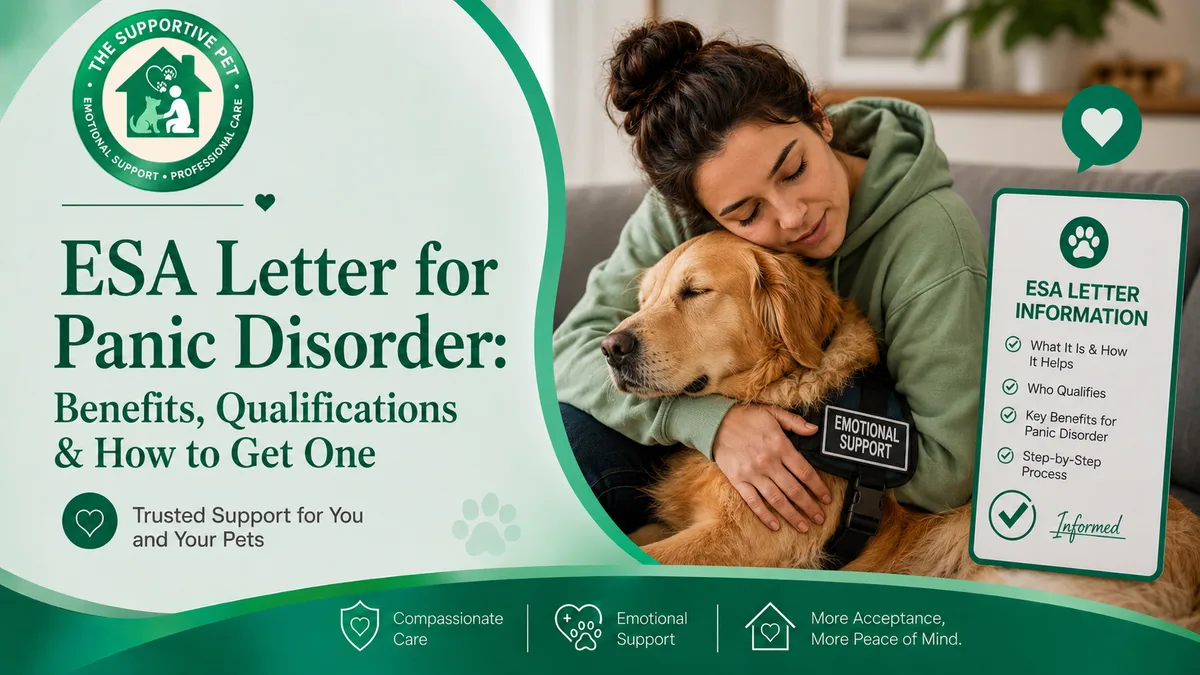
Does panic disorder automatically qualify for an ESA letter?
Panic disorder is a recognized qualifying condition, but automatic qualification depends on whether the condition substantially limits your daily functioning. A licensed clinician evaluates this during your telehealth assessment. Most people with a diagnosed panic disorder who seek an ESA letter qualify.
Medical Disclaimer: This article is for informational purposes only and does not constitute medical or legal advice. Consult a qualified mental health professional before making decisions about your care. If you or someone you know is in crisis, call or text 988 (Suicide & Crisis Lifeline, available 24/7).
Panic disorder is characterized by recurrent, unexpected panic attacks - sudden surges of intense fear accompanied by physical symptoms such as heart palpitations, shortness of breath, dizziness, and a profound sense of impending doom. Between attacks, sufferers experience persistent anticipatory anxiety about future attacks. Panic disorder affects approximately 2.7% of U.S. adults and is one of the most common qualifying conditions for an ESA letter.
How an ESA Helps with Panic Disorder
Emotional support animals provide specific, clinically recognized benefits for panic disorder sufferers:
- Grounding during panic attacks - the tactile sensation of holding or petting an animal provides a concrete sensory anchor that interrupts the dissociative spiral of a panic attack
- Pre-attack sensing - many animals, particularly dogs, detect physiological changes (heart rate increase, altered breathing, perspiration) that precede a conscious attack and respond with increased contact, providing early intervention
- Reduction of anticipatory anxiety - the constant presence of a predictable, non-judgmental companion reduces the vigilance load that drives anticipatory anxiety between attacks
- Safe re-engagement with avoided spaces - a companion animal makes previously avoided spaces (crowds, public transport, specific buildings) more navigable, reducing the agoraphobic constriction that often accompanies panic disorder
Does Panic Disorder Qualify for an ESA Letter?
Yes. Panic disorder is a recognized mental health condition that qualifies under standard ESA letter criteria when it substantially limits one or more major life activities. Clinicians assess:
- Whether you have a clinical diagnosis of panic disorder
- Whether the condition substantially impacts your daily functioning
- Whether an emotional support animal provides genuine therapeutic benefit
You do not need a severe case - moderate panic disorder that affects your sleep, social functioning, or ability to leave home regularly qualifies. You also do not need a new diagnosis - existing documentation from your therapist, psychiatrist, or primary care physician supports your evaluation.
Housing Rights for Panic Disorder ESA Owners
Under the Fair Housing Act (42 U.S.C. § 3604), a valid ESA letter requires landlords to:
- Allow your emotional support animal regardless of no-pets policies
- Waive all pet fees - deposits, monthly pet rent, move-in fees
- Override weight and breed restrictions
See our complete guide to ESA letters for housing.
Choosing the Best ESA for Panic Disorder
The best ESA for panic disorder is the animal you already have a therapeutic bond with. Practically, smaller animals that can be held or have close physical contact during an attack are often most useful. Dogs and cats dominate for panic disorder specifically, as their responsiveness and physical contact provide the most direct grounding benefit. Dogs that naturally seek physical contact - Chihuahuas, Dachshunds, Cavalier King Charles Spaniels - are particularly suitable for panic disorder.
How to Get an ESA Letter for Panic Disorder
The Supportive Pet provides telehealth evaluations with state-licensed mental health professionals. The evaluation focuses on your panic disorder diagnosis and how your ESA provides therapeutic benefit. Most clients receive their letter the same business day. Start your evaluation here.
See also our condition-specific guides: ESA letters for anxiety | ESA letters for PTSD
Frequently Asked Questions
Does panic disorder automatically qualify for an ESA letter?
Panic disorder is a recognized qualifying condition, but automatic qualification depends on whether the condition substantially limits your daily functioning. A licensed clinician evaluates this during your telehealth assessment. Most people with a diagnosed panic disorder who seek an ESA letter qualify.
Can an ESA letter help me live with a no-pets policy if I have panic disorder?
Yes. The Fair Housing Act requires landlords to grant reasonable accommodations for documented ESA owners, overriding no-pets policies. Your panic disorder diagnosis and the therapeutic benefit of your ESA support the accommodation request.
What animals are most effective as ESAs for panic disorder?
The most effective ESA is the animal you have the strongest bond with. For panic disorder specifically, animals that provide physical contact during episodes - dogs (especially small, lap-oriented breeds) and cats - tend to provide the most direct benefit through tactile grounding.
See our articles highlighted in Google Search
Add The Supportive Pet as a preferred source - your results, your way.