
Does insomnia qualify for an ESA letter?
It depends on the nature of your insomnia. Insomnia that is chronic, severe, and substantially limits major life activities - particularly when it is linked to or comorbid with a DSM-5 mental health condition like anxiety, depression, or PTSD - is more likely to support ESA qualification. Insomnia Disorder is itself listed in the DSM-5. A licensed clinician will evaluate your specific situation.
Medical Disclaimer: This article is for informational purposes only and does not constitute medical or legal advice. Consult a qualified mental health professional before making decisions about your care. If you or someone you know is in crisis, call or text 988 (Suicide & Crisis Lifeline, available 24/7).
Insomnia disorder affects about 10-30% of adults. It is the most common sleep disorder in the United States. People with insomnia have persistent difficulty falling or staying asleep, leading to significant daytime impairment. When insomnia is caused or worsened by a mental health condition such as anxiety, PTSD, or depression, it may qualify as a disability under the Fair Housing Act. In that case, an emotional support animal may be appropriate as part of a comprehensive treatment plan. This guide explains when insomnia qualifies for an ESA letter, how animals help, and what your housing rights are.
Can Insomnia Qualify for an ESA Letter?
Yes — but the answer depends on the nature and severity of your insomnia. Chronic Insomnia Disorder is listed in the DSM-5 as a sleep-wake disorder. When it substantially limits a major life activity — which chronic sleep deprivation reliably does — it can support ESA qualification under the Fair Housing Act.
Insomnia often occurs alongside other qualifying mental health conditions. Anxiety disorders, depression, PTSD, and bipolar disorder all commonly include insomnia as a symptom. In these cases, the primary condition and the insomnia together support a strong case for ESA qualification.
When Insomnia Qualifies as a Disability for ESA Purposes
Primary vs. Secondary Insomnia
Primary insomnia (not caused by another condition) can qualify for an ESA letter. It must substantially limit major life activities — specifically sleeping, which the ADA recognizes as a major life activity. However, licensed clinicians typically look for a broader clinical picture. They assess whether insomnia produces significant cognitive impairment, emotional dysregulation, or functional limitation beyond sleep loss itself. Secondary insomnia (caused by anxiety, PTSD, depression, or another mental health condition) often has a clearer path to ESA qualification. The underlying condition is independently qualifying.
How the Therapeutic Nexus Works for Insomnia
For an ESA letter to hold up under the FHA, the clinician must establish a "therapeutic nexus." This is a direct connection between the animal's presence and improvement in the person's disability. For insomnia, this means documenting how the animal helps. Common examples include reducing the hyperarousal or anxiety that delays sleep, providing physical grounding that soothes the nervous system before bed, or reducing nighttime awakenings caused by anxiety. The therapeutic nexus for insomnia is well-established in clinical literature.
What a Clinician Evaluates
A licensed clinician evaluating you for an ESA letter will assess several things:
- Your insomnia severity and duration
- The underlying or co-occurring conditions driving the insomnia
- How the condition substantially limits your daily functioning
- Whether your specific animal provides measurable therapeutic benefit
What Insomnia Does to the Body and Mind
Chronic insomnia is not simply being a "light sleeper" or occasionally having trouble falling asleep. It is a condition characterized by:
- Difficulty initiating sleep, maintaining sleep, or waking too early - at least 3 nights per week for at least 3 months
- Significant daytime impairment: fatigue, cognitive difficulties, mood disturbances, and reduced performance at work or school
- Inability to sleep despite adequate opportunity and circumstances
The consequences of chronic insomnia extend far beyond tiredness. Sleep deprivation impairs many functions, including memory, decision-making, emotional regulation, and immune response. People with chronic insomnia have significantly higher rates of depression, anxiety disorders, and cardiovascular disease.
How an ESA Can Help with Insomnia
Emotional support animals can address insomnia through several mechanisms:
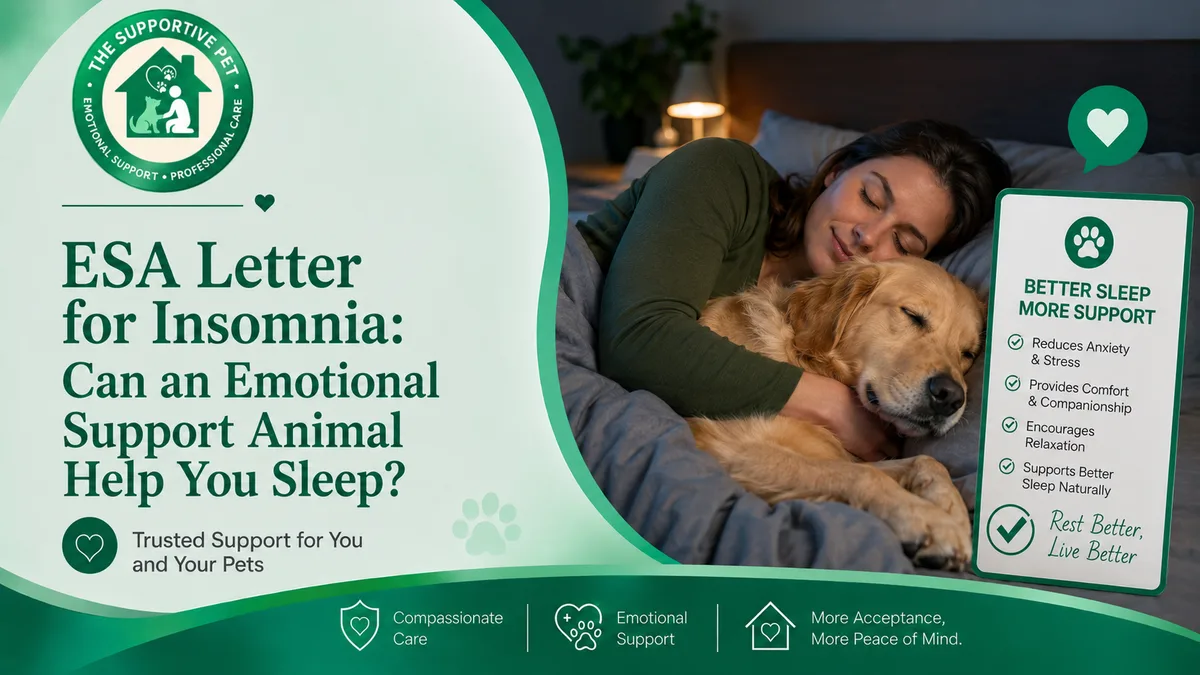
- Reducing nighttime anxiety - many people with insomnia lie awake due to racing thoughts and anxiety. The calming presence of an animal in the bedroom can reduce the cognitive hyperarousal that prevents sleep
- Creating a sense of safety - for people whose insomnia is linked to hypervigilance (common in PTSD and anxiety), an animal's presence can signal safety and reduce the alertness that prevents sleep onset
- Establishing sleep routine - animals naturally regulate to daily schedules, and their consistent bedtime routines can reinforce a healthy sleep-wake cycle
- Reducing loneliness at night - for people who live alone, nighttime can amplify feelings of isolation and anxiety; an ESA provides constant, reassuring presence
- Physical warmth and comfort - the physical sensation of a warm animal companion has documented calming effects on the nervous system
What the Research Says
A 2018 Mayo Clinic study found that 41% of pet owners said their pets did not disrupt sleep. Many found them beneficial — especially for comfort and security at night. Research on animal-assisted therapy consistently shows reductions in anxiety. This directly addresses a primary driver of insomnia. See our post on how pets reduce anxiety and stress.
Cognitive Behavioral Therapy for Insomnia (CBT-I) remains the gold-standard treatment. An ESA is not a replacement for CBT-I or sleep hygiene improvements. However, it can complement these approaches by reducing anxiety and hyperarousal.
Insomnia and the Fair Housing Act
For an ESA to provide housing protections, your condition must constitute a disability under the Fair Housing Act - meaning it substantially limits a major life activity. Chronic insomnia that impairs your ability to work, concentrate, maintain relationships, or care for yourself qualifies as such a limitation.
A valid ESA letter documents this need. It gives you the right to keep your ESA in housing with no-pet policies — without paying pet deposits or pet rent.
How to Get an ESA Letter for Insomnia
- Complete a clinical evaluation - a licensed mental health professional evaluates your insomnia (and any comorbid conditions) and determines whether an ESA provides therapeutic benefit
- Receive your ESA letter - if you qualify, your clinician issues a signed letter on their professional letterhead with their license details
- Present your letter to your landlord - they must accommodate your ESA under the Fair Housing Act, regardless of no-pet policies
At The Supportive Pet, licensed clinicians evaluate your mental health needs and issue letters for qualifying residents. View pricing or start your evaluation here.
Insomnia ESA Letters and Your Housing Rights
Once you have an ESA letter for insomnia, you have full FHA housing protections. Your landlord must waive pet deposits, pet rent, and no-pet restrictions. The FHA does not require you to disclose your specific diagnosis — only that you have a disability-related need for the animal. Your landlord cannot require medical records or a detailed explanation of your insomnia.
Common challenges for insomnia ESA owners include landlords who are unfamiliar with insomnia as a qualifying condition. If your request is met with skepticism, reference HUD's 2020 guidance. It confirms that any DSM-5 diagnosed condition that substantially limits a major life activity qualifies. Sleeping is explicitly listed as a major life activity under the ADA. For more on your rights, see our complete ESA housing rights guide and what to do if your landlord denies your ESA.
Frequently Asked Questions
Does insomnia qualify for an ESA letter?
It depends on the nature of your insomnia. Insomnia that is chronic, severe, and substantially limits major life activities - particularly when it is linked to or comorbid with a DSM-5 mental health condition like anxiety, depression, or PTSD - is more likely to support ESA qualification. Insomnia Disorder is itself listed in the DSM-5. A licensed clinician will evaluate your specific situation.
Can sleeping with an ESA improve insomnia?
Research suggests that the presence of a pet can reduce nighttime anxiety and promote feelings of safety and calm, which may help some people with insomnia fall asleep more easily. A 2018 Mayo Clinic study found that most pet owners who sleep with their pets report that it does not disrupt sleep and many find it comforting. Results vary by individual and animal.
What types of insomnia qualify for an ESA?
Chronic Insomnia Disorder (difficulty initiating or maintaining sleep at least 3 nights per week for at least 3 months) is most likely to qualify. Insomnia comorbid with anxiety, depression, PTSD, or other qualifying DSM-5 conditions also strongly supports an ESA evaluation. Short-term or situational insomnia is less likely to meet the threshold for a disability under the FHA.
What animals are best ESAs for insomnia?
The most effective ESA for sleep-related issues is typically one whose presence is calming and whose natural schedule is compatible with nighttime routines. Many people with insomnia benefit from dogs or cats that can sleep in the bedroom or on the bed. The specific animal that works best depends on your individual comfort and living situation.
Can I get an ESA letter online for insomnia?
Yes. Telehealth evaluations with licensed mental health professionals are legal in all 50 states. A licensed clinician can evaluate your insomnia and related mental health conditions via a secure telehealth platform and issue an ESA letter the fast if you qualify. The Supportive Pet connects you with state-licensed providers.
See our articles highlighted in Google Search
Add The Supportive Pet as a preferred source - your results, your way.