
Is social anxiety disorder different from generalized anxiety disorder for ESA purposes?
Both qualify as ESA conditions when they substantially impact daily functioning. Social anxiety disorder is specifically characterized by fear of social situations; generalized anxiety disorder involves broader worry. Both are recognized under the same ESA qualification criteria.
Medical Disclaimer: This article is for informational purposes only and does not constitute medical or legal advice. Consult a qualified mental health professional before making decisions about your care. If you or someone you know is in crisis, call or text 988 (Suicide & Crisis Lifeline, available 24/7).
Social anxiety disorder (SAD) - also called social phobia - is characterized by intense fear of social situations where one might be judged, embarrassed, or scrutinized. It affects approximately 15 million American adults and is one of the most common qualifying conditions for ESA letters. Social anxiety disorder is distinguished from shyness by its severity: it substantially impairs work performance, relationships, and daily activities.
How Emotional Support Animals Help with Social Anxiety
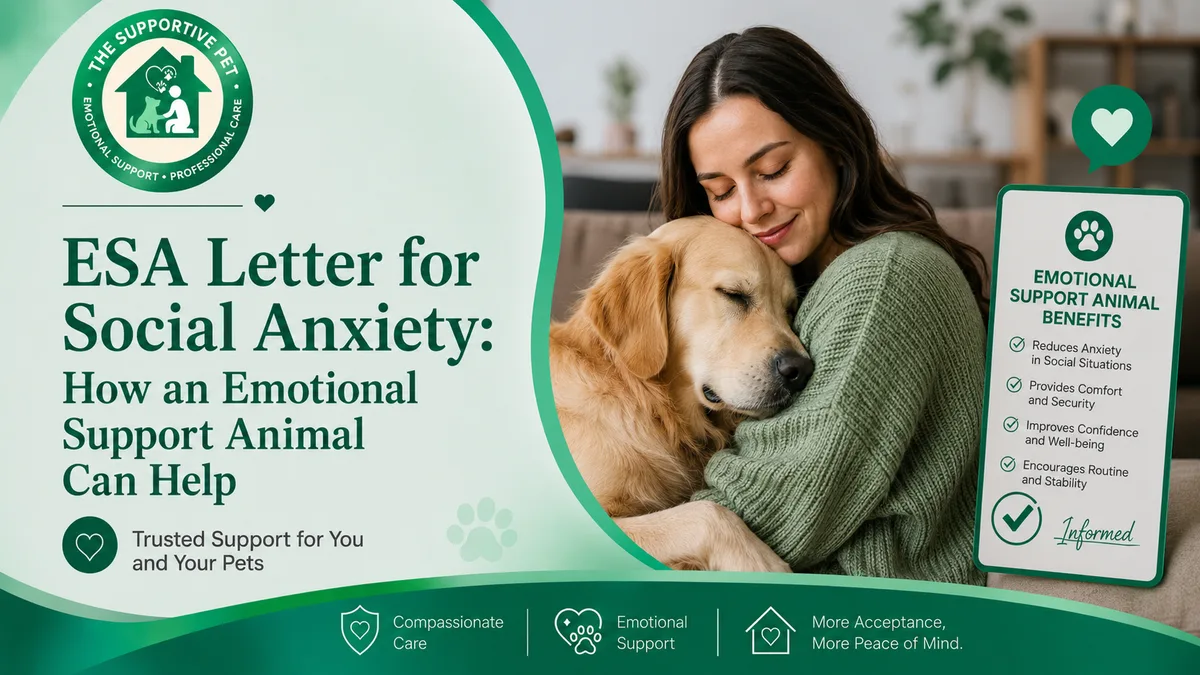
Emotional support animals address social anxiety through several mechanisms:
- Social bridging - animals, especially dogs, naturally create social interactions at reduced threat levels; people with social anxiety often find it easier to engage with strangers initially about a dog than to initiate direct human-to-human contact
- Anxiety anchor - having an animal present during anxiety-provoking situations provides a known, safe sensory focus that reduces threat-monitoring hypervigilance
- Avoidance interruption - social anxiety drives behavioral avoidance that maintains the disorder; an animal's routine needs (walks, vet visits, socialization) provide structured reasons to engage with avoided situations
- Home safety base - the home environment is typically safe for social anxiety sufferers; an animal makes the home more emotionally supportive, reducing the exhaustion that makes social engagement harder
- Shame and self-consciousness reduction - an animal's consistent positive regard directly counteracts the self-focused negative evaluation that drives social anxiety
Does Social Anxiety Disorder Qualify for an ESA Letter?
Yes. Social anxiety disorder is a recognized DSM-5 diagnosis that qualifies for an ESA letter when it substantially limits major life activities - such as work performance, the ability to maintain relationships, or daily activities like grocery shopping, using public transportation, or attending appointments. A licensed clinician will assess your specific symptoms and functioning during your telehealth evaluation.
Housing Rights Under the Fair Housing Act
With a valid ESA letter from a licensed clinician, the Fair Housing Act (42 U.S.C. § 3604) requires your landlord to allow your ESA, waive all pet fees, and override no-pets or weight/breed restrictions. See our full ESA letter for housing guide.
How to Get Your ESA Letter for Social Anxiety Disorder
The Supportive Pet provides telehealth evaluations with state-licensed clinicians. Telehealth is particularly accessible for people with social anxiety - you complete the evaluation from home on your own schedule. Most clients receive their letter the same business day. Start your evaluation here.
See also: Social anxiety disorder ESA condition page | Generalized anxiety ESA guide
Frequently Asked Questions
Is social anxiety disorder different from generalized anxiety disorder for ESA purposes?
Both qualify as ESA conditions when they substantially impact daily functioning. Social anxiety disorder is specifically characterized by fear of social situations; generalized anxiety disorder involves broader worry. Both are recognized under the same ESA qualification criteria.
Can getting an ESA help me manage social anxiety, or will it make avoidance worse?
Clinical experience suggests ESAs support managed exposure to avoided situations rather than enabling complete avoidance. A dog particularly creates structured reasons to engage with the outside world while providing a regulated companion during that engagement - typically reducing avoidance over time.
Do I need to interact with anyone to get my ESA letter through The Supportive Pet?
The evaluation is conducted via telehealth - video or phone call with a licensed clinician. For people with social anxiety, our clinicians are experienced in conducting evaluations in a structured, low-pressure format that is focused specifically on your condition and needs.
See our articles highlighted in Google Search
Add The Supportive Pet as a preferred source - your results, your way.