
How do I get an ESA letter?
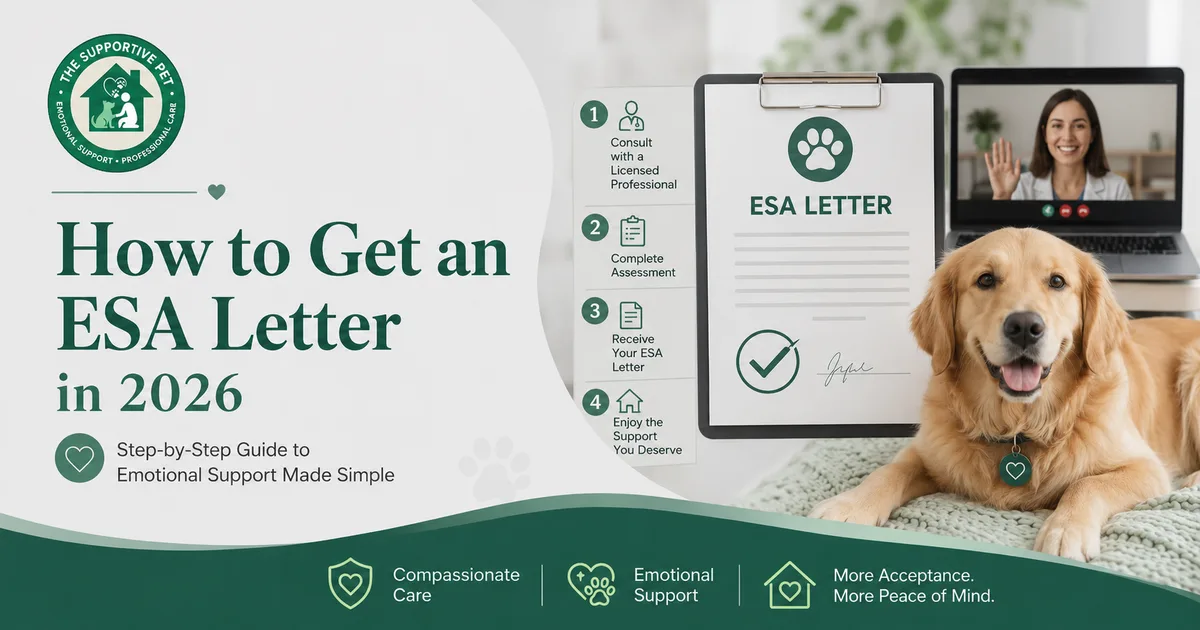
To get an ESA letter, complete an intake form with a licensed mental health platform, undergo a clinical evaluation with a licensed clinician in your state, and receive your letter upon approval. The entire process can be completed online and typically takes less than 24 hours. The letter must come from a licensed professional - not a website that generates instant letters with no evaluation.
Medical Disclaimer: This article is for informational purposes only and does not constitute medical or legal advice. Consult a qualified mental health professional before making decisions about your care. If you or someone you know is in crisis, call or text 988 (Suicide & Crisis Lifeline, available 24/7).
Before you start: what makes a letter legitimate
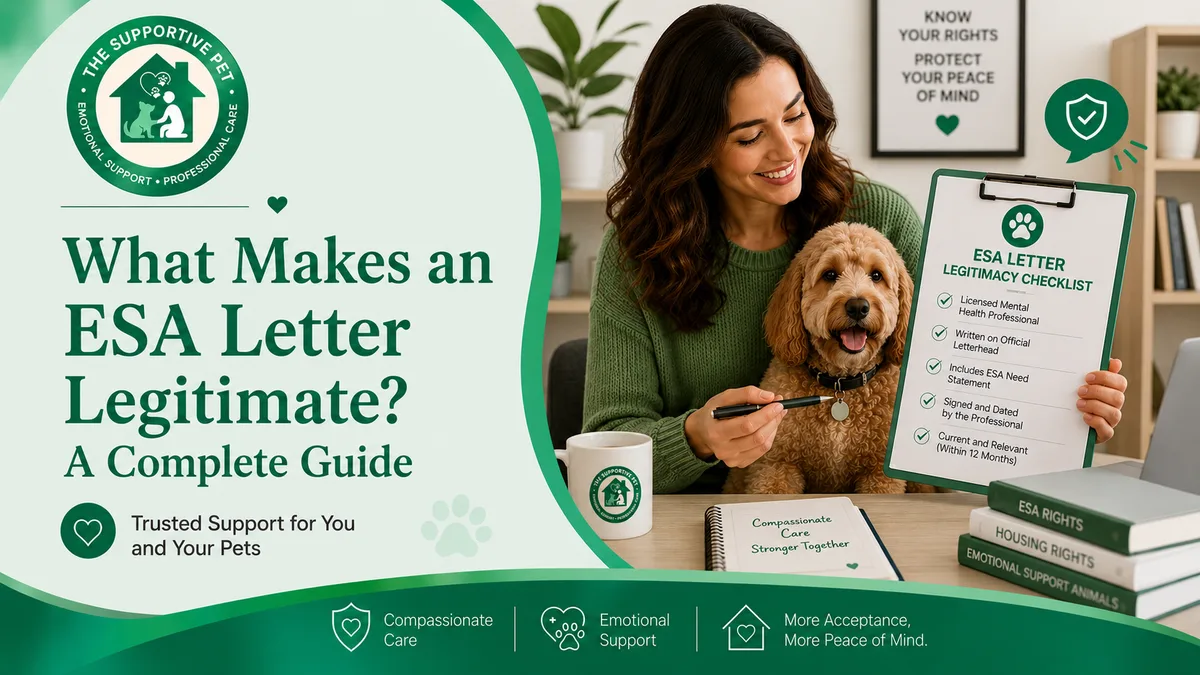
An ESA letter is only legally valid under the Fair Housing Act when it comes from a licensed mental health professional who has conducted a real clinical evaluation. Letters from websites that skip the evaluation, generate instant documents, or sell "certificates" and "registration IDs" have no legal force. Landlords - and increasingly, courts - know the difference.
With that foundation in place, here is the complete step-by-step process.
Step 1: Complete your intake form
The process begins with an intake questionnaire. You will be asked about your mental health history, the symptoms you experience, and how your emotional support animal helps manage those symptoms. This typically takes 10-15 minutes.
Be thorough and honest. The clinician reviewing your case uses your answers to assess whether your condition qualifies and whether the animal genuinely provides therapeutic benefit. Vague answers may require follow-up and slow the process.
Step 2: Clinician review and evaluation
A licensed mental health professional in your state reviews your intake. They are looking for:
- Evidence of a mental health condition that substantially limits a major life activity
- A credible nexus between your condition and the therapeutic role your animal plays
- That you are a genuine patient seeking a clinical recommendation, not just documentation for convenience
In most cases, the written intake is sufficient for a determination. If the clinician needs clarification, they may schedule a brief telehealth consultation - typically 15-20 minutes by video or phone.
Step 3: Letter delivery
If the clinician determines an ESA letter is clinically appropriate, you receive your letter by email - typically within the same business day. The letter will include:
- The clinician's name, license type, license number, and state
- A statement confirming you have a mental health disability
- A nexus statement connecting your disability to your ESA
- The clinician's original signature and the date
You can present this letter to your landlord as a formal reasonable accommodation request under the Fair Housing Act.
What happens after you receive your letter
Submit your letter to your landlord or housing provider along with a written reasonable accommodation request. Landlords are required to respond within a reasonable time - typically 10 business days. They may verify the clinician's license through their state licensing board, which is a normal part of the process.
Keep a copy of everything you submit and the responses you receive. If your landlord denies your request without a legally valid reason, you have grounds to file a complaint with HUD.
"Most of our customers are surprised by how straightforward the process is. The goal is a genuine clinical evaluation - not a box-checking exercise. If you have a real condition and a real relationship with your animal, the letter follows naturally."
- Pooja Sharma, The Supportive Pet
Common mistakes to avoid
- Using a free or instant letter service: These almost always fail landlord verification. See our guide on why free ESA letters don't hold up.
- Submitting ESA "registration" or "certification": These have zero legal value. ESA registration is not recognized by the FHA.
- Waiting until move-in day: Start the process at least a week before you need the letter - ideally before signing a lease on a no-pet property.
- Not renewing annually: Most landlords require a letter dated within 12 months. ESA letters should be renewed every year.
Who qualifies for an ESA letter?
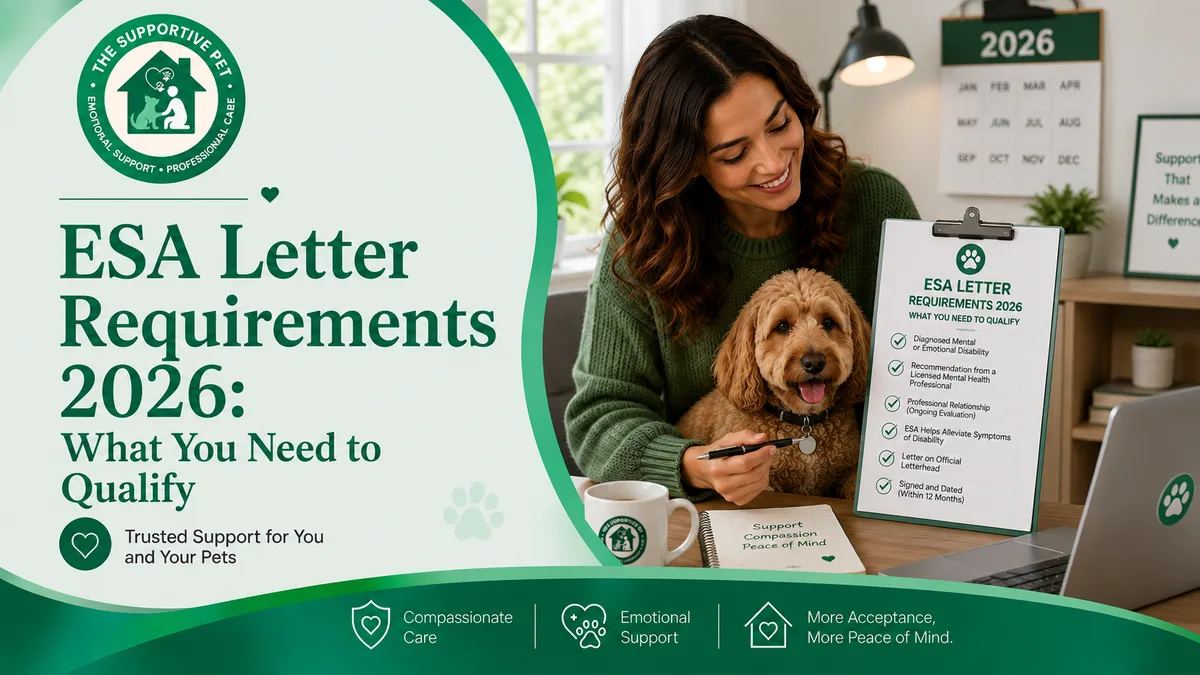
The Fair Housing Act does not list qualifying conditions. The standard is functional: you need a mental health condition that substantially limits a major life activity. Common qualifying conditions include anxiety disorders, depression, PTSD, bipolar disorder, OCD, ADHD, autism spectrum disorder, and schizophrenia. See all qualifying conditions.
You do not need a prior formal diagnosis from another provider. The clinician who evaluates you through The Supportive Pet conducts an independent clinical assessment and makes their own determination.
What the clinical evaluation involves
A legitimate evaluation assesses three things: evidence of a qualifying mental health condition, proof that it substantially limits a major life activity, and a credible therapeutic nexus between your condition and your animal. If your intake provides sufficient information, your letter is issued the fast. If the clinician needs clarification, they contact you directly - this is good clinical practice.
How to submit your letter to your landlord
Submit your letter in writing to your landlord alongside a formal reasonable accommodation request. Landlords must respond within a reasonable time - HUD guidance suggests 10 business days. They may verify the clinician's license through the state licensing board, which is normal and expected. What they cannot do: demand your specific diagnosis, request your full medical records, or require an ESA registration certificate.
Keep copies of every communication. If your landlord does not respond or denies your request without a valid legal reason, you have grounds to file a complaint with HUD.
ESA letter vs. Psychiatric Service Dog letter
An ESA letter provides housing rights under the FHA for any species, with no task training required for your animal. A Psychiatric Service Dog (PSD) letter applies only to dogs trained to perform specific psychiatric tasks, and grants full ADA public access rights - restaurants, stores, hotels, transportation - plus housing rights. If housing is your primary need, an ESA letter is the right starting point. If you need your dog with you in public spaces, a PSD letter provides the broader protection.
If your landlord denies your ESA request
Lawful reasons for denial are narrow: the specific animal poses a direct, documented threat to others; granting the accommodation would impose an undue financial or administrative burden; or the property is genuinely exempt from FHA coverage. A no-pet policy alone is not a valid reason. Neither is breed, size, or weight. If you receive an unlawful denial, you can file a complaint with HUD or your state's fair housing agency. The Supportive Pet provides free landlord dispute support for every letter we issue - our team will contact your landlord and work to resolve the situation.
Related: See verified customer reviews
The Complete Step-by-Step Process for Getting an ESA Letter
Getting a valid ESA letter is a clinical process, not an administrative one. Here is the complete path from start to having a legally defensible ESA letter in hand.
Step 1: Confirm You Have a Qualifying Mental Health Condition
To qualify for an ESA letter, you must have a mental health condition recognized in the DSM-5 that substantially limits a major life activity. Common qualifying conditions include:
- Major depressive disorder or persistent depressive disorder (dysthymia)
- Generalized anxiety disorder, panic disorder, or social anxiety disorder
- PTSD or acute stress disorder
- Bipolar disorder (any type)
- Obsessive-compulsive disorder (OCD)
- Adjustment disorder
- ADHD when substantially limiting
- Agoraphobia or specific phobias when substantially limiting
This is not an exhaustive list. Many mental health conditions can qualify — the key is the "substantially limits a major life activity" standard, which includes the ability to sleep, concentrate, care for oneself, or engage in housing-related activities.
Step 2: Choose Your Clinician or Service
Option A: Your Current Therapist or Psychiatrist
If you are already in mental health treatment, ask your current clinician about an ESA letter at your next appointment. This is the strongest documentation because it reflects an established clinical relationship. Your clinician knows your history and can write with specificity about how your ESA supports your treatment.
Option B: Telehealth ESA Assessment
If you are not currently in treatment or your current clinician declines, telehealth mental health platforms offer ESA assessments. Choose a platform where:
- A real licensed clinician (not just a questionnaire algorithm) conducts the assessment
- The clinician is licensed in your state of residence
- The assessment includes a live video or phone consultation
- The clinician's license information is clearly provided with the letter
Step 3: The Assessment
A legitimate ESA assessment involves a clinician reviewing your mental health history and current status. You will typically discuss:
- Your current mental health condition and symptoms
- How long you have been experiencing these symptoms
- How the condition affects your daily life, including housing
- Your relationship with your ESA and how the animal helps manage symptoms
- Whether an ESA is an appropriate part of your care approach
Step 4: Receive and Review Your Letter
After the assessment, the clinician issues your letter. Before submitting to a landlord, verify the letter includes:
- Clinician's full name, title, and license type
- License number and state of licensure
- Date of issuance
- Your name
- Statement of qualifying disability and ESA recommendation
- Professional letterhead and signature
Step 5: Submit to Your Housing Provider
Prepare a written reasonable accommodation request letter to your landlord or property manager. Include:
- Your name and unit number
- A request for reasonable accommodation under the FHA to keep an emotional support animal
- A brief description of your animal (species, name)
- Your ESA letter attached
- A request for written acknowledgment within 10 business days
Submit via email (creates a date stamp) or certified mail (creates delivery proof).
Frequently Asked Questions: Getting Your ESA Letter
How long does the process take?
With a telehealth service, the assessment appointment and letter can be completed within 24–48 hours. With your regular clinician, the timeline depends on appointment availability — anywhere from your next scheduled session to 2–3 weeks if scheduling is needed.
How much does an ESA letter cost?
Telehealth ESA assessments typically range from $99 to $199. Your regular therapist or psychiatrist's standard appointment fee applies if they conduct the assessment. Avoid services charging under $50 — they are not conducting genuine clinical assessments.
Can I get an ESA letter even if I'm not currently in therapy?
Yes. You do not need to be in ongoing therapy to obtain an ESA letter. The letter is based on a current clinical assessment, not a requirement for continuous treatment. However, a single-visit telehealth assessment is more limited than a letter from a treating clinician with ongoing knowledge of your case.
How long is my ESA letter valid?
Typically one year. After that, renewal with an updated assessment is standard practice. Maintain a current letter at all times if you are relying on it for housing protection.
Frequently Asked Questions
How do I get an ESA letter?
To get an ESA letter, complete an intake form with a licensed mental health platform, undergo a clinical evaluation with a licensed clinician in your state, and receive your letter upon approval. The entire process can be completed online and typically takes less than 24 hours. The letter must come from a licensed professional - not a website that generates instant letters with no evaluation.
How long does it take to get an ESA letter?
Through The Supportive Pet, most customers receive their letter the fast they submit their intake form. A licensed clinician reviews your case and, if appropriate, issues the letter within a few hours. In rare cases requiring additional consultation, the process may take up to 24 hours.
Who qualifies for an ESA letter?
To qualify, you must have a mental health condition that substantially limits a major life activity, and your emotional support animal must provide therapeutic benefit related to that condition. Qualifying conditions include anxiety, depression, PTSD, bipolar disorder, OCD, panic disorder, ADHD, and many others. A licensed clinician makes the determination based on your individual evaluation.
How much does an ESA letter cost?
A legitimate ESA letter from a licensed clinician costs between $99 and $199 through reputable telehealth platforms. This fee covers the clinician's evaluation time, letter drafting, and any follow-up support. Free or very cheap letters are almost always fraudulent - they skip the clinical evaluation that makes the letter legally defensible under the Fair Housing Act.
See our articles highlighted in Google Search
Add The Supportive Pet as a preferred source - your results, your way.