
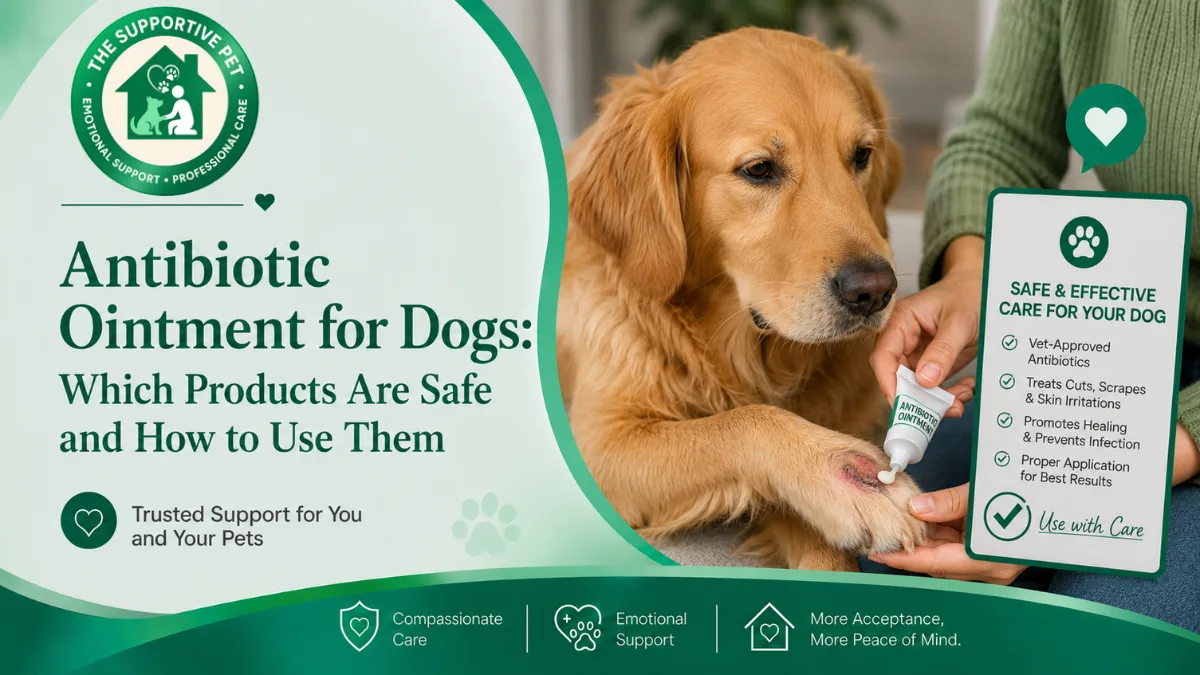
Can you put antibiotic ointment on a dog?
Yes, you can apply antibiotic ointment to minor cuts, scrapes, and small wounds on dogs. Triple antibiotic ointments containing neomycin, polymyxin B, and bacitracin are generally considered safe for dogs in small amounts on minor wounds. The main concern is preventing your dog from licking the ointment off, as some ingredients can cause digestive upset if ingested in large quantities.
Medical Disclaimer: This article is for informational purposes only and does not constitute medical or legal advice. Consult a qualified mental health professional before making decisions about your care. If you or someone you know is in crisis, call or text 988 (Suicide & Crisis Lifeline, available 24/7).
Can You Use Antibiotic Ointment on Dogs?
Yes - for minor, clean wounds, cuts, and scrapes, antibiotic ointment can be appropriate first aid for your dog. The same way it helps prevent infection in human minor wounds, it can help keep small dog wounds from becoming infected while they heal.
For related first aid topics, see bandages for dogs and tick bite wound care.
The key qualifiers are minor and clean. Antibiotic ointment is appropriate for:
- Small surface cuts and scrapes
- Minor abrasions from rough terrain
- Small puncture wounds that have been thoroughly cleaned
- Post-surgical incisions (only if your vet has instructed you to apply ointment)
It is not appropriate for large wounds, deep punctures, bite wounds, infected wounds, or wounds near the eyes - these need veterinary evaluation.
Which Over-the-Counter Antibiotic Ointments Are Safe for Dogs?
Triple Antibiotic Ointment (Neosporin and generics)
Triple antibiotic ointment contains three antibiotics - neomycin sulfate, polymyxin B sulfate, and bacitracin zinc. This combination is broadly effective against the most common bacteria found in minor wounds. It is considered safe for topical use on dogs in small amounts.
How to use: Clean the wound first with mild soap and water or saline. Apply a thin layer of ointment. Use an e-collar or bandage to prevent licking. Reapply once or twice daily for 3–5 days for minor wounds.
Bacitracin
Bacitracin alone (without neomycin or polymyxin B) is also safe for dogs and may be preferred for dogs with sensitivities, as neomycin can occasionally cause skin reactions. It is slightly less broad-spectrum than triple antibiotic ointment but effective for most minor wound bacteria.
Products to Avoid
- Ointments with hydrocortisone: Steroids should not be used on wounds unless prescribed by a vet
- Products with benzocaine or lidocaine: These topical anesthetics can be toxic to dogs
- Antifungal creams: These treat a different type of infection and should not be used on bacterial wounds
- Hydrogen peroxide: Damages healing tissue - avoid as a wound cleanser in dogs
- Povidone-iodine: Can be used diluted (tea-colored solution) to clean wounds but should not be applied full-strength
How to Apply Antibiotic Ointment to a Dog
- Clean the wound: Gently flush with clean water or saline solution to remove debris. Pat dry with a clean cloth.
- Clip surrounding fur: If possible, trim the fur around the wound to keep it clean and allow better ointment contact
- Apply a thin layer: A small amount goes a long way - avoid thick application
- Prevent licking: Immediately cover with a non-stick bandage, use an e-collar, or apply a bitter spray over the area
- Monitor daily: Check the wound for increasing redness, swelling, discharge, or odor - all signs of infection that need vet attention
Preventing Your Dog from Licking the Ointment
Licking is the biggest challenge with any topical treatment. Options to prevent licking:
- E-collar (cone of shame): The most reliable option for wounds on the body or limbs
- Soft recovery collar: More comfortable than hard plastic cones for some dogs
- Inflatable collar: Prevents licking without blocking peripheral vision
- Bandaging: Covering the wound with a light bandage keeps the ointment on and prevents licking
- Bitter spray: Applied over the bandage or ointment to deter licking
When You Need a Prescription Antibiotic Ointment
OTC ointments are appropriate only for superficial, minor wounds. For deeper infections or wounds that are not healing, your vet may prescribe:
- Mupirocin (Bactoderm): Effective against resistant Staph infections, commonly used for canine pyoderma
- Silver sulfadiazine: Used for burns and serious skin infections
- Combination products with gentamicin or betamethasone: For infected wounds with significant inflammation
When to Skip Ointment and Go Straight to the Vet
Some wounds should not be treated at home - take your dog to the vet if:
- The wound is deep, large, or jagged and may need sutures
- The wound was caused by an animal bite (which carries high infection risk)
- The wound is near the eyes, face, or genitals
- Signs of infection are already present (swelling, warmth, pus, odor)
- Your dog won't stop licking despite your best efforts
- The wound isn't healing or is getting worse after 2–3 days of home care
Step-by-Step Wound Care with Antibiotic Ointment
Applying antibiotic ointment correctly makes the difference between effective home care and a worsening infection:
- Clean the wound first. Rinse thoroughly with clean water or sterile saline. Do not use hydrogen peroxide or alcohol - both damage tissue and slow healing. Use mild, unscented soap only on intact skin surrounding the wound.
- Trim surrounding fur if needed. Gently trim fur around the wound edges with blunt-tipped scissors to prevent it from matting over the injury and trapping bacteria.
- Apply a thin layer of ointment. Use a clean cotton swab or fresh finger to apply a thin layer over the wound surface. More ointment is not more effective - a thick layer traps moisture and can slow healing.
- Cover if accessible to your dog. For wounds your dog can reach, cover with a light gauze pad secured with medical tape or a self-adherent bandage. Licking is the biggest obstacle to ointment effectiveness.
- Monitor daily. Check the wound once or twice daily for worsening signs: increased redness, swelling, warmth, discharge, or odor. Reapply ointment after cleaning as needed.
Topical Products to Avoid on Dog Wounds
Several common household products are inappropriate for dog wounds, even if they seem similar to antibiotic ointment:
- Products containing steroids: Combination antibiotic-steroid ointments suppress the immune response and can worsen infection. Use plain antibiotic ointment only.
- Products with pain relief (lidocaine, benzocaine): These local anesthetics are toxic to dogs if licked - even topical amounts can cause methemoglobinemia in some dogs. Stick to plain triple antibiotic ointment.
- Antifungal creams: These are ineffective against bacterial infections and delay proper treatment. Only use antifungals when your vet has confirmed a fungal cause.
- Hydrogen peroxide or iodine: Both damage healthy tissue and impair healing. Saline is always the better wound rinse choice.
When to Stop Home Care and Call a Vet
Transition from home care to veterinary evaluation if any of these apply:
- The wound is larger than 1 inch, deep, or has irregular edges that may need stitches
- Any bite wound - even small punctures can drive bacteria deep into tissue where topical ointment cannot reach
- Worsening redness, swelling, or warmth after 48 hours of home treatment
- Any pus or foul-smelling discharge
- Your dog is licking persistently despite your efforts to cover the wound - ingested ointment can cause vomiting and defeats the treatment
- Your dog develops fever, lethargy, or loss of appetite - these systemic signs indicate infection that requires oral or injectable antibiotics
Your dog's health matters - and so does yours. If caring for a sick or injured pet is adding to your mental health stress, The Supportive Pet can help you document your therapeutic bond with your pet for an ESA letter. Learn more about the process.
Frequently Asked Questions
Can you put antibiotic ointment on a dog?
Yes, you can apply antibiotic ointment to minor cuts, scrapes, and small wounds on dogs. Triple antibiotic ointments containing neomycin, polymyxin B, and bacitracin are generally considered safe for dogs in small amounts on minor wounds. The main concern is preventing your dog from licking the ointment off, as some ingredients can cause digestive upset if ingested in large quantities.
Is Neosporin safe for dogs?
Neosporin (triple antibiotic ointment) is generally safe for dogs when applied in small amounts to minor wounds. It contains neomycin, polymyxin B, and bacitracin - all of which are topically safe for dogs. The main concern is licking: if ingested in large amounts, it can cause vomiting or diarrhea. Use sparingly, and use an e-collar (cone) to prevent your dog from licking the area.
What antibiotic ointment is safe for dogs?
Triple antibiotic ointments containing bacitracin, neomycin, and polymyxin B (like Neosporin, generic triple antibiotic, or brand-name pet versions like Pet MD Topical Wound Spray) are generally safe for dogs on minor wounds. Bacitracin alone is also safe. Avoid ointments containing hydrocortisone or other steroids unless specifically directed by a vet, and avoid products with added pain relief ingredients like benzocaine.
Can dogs lick antibiotic ointment?
A small lick of antibiotic ointment is usually not dangerous for a dog, but repeated or large ingestion can cause vomiting, diarrhea, and stomach upset. More importantly, licking removes the ointment from the wound, making treatment ineffective. Use an Elizabethan collar (cone), a bandage, or a bitter anti-lick spray over the ointment to prevent licking.
What is a prescription antibiotic cream for dogs?
For more serious skin infections, veterinarians can prescribe prescription topical antibiotics for dogs. Common prescription topical antibiotics for dogs include mupirocin (Bactoderm), silver sulfadiazine, and various combination products containing gentamicin or enrofloxacin. These are used for deeper or more resistant skin infections that do not respond to OTC options.
See our articles highlighted in Google Search
Add The Supportive Pet as a preferred source - your results, your way.