
How do you bandage a dog wound?
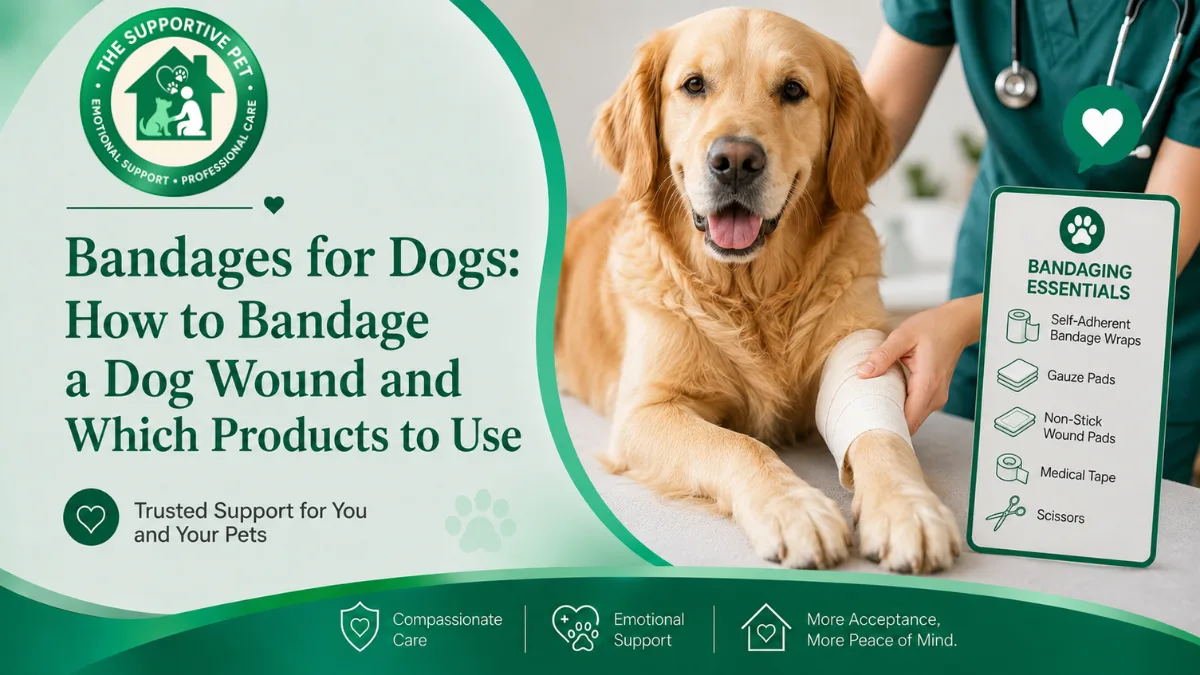
To bandage a dog wound: first clean the wound thoroughly with saline or mild soap and water. Apply a non-stick sterile pad over the wound. Wrap with absorbent cotton or roll gauze to hold the pad in place. Cover with cohesive bandage (self-adhesive wrap like Vetwrap) applied with moderate - not tight - tension. Secure with medical tape at the edges. Check that you can slip two fingers under the bandage to ensure it is not too tight.
Medical Disclaimer: This article is for informational purposes only and does not constitute medical or legal advice. Consult a qualified mental health professional before making decisions about your care. If you or someone you know is in crisis, call or text 988 (Suicide & Crisis Lifeline, available 24/7).
Knowing how to bandage a dog wound can make a significant difference in the minutes between an injury and reaching a veterinarian. Done correctly, a bandage controls bleeding, prevents contamination, and reduces the dog's ability to lick or chew the wound. Done incorrectly, a bandage can cut off circulation, introduce infection, or give a false sense of security that delays needed veterinary care. This guide covers the correct technique, the right materials, and when home bandaging is appropriate versus when you need emergency vet care.
Types of Dog Bandages and When to Use Each
Bandaging a dog wound involves layers - each layer has a specific job. Understanding the layer system helps you apply it correctly and choose the right materials.
For related first aid, see antibiotic ointment for dogs and dog scabs and skin conditions.
- Contact layer (inner pad): The non-stick sterile pad that touches the wound. This layer absorbs wound fluid without sticking to the healing tissue. Use non-adherent sterile pads (Telfa pads) rather than plain gauze for this layer.
- Absorbent/padding layer: Rolled cotton, cast padding, or conforming gauze wrapped over the contact layer. This layer provides cushioning, absorbs excess discharge, and gives the outer wrap something to grip.
- Outer layer (cohesive bandage): Self-adhesive wrap like Vetwrap, Coflex, or PetFlex. This layer holds everything in place, provides some support, and protects against the environment. Apply with even, moderate tension - not tight.
- Securing tape: Medical tape at the top and bottom edges of the outer wrap helps prevent slipping and peeling.
Supplies You Need to Bandage a Dog Wound
Build a basic dog first aid kit with:
- Saline solution or clean water for wound cleaning
- Sterile non-stick pads (Telfa pads, various sizes)
- Rolled cotton bandage or cast padding
- Conforming stretch gauze (Kling or similar)
- Cohesive self-adhesive wrap (Vetwrap, Coflex, or 3M Coban)
- Medical adhesive tape
- Blunt-tipped bandage scissors
- Antiseptic for cleaning (diluted betadine or chlorhexidine)
How to Bandage a Dog Wound (Step-by-Step)
- Clean the wound: Flush with saline or clean water. Remove debris. For contaminated wounds, use diluted betadine (tea-colored, not full strength) or diluted chlorhexidine solution.
- Dry the surrounding area: The bandage will not adhere well to wet fur. Pat dry before applying.
- Apply the contact layer: Place a non-stick sterile pad over the wound. If the wound is actively bleeding, hold gentle pressure for several minutes before proceeding.
- Wrap with padding: Start below the wound and wrap upward with cotton or gauze, overlapping each layer by 50%. Extend the bandage at least 2–3 inches above and below the wound.
- Apply the cohesive outer layer: Wrap Vetwrap or similar material over the padding with even tension. The wrap should be firm but you should be able to slip two fingers between the bandage and your dog's skin.
- Secure the edges: Apply medical tape to the top and bottom edges to prevent rolling or peeling.
- Check circulation: After bandaging, monitor the toes (if bandaging a limb) - if they become cold, swollen, or if your dog chews at the bandage obsessively, the bandage may be too tight.
How Long to Leave a Bandage on a Dog
The right interval depends on the wound type:
- Minor cuts and scrapes: Change every 1–2 days or sooner if wet or soiled
- More significant wounds: Often daily changes for the first few days, then every 2–3 days as the wound matures
- Post-surgical bandages: Follow your vet's exact instructions - do not deviate from the vet's schedule
Change immediately if you notice: the bandage is wet from the outside, it has shifted out of position, there is discharge soaking through the outer layer, your dog is chewing at it intensely, or any swelling appears above or below the bandage.
Keeping Your Dog from Removing the Bandage
This is often the biggest challenge in home wound care. Strategies:
- E-collar (cone): The most reliable method for preventing access to body and limb wounds
- Bitter spray: Apply bitter apple or bitter lemon spray to the outer surface of the bandage
- Dog boots: For paw bandages, a dog boot over the bandage protects it and prevents removal
- Distraction: Extra exercise and mental enrichment can reduce fixation on the bandage
- Supervision: Closely monitor your dog especially when first bandaged
When Bandaging at Home Is Not Enough
Some wounds require veterinary care regardless of bandaging ability:
- Wounds that won't stop bleeding after 5–10 minutes of firm pressure
- Deep wounds that may have damaged tendons, bone, or joints
- Puncture wounds from animal bites (high infection risk and often deeper than they appear)
- Wounds on the face, near the eyes, or on the genitals
- Wounds showing signs of infection (increasing redness, swelling, discharge, odor)
- Wounds that aren't healing or are enlarging despite home care
If your pet's health challenges are adding to your stress, and you have a mental health condition, your pet may qualify as an emotional support animal. The Supportive Pet connects you with licensed clinicians for ESA evaluations.
Monitoring the Wound After Bandaging
Signs a Bandage Is Too Tight
A bandage that is too tight can cause tissue damage and even limb loss within hours. Check the bandaged limb every 2-4 hours for the first day. Signs of a too-tight bandage: swelling above or below the bandage, cold skin or paws below the bandage, your dog crying or whimpering when you touch the bandage area, or your dog chewing aggressively at the bandage. If you see any of these signs, remove the bandage immediately and seek veterinary care. When in doubt, a looser bandage that stays in place is safer than a tight one.
Changing the Bandage
For minor wounds being managed at home, change the bandage daily or whenever it gets wet, soiled, or loosens significantly. Soak the bandage with warm water before removal if it is adhering to the wound - pulling a dry bandage away from a healing wound reopens the tissue and is extremely painful. After removal, clean the wound gently with saline solution, allow it to air for a few minutes, assess healing progress, and apply a fresh bandage. If the wound appears to be worsening (increasing redness, swelling, discharge, or odor), it needs veterinary evaluation.
Infection Signs to Watch For
A healing wound should look progressively better: less red, less swollen, drying at the edges, new pink tissue forming at the center. Signs that the wound is infected: increasing redness or warmth around the wound, pus or yellow/green discharge, foul odor, your dog developing a fever (temperature above 102.5°F), or your dog becoming lethargic or losing appetite. Infected wounds require veterinary treatment - typically cleaning, debridement, and antibiotics. See our guide on antibiotic ointment for dogs for information on topical antibiotic options for minor wounds.
Frequently Asked Questions
How do you bandage a dog wound?
To bandage a dog wound: first clean the wound thoroughly with saline or mild soap and water. Apply a non-stick sterile pad over the wound. Wrap with absorbent cotton or roll gauze to hold the pad in place. Cover with cohesive bandage (self-adhesive wrap like Vetwrap) applied with moderate - not tight - tension. Secure with medical tape at the edges. Check that you can slip two fingers under the bandage to ensure it is not too tight.
What type of bandage should I use for my dog?
For home use, a basic wound dressing system works well: a non-stick wound pad (contact layer), stretch gauze (conforming layer), and self-adhesive cohesive bandage like Vetwrap or Coflex (outer layer). For paws, a dog boot can be placed over the bandage to protect it. Avoid using only elastic bandages without padding - improper tension can cut off circulation.
Can you use human bandages on dogs?
Yes, many human bandage supplies work for dogs - sterile gauze pads, cohesive bandaging wrap (Coban/Vetwrap), and medical tape are all used in veterinary first aid. The main difference is size and fit, particularly for bandaging paws or tails. The critical principle is the same as for humans: proper padding and tension, no tourniquet-like tightness.
How long should I keep a bandage on my dog?
For minor wounds, change the bandage every 1–2 days or immediately if it becomes wet, soiled, or loose. For more serious wounds or post-surgical bandages, follow your vet's specific instructions - some wounds benefit from daily changes, others from less frequent changes to allow undisturbed healing. Any bandage that causes swelling above or below the bandage line, or that the dog seems very distressed by, should be removed and replaced.
What do I do if my dog keeps removing the bandage?
If your dog is pulling off the bandage, try using bitter apple spray on the outer layer of the bandage as a deterrent. You can also use an Elizabethan collar (e-collar/cone) to prevent access to the wound. Make sure the bandage is not too tight or uncomfortable - dogs often remove bandages because they are irritating. For persistent wound interference, a veterinary check is warranted to rule out infection causing the discomfort.
See our articles highlighted in Google Search
Add The Supportive Pet as a preferred source - your results, your way.