

What happens if a tick bites my dog?
A tick bite itself is usually not immediately dangerous, but ticks can transmit diseases including Lyme disease, Rocky Mountain spotted fever, ehrlichiosis, anaplasmosis, and babesiosis. The risk of disease transmission increases the longer the tick remains attached. Remove the tick as soon as possible and monitor your dog for illness symptoms over the following weeks.
Medical Disclaimer: This article is for informational purposes only and does not constitute medical or legal advice. Consult a qualified mental health professional before making decisions about your care. If you or someone you know is in crisis, call or text 988 (Suicide & Crisis Lifeline, available 24/7).
Finding a tick on your dog triggers immediate concern - and rightly so. Ticks can transmit serious diseases including Lyme disease, Rocky Mountain spotted fever, and ehrlichiosis within hours of attachment. The most important thing to do is remove the tick correctly and monitor your dog for symptoms over the following weeks. This guide walks you through exactly what to do, step by step, from the moment you find a tick through the monitoring period that follows.
What to Do Right After You Find a Tick on Your Dog
Discovering a tick on your dog requires calm, prompt action. The most important thing is to remove the tick as quickly as possible - disease transmission risk increases significantly the longer a tick is attached, particularly after 24–48 hours of feeding.
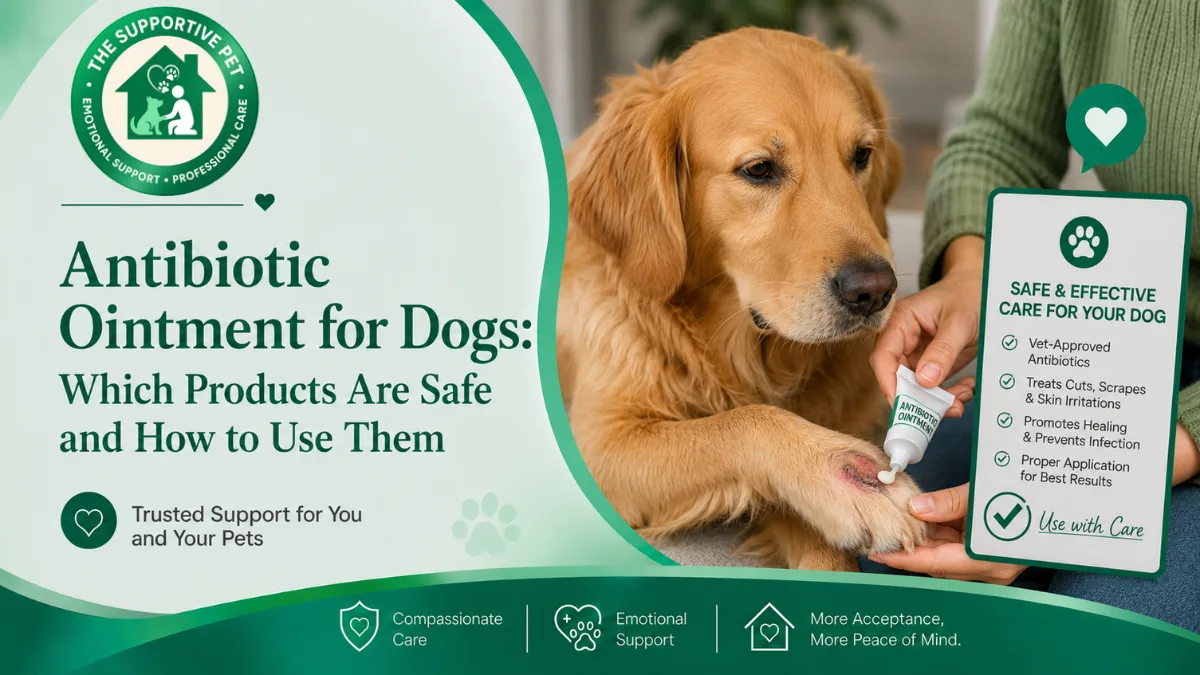
For wound care after a tick bite, see our guides on antibiotic ointment for dogs and how to bandage a dog wound.
Before removal:
- Part the fur to fully expose the tick and the bite site
- Note the tick's appearance (color, size, whether it is engorged) - this can help identify the species
- Gather your removal tools before you start
How to Safely Remove a Tick from Your Dog
The correct removal technique matters. Improper removal can cause the tick to regurgitate into the wound, increasing disease transmission risk.
What to use: Fine-tipped tweezers or a purpose-made tick removal tool (tick key, tick twister). These are available at most pet stores.
Step-by-step removal:
- Grasp the tick as close to your dog's skin surface as possible
- Pull upward with steady, even pressure - no twisting, jerking, or squeezing
- Once removed, clean the bite site with rubbing alcohol or soap and water
- Dispose of the tick in alcohol, a sealed bag, or by flushing - do not crush it with your fingers
- Consider saving the tick in a sealed container in case your vet needs to identify it later
What not to do: Do not use petroleum jelly, nail polish, match flames, or other "suffocation" methods. These cause the tick to regurgitate saliva and can increase disease transmission risk.
Tick-Borne Diseases That Affect Dogs
The US is home to several tick species that can transmit diseases to dogs:
- Lyme disease (Borrelia burgdorferi): Transmitted by deer ticks (black-legged ticks). Most common in the northeastern US and upper Midwest. Can cause fever, joint pain, limping, and kidney disease in chronic cases.
- Rocky Mountain spotted fever (Rickettsia rickettsii): Transmitted by American dog ticks and Rocky Mountain wood ticks. Can be severe and potentially life-threatening if untreated.
- Ehrlichiosis: Transmitted by the lone star tick and brown dog tick. Causes fever, lethargy, and blood cell abnormalities.
- Anaplasmosis: Transmitted by deer ticks. Symptoms overlap with Lyme disease.
- Babesiosis: Transmitted by brown dog ticks. Destroys red blood cells and can cause anemia.
Symptoms of Tick-Borne Illness in Dogs
Symptoms can appear days to months after a tick bite and vary by disease:
- Fever (your dog's normal temperature is 101–102.5°F)
- Lethargy or unusual tiredness
- Loss of appetite
- Limping or joint swelling
- Swollen lymph nodes
- Vomiting or diarrhea
- Difficulty breathing (in severe cases)
- Pale gums (indicating anemia)
- Neurological signs such as incoordination or seizures (in severe cases)
When to Call the Vet
Contact your veterinarian if:
- You cannot fully remove the tick or the head remains embedded
- The bite site becomes red, swollen, or develops a bull's-eye pattern
- Your dog develops any of the symptoms above in the weeks following the bite
- The tick appeared engorged (indicating prolonged attachment)
- Your dog is a puppy, senior, or has underlying health conditions
Your vet can run blood panels to screen for tick-borne diseases (often included in annual heartworm tests as the 4Dx panel) and prescribe antibiotics like doxycycline if infection is confirmed.
Preventing Tick Bites in Dogs
Prevention is far easier than treatment. Effective prevention includes:
- Monthly tick prevention products (oral, topical, or collar-based) - speak to your vet about which is appropriate for your dog's lifestyle and region
- Checking your dog thoroughly after every outdoor excursion, particularly through wooded or grassy areas
- Keeping grass short in your yard
- Lyme disease vaccination (available and recommended in high-risk areas)
Your dog's wellbeing directly affects your own mental health. If the stress of managing your pet's health is affecting you, and you have a mental health condition, your pet may qualify as an emotional support animal - learn how an ESA letter from The Supportive Pet can protect your housing rights.
Tick Season by Region: When to Be Most Vigilant
Northeast and Upper Midwest: Spring Through Fall
The black-legged tick (deer tick), which transmits Lyme disease, is most active in the Northeast and Upper Midwest from April through November, with peak activity in spring and fall when temperatures are moderate. Dogs in wooded or tall-grass areas of New England, New York, Pennsylvania, Minnesota, Wisconsin, and Michigan face the highest Lyme disease exposure risk. Year-round tick prevention medication is recommended for dogs in high-risk areas.
South and Southeast: Year-Round Risk
In warmer southern states including Texas, Florida, Georgia, and the Carolinas, ticks remain active year-round. The American dog tick and the lone star tick are the primary species in the South, transmitting Rocky Mountain spotted fever and ehrlichiosis. Dogs in the South that spend any time outdoors should be on year-round tick prevention medication and checked after every outdoor activity.
Tick Prevention: What Actually Works
Oral tick prevention medications (Bravecto, Nexgard, Simparica) are generally considered more effective than topical treatments because they work systemically - the tick must bite and begin feeding before being killed. Topical treatments (Frontline, Advantix) work on contact but can wash off and lose effectiveness. Tick collars (Seresto) provide effective environmental protection. The best approach depends on your dog's lifestyle, health history, and your vet's recommendation - consult your veterinarian for the right prevention protocol for your area and your dog's risk level.
Dogs that spend time in tick-endemic areas should also receive regular tick checks immediately after outdoor activities - before they come back indoors. Run your fingers through your dog's coat along the neck, ears, armpits, groin, between toes, and around the tail where ticks prefer to attach. Finding and removing ticks within 24-36 hours significantly reduces disease transmission risk, since most tick-borne pathogens require sustained attachment time to transfer to the host.
Frequently Asked Questions
What happens if a tick bites my dog?
A tick bite itself is usually not immediately dangerous, but ticks can transmit diseases including Lyme disease, Rocky Mountain spotted fever, ehrlichiosis, anaplasmosis, and babesiosis. The risk of disease transmission increases the longer the tick remains attached. Remove the tick as soon as possible and monitor your dog for illness symptoms over the following weeks.
How do I remove a tick from my dog?
Use fine-tipped tweezers or a tick removal tool. Grasp the tick as close to the skin surface as possible and pull upward with steady, even pressure - do not twist or jerk. Avoid squeezing the tick's body. After removal, clean the bite area with rubbing alcohol or soap and water. Do not use petroleum jelly, match flames, or nail polish to remove ticks.
What are symptoms of tick-borne illness in dogs?
Signs of tick-borne illness in dogs include fever, lethargy, loss of appetite, joint pain or limping, swollen lymph nodes, vomiting, and in some cases neurological symptoms. Symptoms may appear days to weeks after the tick bite. Not all dogs exposed to tick-borne diseases develop symptoms immediately - some conditions like Lyme disease may not show signs for months.
How long after a tick bite will a dog show symptoms?
The incubation period varies by disease. Lyme disease symptoms typically appear 2–5 months after infection. Rocky Mountain spotted fever symptoms may appear within 2–14 days. Ehrlichiosis can take 1–3 weeks. Because the window is wide, it is important to monitor your dog for weeks after finding and removing a tick.
Should I take my dog to the vet after a tick bite?
For a single tick that was promptly removed from a healthy dog, an immediate vet visit is not always necessary. However, you should call your vet if you cannot fully remove the tick, if your dog develops any symptoms in the following weeks, if the tick was engorged (indicating it was attached for an extended time), or if your dog is very young, elderly, or immunocompromised.
See our articles highlighted in Google Search
Add The Supportive Pet as a preferred source - your results, your way.