
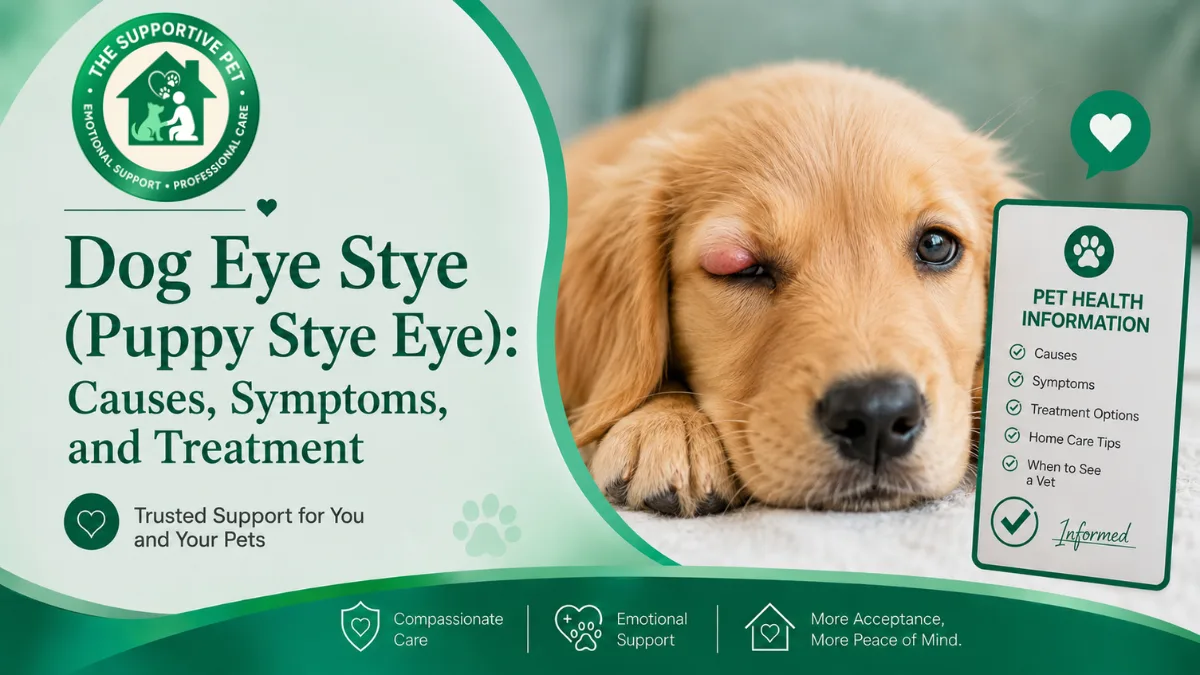
Do dogs get styes in their eyes?
Yes, dogs can get styes (also called hordeolum) on their eyelids. A dog eye stye is a localized bacterial infection of a hair follicle or oil gland on the eyelid margin. They appear as a red, swollen lump on or near the eyelid edge. Styes are more common in puppies but can affect dogs of any age.
Medical Disclaimer: This article is for informational purposes only and does not constitute medical or legal advice. Consult a qualified mental health professional before making decisions about your care. If you or someone you know is in crisis, call or text 988 (Suicide & Crisis Lifeline, available 24/7).
A stye (hordeolum) in a dog's eye is a bacterial infection of the eyelid's oil glands or hair follicles that appears as a red, swollen, pimple-like bump on or near the eyelid margin. While styes are generally not serious, they are uncomfortable for your dog and can occasionally develop into more significant eyelid infections if left untreated. This guide explains what dog eye styes look like, how they differ from other eyelid conditions, and when home treatment is appropriate versus when you need veterinary care.
What Is a Dog Eye Stye?
A stye (medically called a hordeolum) is a localized bacterial infection of an eyelid gland or hair follicle. In dogs, styes appear as a red, raised, pimple-like bump on or near the edge of the eyelid. The bump may be firm or soft, and the area around it is often swollen and tender.
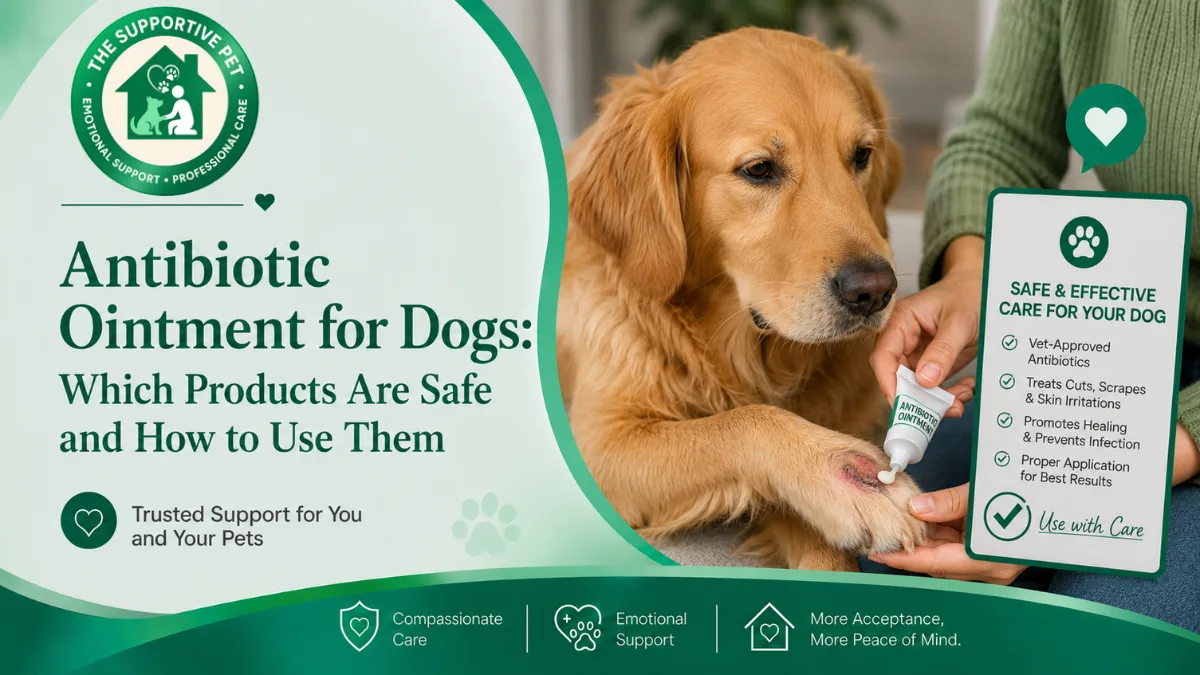
For general dog wound care, see our guides on antibiotic ointment for dogs and dog scabs and skin healing.
Most styes in dogs involve the meibomian glands - small oil-producing glands that line the inner eyelid margin and help keep the eye lubricated. When a meibomian gland becomes blocked and infected, the result is a stye or a chalazion (a non-infected blocked gland).
Stye vs. Chalazion vs. Other Eyelid Lumps in Dogs
Not every bump on a dog's eyelid is a stye. Understanding the differences helps guide the right response:
- Stye (hordeolum): Bacterial infection of an eyelid gland or follicle. Appears red, inflamed, and may be painful to the touch. Often has a visible "head" like a pimple.
- Chalazion: A blocked meibomian gland without active infection. Usually less painful, firmer, and slower-developing than a stye. May feel like a small, hard lump under the eyelid skin.
- Meibomian gland adenoma: A benign tumor of the meibomian gland. More common in older dogs. Appears as a firm, often cauliflower-textured lump on the eyelid. Not infectious but may require surgical removal if it rubs on the eye surface.
- Eyelid papilloma (wart): Viral growths more common in puppies and immunocompromised dogs. Usually multiple, rough-textured, and whitish.
A vet can distinguish between these conditions with a physical examination. The distinction matters because treatment differs significantly.
Causes of Eye Styes in Dogs
Dog eye styes are caused by bacteria - most commonly Staphylococcus species - infecting a blocked eyelid gland or hair follicle. Contributing factors include:
- Immature immune system: Puppies are most susceptible because their immune defenses against localized bacterial infections are still developing
- Eyelid trauma: Scratching or rubbing the eye creates entry points for bacteria
- Skin allergies: Allergic inflammation of the eyelid skin can predispose to gland blockage and infection
- Poor eyelid hygiene: Accumulation of discharge around the eyelids can harbor bacteria
- Immune suppression: Dogs on long-term steroids or with immunosuppressive conditions may be more susceptible
Symptoms of a Stye in a Dog's Eye
Signs that your dog has a stye include:
- A raised red or pink bump on the eyelid margin or eyelid surface
- Swelling around the bump or entire eyelid
- Your dog rubbing or pawing at the eye
- Increased tearing or watery discharge from the affected eye
- Squinting or holding the eye partially closed
- Visible discomfort when the eyelid area is touched
Home Treatment for Dog Eye Styes
Warm compresses are the cornerstone of home management for a mild dog stye:
- Soak a clean, soft cloth in comfortably warm water
- Wring it out so it is damp, not dripping
- Gently hold the compress against the closed eyelid for 5–10 minutes
- Repeat 3–4 times daily
The warmth helps soften the blocked gland content and promotes natural drainage. This is the same approach used for human styes.
Important: Never squeeze, pop, or lance a stye at home. Breaking the skin barrier can spread bacteria into deeper tissues or into the eye itself.
Keep the area clean by gently wiping away any discharge with a damp cotton pad, wiping from the inner corner of the eye outward.
Veterinary Treatment Options
If home treatment is not sufficient, your vet has several options:
- Topical antibiotic eye ointment or drops: Usually the first veterinary treatment. Common options include neomycin-polymyxin-bacitracin ophthalmic ointment or terramycin.
- Oral antibiotics: For more severe or spreading infections
- Lancing and drainage: For styes that have not resolved with conservative treatment, your vet may perform a minor procedure to open and drain the gland
- Chalazion removal: Non-resolving chalazions may need to be surgically excised
When to See a Vet Immediately
Go to a vet promptly if:
- The eyelid swelling is rapid and severe
- The entire eyelid appears infected or very warm to the touch
- There is green or yellow discharge from the eye
- The eye itself appears cloudy, red, or irritated
- Your dog seems to be in significant pain or is unable to open the eye
- It is a puppy - veterinary care is preferable to home management in young dogs
Eye conditions can escalate quickly in dogs because rubbing and scratching can introduce additional bacteria or damage the eye surface. When in doubt, have a vet evaluate any eye change in your dog.
Your pet's health and your own mental wellbeing are connected. If you rely emotionally on your pet for support, learn how an ESA letter can protect your housing rights.
Eye Health Monitoring for Dogs
Routine Eye Checks for Dogs
Catching eye problems early - whether styes, conjunctivitis, entropion, or other conditions - requires regular observation. During your dog's daily routine, take a moment to look at both eyes: they should be clear and bright, with minimal discharge, no obvious swelling or redness of the eyelids, and pupils of equal size. Any persistent cloudiness, heavy discharge, squinting, or pawing at the eye warrants veterinary evaluation. For breeds prone to eye problems (Shih Tzus, Bulldogs, Pugs, Cocker Spaniels), more frequent checks are recommended.
Breeds Prone to Eyelid Problems
Brachycephalic breeds (dogs with pushed-in faces) including Bulldogs, French Bulldogs, Pugs, Boston Terriers, and Shih Tzus have shallow eye sockets and prominent eyes that make them especially vulnerable to corneal injuries and eyelid problems including styes, entropion (inward-rolling eyelids), and ectropion (outward-rolling eyelids). Cocker Spaniels are also prone to eyelid cysts and stye-like conditions due to their dense eyelid anatomy. If you have a brachycephalic breed, discuss routine eye health monitoring with your veterinarian at annual exams.
Distinguishing a Stye from More Serious Conditions
The conditions most commonly confused with styes in dogs are: chalazions (blocked oil glands without active infection - slower to form, less tender), eyelid cysts (fluid-filled, often not inflamed), eyelid tumors (firm, slow-growing, may not be tender), and papillomas (viral warts that can appear on eyelids). The key difference: a stye comes on relatively quickly (1-3 days), is red and warm to the touch, and may have a visible white or yellowish center. Growths that develop slowly over weeks, are firm, or grow without signs of infection are more likely to be cysts or tumors requiring biopsy. When in doubt, have a veterinarian evaluate any new eyelid growth.
Frequently Asked Questions
Do dogs get styes in their eyes?
Yes, dogs can get styes (also called hordeolum) on their eyelids. A dog eye stye is a localized bacterial infection of a hair follicle or oil gland on the eyelid margin. They appear as a red, swollen lump on or near the eyelid edge. Styes are more common in puppies but can affect dogs of any age.
What causes a stye in a dog's eye?
Dog eye styes are typically caused by a bacterial infection - most commonly Staphylococcus - of an eyelid hair follicle or meibomian gland. In puppies, styes often occur because the immune system is still developing and less effective at preventing localized infections. Rubbing the eyes, skin allergies, and eyelid trauma can also increase the risk of stye development.
How do I treat my dog's eye stye at home?
Warm compresses are the primary home treatment for a dog eye stye. Soak a clean cloth in warm (not hot) water, wring it out, and gently hold it against the closed eyelid for 5–10 minutes, 3–4 times daily. This helps soften the blocked gland and encourages natural drainage. Do not squeeze or pop a stye - this can spread infection. If the stye does not improve within a few days, see a vet.
Should I see a vet for my dog's eye stye?
You should see a vet if the stye does not show improvement after 3–4 days of warm compresses, if it is getting larger or more painful, if your dog is pawing at the eye excessively, if there is significant eye discharge or cloudiness to the eye, or if your dog seems to be in obvious discomfort. A vet can prescribe antibiotic eye drops or ointment, which are typically more effective than home care alone.
Is a puppy eye stye dangerous?
A stye itself is not immediately dangerous, but puppies are more vulnerable to infection spread because their immune systems are less mature. An untreated stye can occasionally progress to a more serious eyelid infection (called a preseptal or orbital cellulitis) or cause irritation to the eye surface. Prompt veterinary care for puppies with eye styes is generally recommended rather than relying solely on home treatment.
See our articles highlighted in Google Search
Add The Supportive Pet as a preferred source - your results, your way.