

What causes scabs on dogs?
Common causes of scabs on dogs include flea allergy dermatitis (the most common cause), environmental allergies (atopic dermatitis), hot spots (pyotraumatic dermatitis), bacterial skin infections (pyoderma), mange (sarcoptic or demodectic), ringworm (fungal infection), seborrhea, and self-inflicted wounds from excessive scratching. Identifying the underlying cause is important because each requires a different treatment approach.
Medical Disclaimer: This article is for informational purposes only and does not constitute medical or legal advice. Consult a qualified mental health professional before making decisions about your care. If you or someone you know is in crisis, call or text 988 (Suicide & Crisis Lifeline, available 24/7).
Dog scabs can appear anywhere on the body and have dozens of potential causes - from minor scratches and insect bites to allergic reactions, bacterial infections, and fungal conditions. Understanding why your dog has scabs and whether they need veterinary treatment requires examining where the scabs are, how they appeared, and what other symptoms your dog has. This guide covers the most common causes of dog scabs, when home treatment is sufficient, and when scabs signal something that needs a vet.
Why Dogs Get Scabs
A scab is the dried crust that forms over a wound, scratch, or irritated area of skin as part of the healing process. In dogs, scabs form for many of the same reasons as in humans - skin injury, infection, and inflammation all trigger the clotting and crusting process.
Related guides: bandages for dogs, antibiotic ointment, and dog paw blisters.
The challenge with dog scabs is that dogs often make them worse by scratching, licking, or biting at the itchy skin, which disrupts healing and invites bacterial infection. This creates a cycle of irritation → scratching → scabbing → more scratching that can be difficult to break without addressing the root cause.
Common Causes of Scabs on Dogs
Flea Bites and Flea Allergy Dermatitis
The single most common cause of scabs on dogs. Dogs with flea allergy dermatitis (FAD) react intensely to flea saliva - just one or two bites can trigger widespread itching and scabbing that appears days after the bite. Scabs from FAD are often concentrated on the lower back, base of the tail, inner thighs, and abdomen. You may not see fleas on your dog even when FAD is the cause - the flea can bite and leave before you notice.
Treatment requires consistent flea prevention, not just treating the current outbreak.
Environmental Allergies (Atopic Dermatitis)
Dogs can be allergic to pollen, mold, dust mites, and other environmental allergens. Atopic dermatitis causes itching concentrated on the paws (dogs lick their feet), belly, armpits, and around the eyes and muzzle. Repeated scratching and licking leads to skin trauma, secondary bacterial infection, and scabbing. Atopic dermatitis is often seasonal but can be year-round depending on the allergen.
Hot Spots (Pyotraumatic Dermatitis)
Hot spots are areas of acute, moist skin inflammation that develop rapidly - sometimes within hours. They typically start from a minor irritation (flea bite, matted fur, minor wound) that the dog then scratches, licks, or bites obsessively. Hot spots appear as red, weeping, often smelly sores that may have hair loss around them. Scabbing forms at the edges and as the lesion begins to dry. Common in dogs with thick or double coats.
Mange
Two types of mange affect dogs:
- Sarcoptic mange (scabies): Caused by the Sarcoptes scabiei mite. Extremely itchy, with scabs concentrated on the ears, elbows, hocks, and abdomen. Highly contagious to other dogs and can temporarily affect humans.
- Demodectic mange: Caused by Demodex mites, which are normally present in small numbers on all dogs. Becomes problematic in dogs with weakened immune systems. Causes patchy hair loss and scabbing, often less itchy than sarcoptic mange.
Bacterial Skin Infections (Pyoderma)
Bacterial skin infections often occur secondary to another skin problem - allergies or mange that disrupts the skin barrier allow bacteria (most commonly Staphylococcus pseudintermedius) to proliferate. Pyoderma causes pustules, redness, crusting, and scabs. Superficial pyoderma responds to topical and oral antibiotics. Deep pyoderma may require 4–6 weeks of treatment.
Ringworm
Despite the name, ringworm is a fungal infection (not a worm). It causes circular areas of hair loss with scaly, scabby borders. It is contagious to other animals and to humans. Requires antifungal treatment - antibiotics are ineffective against fungal infections.
Itchy Scabs on Dogs: Why the Scratching Matters
The degree of itchiness is an important clue to the cause:
- Intensely itchy scabs: Suggest flea allergy, sarcoptic mange, or contact allergy
- Moderately itchy scabs: Suggest environmental allergies, bacterial infection, or hot spots
- Minimally itchy scabs: May indicate demodectic mange, ringworm, or healing from a minor wound
If your dog is scratching intensely, preventing that scratching (with an e-collar) is essential to allow the skin to heal - but you also need to address the underlying itch cause or the cycle continues.
How to Treat Dog Scabs at Home
For minor, isolated scabs from obvious causes:
- Gently clean the area with mild soap and water or diluted chlorhexidine solution
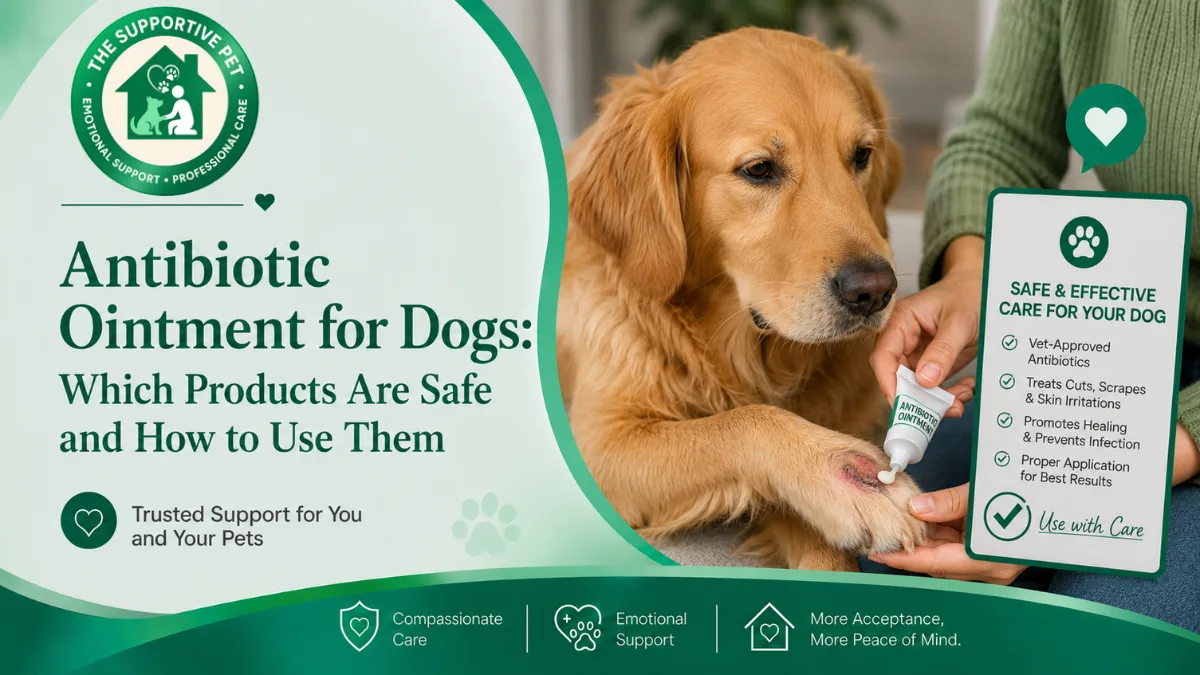
- Pat dry and apply a thin layer of antibiotic ointment if the scab appears infected (red, swollen, or has discharge)
- Use an e-collar to prevent scratching or licking
- Ensure your dog is on current flea prevention
- Monitor daily for improvement
For widespread, recurring, or intensely itchy scabs - do not attempt to treat at home without a diagnosis. Treating the wrong cause wastes time and money and allows the underlying problem to progress.
When to See a Vet for Dog Scabs
Veterinary evaluation is warranted when:
- Scabs are widespread or spreading rapidly
- There is significant hair loss in the affected areas
- Your dog is scratching or licking intensely and cannot stop
- Scabs recur despite appropriate home treatment
- There is discharge, odor, or thickening of the affected skin
- Your dog seems uncomfortable or is losing sleep from itching
- The scabs appear on the ear margins, elbows, or hocks (classic sarcoptic mange locations)
Your vet can diagnose the underlying cause through skin cytology, fungal culture, skin scraping for mites, or allergy testing - and prescribe appropriate treatment rather than guessing.
Caring for a dog with skin problems can be stressful. If your pet provides meaningful emotional support for a mental health condition, they may qualify as an emotional support animal - learn how The Supportive Pet can help you get the documentation you need.
Nutritional and Environmental Causes of Dog Scabs
Food Allergies and Skin Scabs
Food allergies are one of the most common causes of chronic, recurring skin problems in dogs - including scabs from persistent scratching, hot spots, and secondary bacterial infections. The most common food allergens in dogs are beef, dairy, chicken, wheat, and soy. Food allergy skin problems typically appear on the paws, ears, belly, and around the face. If your dog has recurring scabs without a clear external cause, discuss an elimination diet trial with your veterinarian - this is the gold standard for diagnosing food allergies. Novel protein diets (rabbit, venison, duck) fed for 8-12 weeks can help identify whether food is the trigger.
Environmental Allergens and Seasonal Scabs
Dogs, like humans, can develop allergies to environmental allergens including pollen, mold, dust mites, and grass. Environmental allergies (atopy) typically cause intense itching that leads to scratching, licking, and eventually scabs - particularly on the paws, belly, armpits, and face. If your dog's scabs appear or worsen during specific seasons (spring and fall pollen peaks, or in humid summer months), environmental allergy is a likely contributor. Veterinary treatment options include antihistamines, Apoquel, Cytopoint, and in severe cases, allergen immunotherapy.
When Scabs Are a Parasite Problem
Mange (sarcoptic or demodectic) and ringworm (a fungal infection despite its name) can both cause scabbing in dogs. Sarcoptic mange causes intense itching and scabs particularly on the ears, elbows, and belly; it is highly contagious to other dogs and can temporarily affect humans. Demodectic mange typically causes patchy hair loss and scabs, often starting around the face, and is not contagious. Ringworm causes circular, scaly patches and is contagious to humans and other pets. If you suspect mange or ringworm, veterinary diagnosis is essential - these conditions require specific treatments and proper identification before treatment can begin.
Frequently Asked Questions
What causes scabs on dogs?
Common causes of scabs on dogs include flea allergy dermatitis (the most common cause), environmental allergies (atopic dermatitis), hot spots (pyotraumatic dermatitis), bacterial skin infections (pyoderma), mange (sarcoptic or demodectic), ringworm (fungal infection), seborrhea, and self-inflicted wounds from excessive scratching. Identifying the underlying cause is important because each requires a different treatment approach.
How do I treat scabs on my dog at home?
For minor scabs from known causes (like a single bug bite or small scratch), you can gently clean the area with mild soap and water, apply a thin layer of antibiotic ointment if there are signs of infection, and prevent your dog from scratching with an e-collar. For recurring or widespread scabs, home treatment without knowing the cause is not advisable - see a vet to identify the underlying problem before treating.
Why does my dog have itchy scabs?
Itchy scabs are most commonly caused by flea allergy dermatitis, environmental allergies, or mange. Flea allergy is the most common cause - even one flea bite can trigger intense itching in allergic dogs. Sarcoptic mange (scabies) causes extreme itchiness with scabs concentrated on ears, elbows, and the abdomen. Environmental allergies cause itching that tends to be seasonal and concentrated on the paws, belly, and face.
Are scabs on dogs serious?
Scabs can range from minor (healing from a small scratch) to serious (deep skin infection, mange, autoimmune disease). The concerning signs are: scabs that are widespread, rapidly spreading, very itchy, accompanied by hair loss, involve skin thickening or darkening, or that recur despite treatment. These warrant veterinary evaluation. A single small scab on a dog with no other symptoms is usually not serious.
How long do scabs take to heal on a dog?
Simple scabs from minor wounds typically resolve in 1–2 weeks. Scabs from underlying conditions (allergies, infections, mange) will not fully resolve until the underlying cause is treated. Bacterial skin infections may require 3–6 weeks of antibiotic treatment. Allergies require ongoing management, not just short-term treatment. If scabs are not improving after 1–2 weeks of appropriate care, see a vet.
See our articles highlighted in Google Search
Add The Supportive Pet as a preferred source - your results, your way.