

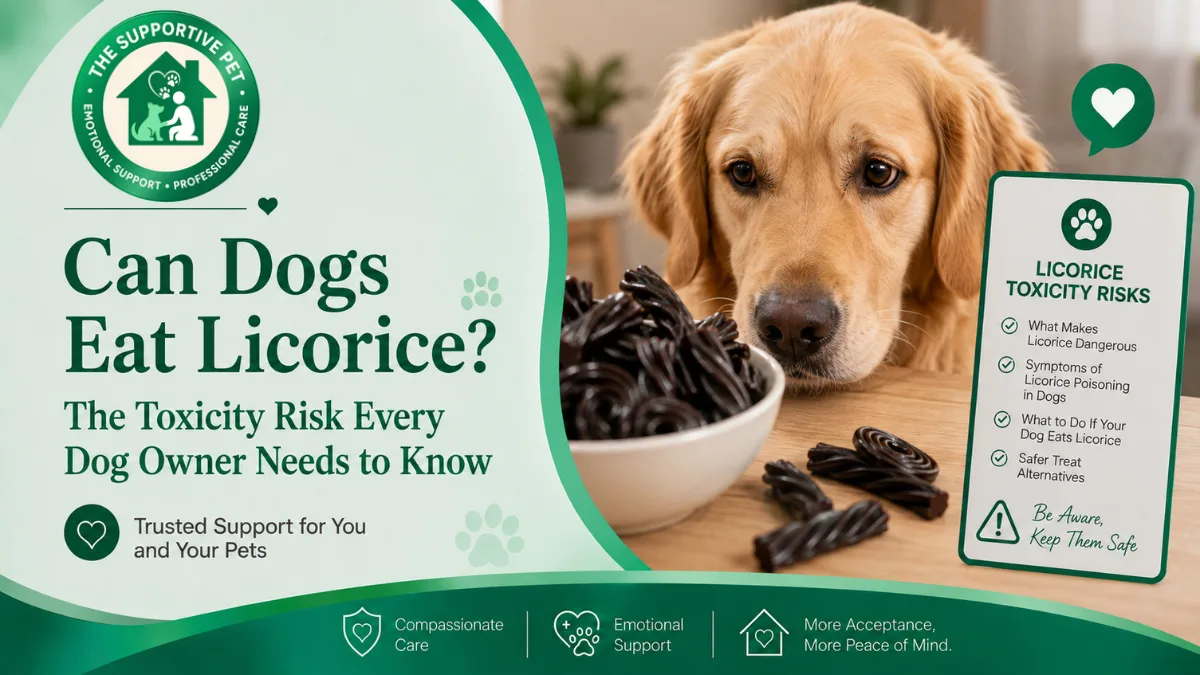
Can dogs eat licorice?
No. Dogs should not eat licorice, especially black licorice made with real licorice root extract. Licorice contains glycyrrhizin, a compound that can cause serious health problems in dogs including electrolyte imbalances, elevated blood pressure, muscle weakness, and in severe cases heart or kidney complications. Even in small amounts, licorice is not a safe treat for dogs.
Medical Disclaimer: This article is for informational purposes only and does not constitute medical or legal advice. Consult a qualified mental health professional before making decisions about your care. If you or someone you know is in crisis, call or text 988 (Suicide & Crisis Lifeline, available 24/7).
No - dogs should not eat licorice. Black licorice contains glycyrrhizin (from licorice root extract), which is toxic to dogs and can cause serious health problems including electrolyte imbalances, elevated blood pressure, muscle weakness, and vomiting. Even small amounts of real black licorice can cause problems in small dogs, and large amounts can be dangerous for dogs of any size. Red licorice is typically less dangerous (it usually doesn't contain real licorice extract) but is still loaded with sugar and artificial ingredients that aren't good for dogs. Here's what you need to know if your dog has eaten licorice.
Is Licorice Safe for Dogs?
No - licorice is not safe for dogs. Real black licorice, made with licorice root extract (Glycyrrhiza glabra), contains a compound called glycyrrhizin that is toxic to dogs. Licorice should not be given to dogs intentionally, and accidental ingestion should be taken seriously.
For other dog safety topics, see tick bites and dogs and bandages for dogs.
This applies to:
- Black licorice candy
- Licorice extract and licorice root supplements
- Licorice-flavored herbal teas and products
- Traditional European licorice (which often has higher glycyrrhizin content than American licorice candy)
- Some herbal remedies and supplements that list licorice root as an ingredient
What Makes Black Licorice Dangerous for Dogs
The active toxic component in licorice is glycyrrhizin - a naturally occurring compound found in the licorice plant root. Glycyrrhizin has potent effects on hormone regulation, specifically mimicking aldosterone, a hormone that controls sodium and potassium balance in the body.
In dogs, glycyrrhizin causes a condition called pseudohyperaldosteronism, which leads to:
- Sodium retention (the body holds on to too much salt)
- Potassium loss (critical electrolyte drops dangerously low)
- Elevated blood pressure
- Fluid retention and swelling
- Muscle weakness from low potassium (hypokalemia)
- In severe cases: heart arrhythmias and kidney strain
Dogs are more vulnerable to these effects than humans because their bodies metabolize glycyrrhizin differently and at lower thresholds for toxicity relative to body weight.
How Much Licorice Is Dangerous for a Dog?
There is no established safe dose of licorice for dogs. Toxicity depends on:
- The amount consumed relative to body weight
- The glycyrrhizin concentration of the specific product (traditional European licorice often contains much more than American candy)
- Whether exposure was a one-time event or repeated
- Your dog's individual health status
Small dogs face greater risk from smaller amounts. A single small piece of licorice candy is unlikely to cause severe toxicity in a large dog, but a small dog who eats several pieces, or any dog who consumes licorice extract or concentrated products, is at meaningful risk.
Symptoms of Licorice Toxicity in Dogs
Signs to watch for after your dog eats licorice:
- Vomiting or diarrhea
- Lethargy or unusual tiredness
- Muscle weakness (difficulty standing, trembling)
- Increased thirst and urination
- Abdominal bloating
- Rapid or irregular heartbeat
Symptoms of electrolyte imbalance (low potassium, high sodium) may not appear immediately - they can develop over hours. Do not wait for symptoms to worsen before contacting a vet.
Safe Alternatives to Licorice for Dogs
If your dog has developed a taste for sweet treats, there are far safer options:
- Blueberries (antioxidants, low sugar)
- Watermelon (seedless, no rind)
- Apple slices (no seeds or core)
- Carrots (great for dental health)
- Commercial dog treats formulated for safety
What About Red Licorice? Is It Safer for Dogs?
Red licorice (such as Twizzlers) is not made with licorice root extract - it is typically flavored with artificial strawberry or cherry flavoring. This means red licorice does not contain glycyrrhizin, making it significantly safer than black licorice. However, red licorice still poses real risks to dogs:
- High sugar content: Red licorice is largely sugar and corn syrup, which can cause digestive upset, vomiting, and diarrhea even in small amounts.
- Xylitol risk: Some red licorice products contain xylitol, which is extremely toxic to dogs - even small amounts can cause dangerous hypoglycemia and liver failure. Always check the ingredient label before deciding red licorice is safe.
- Wheat flour: Standard red licorice contains wheat. Dogs with gluten sensitivity may have digestive reactions.
Bottom line: red licorice without xylitol is unlikely to cause serious toxicity in very small amounts, but it offers no nutritional benefit and should not be given intentionally.
What to Do If Your Dog Eats Licorice
If your dog ate black licorice or any licorice supplement, take these steps immediately:
- Note the product and quantity. Check the label for glycyrrhizin concentration and xylitol. Xylitol in any amount makes it a veterinary emergency regardless of the quantity eaten.
- Call your vet or ASPCA Animal Poison Control (888-426-4435). Provide the product name, estimated quantity, and your dog's weight. Poison control charges a consultation fee but is available 24/7.
- Monitor for symptoms: Lethargy, weakness, vomiting, increased thirst or urination, swelling, and muscle weakness all warrant immediate veterinary evaluation.
- Do not induce vomiting without guidance. Inducing vomiting is only appropriate in specific circumstances and within a short window after ingestion - always confirm with a vet first.
If your dog's companionship and wellbeing are important to your mental health, The Supportive Pet can help you get an ESA letter to protect your housing rights. Get an ESA letter from The Supportive Pet.
Other Common Foods That Are Toxic to Dogs
Xylitol: The Hidden Danger in Sugar-Free Products
Xylitol is an artificial sweetener found in sugar-free gum, candy, peanut butter, yogurt, and some baked goods. It causes a rapid insulin release in dogs that can lead to dangerous hypoglycemia within 30-60 minutes of ingestion. Even small amounts (a few sticks of xylitol-containing gum) can be lethal to a small dog. Xylitol toxicity is a veterinary emergency - if your dog has eaten any product containing xylitol, call your vet or pet poison control immediately without waiting for symptoms.
Grapes and Raisins: Unpredictable Toxicity
Grapes and raisins can cause acute kidney failure in dogs, and the toxic threshold is not well established - some dogs have eaten large amounts with no apparent effect while others have developed kidney failure after a small amount. Because the risk is unpredictable and kidney failure is life-threatening, veterinarians recommend treating any grape or raisin ingestion as a potential emergency. Do not give your dog grapes or raisins under any circumstances, and be aware that they are sometimes hidden in baked goods and trail mixes.
Making Your Home Safe for Your Dog
The most effective way to prevent food toxicity in dogs is to make potentially toxic foods inaccessible. Keep human food off low counters and tables, use trash cans with secure lids, store candy and gum in closed drawers or cabinets, and brief all household members and visitors on which foods dogs cannot have. Dogs are persistent foragers - if a toxic food is within reach, many dogs will find it. Prevention is far less stressful than a toxicity emergency.
Frequently Asked Questions
Can dogs eat licorice?
No. Dogs should not eat licorice, especially black licorice made with real licorice root extract. Licorice contains glycyrrhizin, a compound that can cause serious health problems in dogs including electrolyte imbalances, elevated blood pressure, muscle weakness, and in severe cases heart or kidney complications. Even in small amounts, licorice is not a safe treat for dogs.
Why is licorice bad for dogs?
Licorice root extract contains glycyrrhizin, which can cause pseudohyperaldosteronism - a condition where the body retains sodium and loses potassium. This leads to elevated blood pressure, fluid retention, electrolyte imbalances, and muscle weakness. Dogs' metabolisms are not equipped to process this compound safely, making licorice potentially toxic even in moderate amounts.
How much licorice is toxic to a dog?
There is no established safe amount of licorice for dogs. Even small quantities of real black licorice (made with licorice root extract) can cause problems, especially in smaller dogs or with repeated exposure. The concern is particularly high with concentrated licorice products like licorice-flavored supplements, throat drops, or traditional European licorice candies which have higher glycyrrhizin content.
What if my dog ate a piece of licorice?
If your dog ate a small piece of licorice candy, monitor them closely for symptoms including vomiting, lethargy, muscle weakness, increased urination, or unusual behavior. Contact your veterinarian or the ASPCA Animal Poison Control Center (888-426-4435) to report what your dog ate and get guidance on whether evaluation is needed. Bring the product packaging so the vet can assess the glycyrrhizin content.
Is red licorice safe for dogs?
Red licorice (like Twizzlers) typically does not contain actual licorice root extract - it is strawberry or artificial cherry flavored. However, it is still not a safe treat for dogs because it contains high amounts of sugar, artificial flavors, and other ingredients that can upset a dog's stomach and contribute to obesity and dental problems. It is not licorice-toxic in the same way as black licorice, but it should still be avoided.
See our articles highlighted in Google Search
Add The Supportive Pet as a preferred source - your results, your way.