
Does an emotional support dog need training?
No - not legally. The Fair Housing Act does not require emotional support animals to have any training. An ESA is defined by the therapeutic relationship it has with its owner, not by what it can do on command. That said, basic obedience training significantly improves your dog's behavior in housing situations, public settings, and veterinary visits, and makes the overall ESA experience better for both of you.
Medical Disclaimer: This article is for informational purposes only and does not constitute medical or legal advice. Consult a qualified mental health professional before making decisions about your care. If you or someone you know is in crisis, call or text 988 (Suicide & Crisis Lifeline, available 24/7).
What the Law Actually Says About ESA Training
The Fair Housing Act does not require emotional support animals to be trained. HUD guidance on assistance animals explicitly distinguishes between service animals (which are individually trained to perform tasks under the ADA) and emotional support animals (which provide support through their presence and do not need task training). For housing purposes, training is not a legal requirement for your ESA.
This is meaningfully different from trained service dogs under the ADA, where the task training itself defines the animal's legal status. An ESA's legal status flows from its owner's disability and the therapeutic nexus - not from what the animal can do on command.
That said, training your emotional support dog is one of the best investments you can make in the relationship - and in your ability to live with your animal in housing situations where behavior matters.
Why Training Matters for ESAs (Even If It's Not Required)
Consider the practical reality of living with an emotional support dog in a no-pet building or an apartment complex that made a reasonable accommodation for your ESA:
- Neighbor complaints: A dog that barks for hours when left alone, jumps on people in hallways, or growls at other tenants creates legitimate neighbor complaints that your ESA letter cannot resolve. Landlords can address behavioral problems even when they cannot reject the accommodation itself
- Building rules: Buildings can require that ESAs meet behavioral standards - the same standards they apply to all animals. A trained dog is far less likely to generate complaints
- Lease renewals: A well-behaved ESA makes lease renewals smoother. A dog with chronic behavior problems may make a landlord less willing to accommodate future requests
- Your own quality of life: A dog that pulls on the leash, doesn't come when called, or can't settle down is harder to care for regardless of their emotional support role
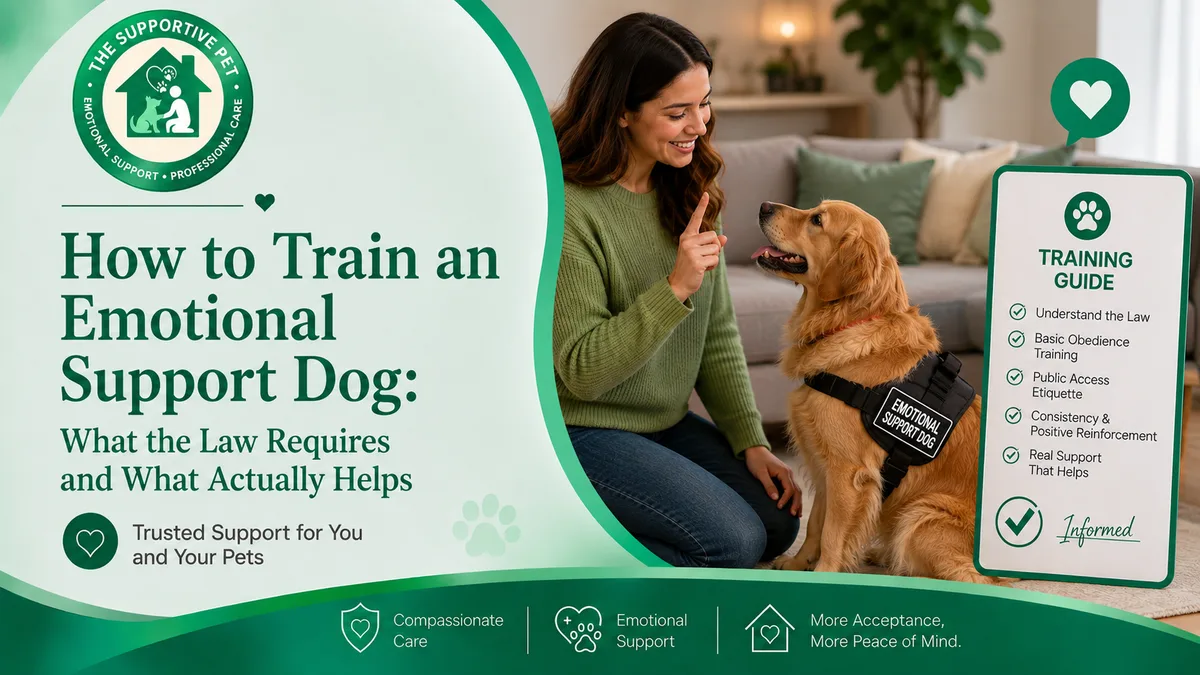
Foundation Training: The Five Behaviors Every ESA Dog Needs
These five behaviors form the foundation of a manageable, well-behaved emotional support dog:
- Sit: The most versatile control behavior. A dog who sits on cue can be managed at doorways, in hallways, during greetings, and at vet visits
- Down and Stay: The ability to settle in one place is essential for any dog in a housing context. Down-stay lets your dog remain calm while you manage daily activities without being underfoot or reactive
- Come (recall): A reliable recall is a safety skill. Every dog needs to come when called consistently, even with distractions
- Leave it: The ability to disengage from something on cue - food on the floor, approaching strangers, other dogs - prevents a wide range of problems
- Leash manners: A dog that walks without pulling is easier to exercise, less likely to cause incidents in building hallways, and more welcome in shared outdoor spaces
Training Specific to the ESA Relationship
Beyond basic obedience, some training specifically supports the therapeutic work your dog does. What this looks like depends on your condition and how your dog helps you. Common patterns:
For Anxiety and Panic Disorders
Some ESA owners benefit from dogs trained to:
- Come to them and make physical contact when they call or show physical signs of escalating anxiety
- Settle on a lap or press against the side of their owner's body (grounding contact) on a cue
- Maintain calm presence without demanding attention during episodes when the owner needs to focus
For Depression
ESAs for depression often serve motivational and routine-building roles. Training that supports this includes:
- Consistent morning alerting behavior that creates a reason to get out of bed
- Nudging or pawing behaviors that interrupt withdrawal or dissociation
- Settling calmly during low-energy periods without demanding play or attention
For PTSD and Trauma Responses
Some dogs naturally develop behaviors that help during trauma responses. Formalizing these through training makes them more reliable:
- Coming to physical contact during hypervigilance episodes
- Room-clearing - checking a space on cue - for owners who struggle with safety checking compulsions
- Creating a physical barrier in crowded spaces
Note: when these behaviors become consistently trained tasks that mitigate disability, your dog may actually be a psychiatric service dog rather than an ESA. See our guide on ESA vs. PSD letter differences if your dog performs specific trained tasks.
Training Methods That Work for ESAs
Positive reinforcement - rewarding the behaviors you want with treats, praise, or play - is the most effective and relationship-preserving training method for dogs that serve as ESAs. It builds trust, strengthens your bond, and produces reliable behaviors without the stress and anxiety that punishment-based methods can introduce.
Given that many ESA owners live with anxiety, depression, or trauma, a training approach that keeps both handler and dog calm and positively engaged is the right fit. Punishment-based training can increase stress responses in dogs and make them more reactive - the opposite of what an ESA relationship requires.
Training Resources
Options for ESA training support:
- Local trainers: A certified professional dog trainer (CPDT-KA or IAABC certified) can assess your dog's specific needs and build a training plan
- Group obedience classes: Good for socialization and foundation skills at low cost
- Online training programs: Multiple reputable online platforms offer structured positive reinforcement training courses
- Veterinary behavioral referral: For dogs with significant behavioral issues - reactivity, aggression, severe anxiety - a veterinary behaviorist (DACVB) can address the behavioral component directly
Getting Your ESA Letter
Training your dog does not affect your eligibility for an ESA letter - the letter is based on your mental health condition and therapeutic need, not your dog's training level. If you need a letter to establish your housing rights, the process starts with a clinical evaluation from a licensed mental health professional, not a dog training assessment.
Related: what is an ESA letter? · ESA vs PSD letter · owner-training a psychiatric service dog · psychiatric service dog tasks
Do ESA Dogs Need Training?
Under federal law, emotional support animals do not require any training. The FHA's reasonable accommodation provision applies based on your disability-related need for the animal, not based on the animal's training level. An untrained dog qualifies as an ESA as long as your licensed clinician has documented the therapeutic relationship and necessity.
However, practical living in housing with an untrained dog creates its own challenges — behavior problems can give landlords legitimate grounds to take action, and basic training makes your dog a better companion and a more reliable ESA. The question is not whether training is legally required, but whether it serves you and your dog.
Basic Training Every ESA Dog Benefits From
Essential Commands for Housing Success
- Sit: Foundation of impulse control — useful for calm greetings, entry procedures, and keeping the dog out of trouble
- Down: Important for quiet settling during longer periods, particularly in smaller apartments
- Stay: Helps the dog remain calm when you need to manage doors, guests, or maintenance visits
- Come (recall): Critical safety command — reliable recall prevents the dog from running into hallways, parking lots, or other hazardous spaces
- Leave it: Prevents the dog from picking up hazardous objects in the environment, including dropped medications, food, or debris
- Quiet: Reduces nuisance barking, which is the most common ESA-related tenant complaint
Task Training for Greater Therapeutic Effect
While ESA status requires no task training, teaching your dog behaviors that specifically address your mental health symptoms can increase therapeutic effectiveness and, if you later pursue psychiatric service dog (PSD) designation, can qualify your dog for broader ADA protections.
Anxiety-Related Tasks
- Deep pressure therapy: Teaching the dog to rest their head on your lap or apply weight to your chest or legs on a verbal or tactile cue — particularly effective during panic attacks or anxiety spikes
- Interrupt repetitive behaviors: Trained response to touch or redirect when you engage in anxiety-driven behaviors like skin picking, rocking, or pacing
- Check-in behavior: Training the dog to periodically touch you with their nose or paw during work or focus periods, helping to ground you if you dissociate
Depression-Related Tasks
- Wake up/get out of bed alert: Training the dog to actively seek you out and engage at a scheduled morning time, countering the inertia of depressive mornings
- Reminder behaviors: Dogs can be trained to signal at medication or meal times
Training Resources for ESA Dog Owners
In-Person Options
- Group obedience classes (6–8 weeks, $100–$200): Foundation manners for ESA dogs
- Private trainers (force-free or positive reinforcement methods preferred): More individualized, useful if your dog has specific behavior issues
- AKC Canine Good Citizen (CGC) program: A nationally recognized certification that demonstrates your dog's manners — useful if a landlord questions your dog's behavior
At-Home Options
- Online training platforms (various price points) offer structured curricula you can work through at home
- YouTube channels by certified trainers provide free instruction on foundation behaviors
- Training sessions of 5–10 minutes twice daily are more effective than longer infrequent sessions for most dogs
Frequently Asked Questions: ESA Dog Training
Can my landlord require my ESA dog to have training certification?
No. Training certification is not a requirement for ESA accommodation under the FHA. Your landlord cannot condition your accommodation on your dog passing a training test. However, if your dog's behavior (not training status) creates actual disruption or damage, that is separately addressable.
Will training help if my landlord has concerns about my dog?
Yes, as a practical matter. A dog that is calm, does not bark excessively, and behaves appropriately in common areas reduces the friction with landlords and neighbors. Training does not create legal rights, but it creates an environment where exercising your rights is easier.
At what age should I start training an ESA dog?
The earlier, the better. Puppies can begin basic training at 8–10 weeks. Even older dogs can learn new behaviors with positive reinforcement methods. Mental health benefits from an ESA begin immediately, but the long-term therapeutic relationship is enhanced by a dog that is responsive and easy to live with.
Frequently Asked Questions
Does an emotional support dog need training?
No - not legally. The Fair Housing Act does not require emotional support animals to have any training. An ESA is defined by the therapeutic relationship it has with its owner, not by what it can do on command. That said, basic obedience training significantly improves your dog's behavior in housing situations, public settings, and veterinary visits, and makes the overall ESA experience better for both of you.
What is the difference between an ESA and a service dog in terms of training?
Service dogs under the ADA must be individually trained to perform specific tasks that mitigate a disability - this task training is what legally defines a service animal. Emotional support animals have no task training requirement. An ESA provides support through presence and companionship. If your dog has been trained to perform specific tasks related to your disability (like waking you from nightmares or interrupting panic attacks), your dog may qualify as a psychiatric service dog rather than an ESA.
What training is recommended for an emotional support dog?
The most useful training for emotional support dogs focuses on reliable basic obedience (sit, down, stay, come, leave it), leash manners, and calm behavior in housing environments. For dogs that interact with you during episodes of anxiety or depression, training specific calming behaviors - like settling on a mat, coming to you on a cue, or performing gentle pressure - can make the therapeutic relationship more consistent and effective.
Can I train my emotional support dog myself?
Yes. Owner training is both legal and common for ESAs. Unlike service dogs in some professional programs that require handler and dog training to be completed together, there is no licensing or certification requirement for training an emotional support dog. You can work with a local trainer, use online resources, or train independently using positive reinforcement methods.
How is ESA training different from service dog training?
ESA training focuses primarily on basic manners, socialization, and optional therapeutic task work that benefits your specific situation. Service dog training - particularly for psychiatric service dogs - involves extensive task training tied to specific disability mitigation, public access skills, and behavior standards required for access to businesses, transit, and other public places. Service dog training is significantly more demanding and often takes 18–24 months.
See our articles highlighted in Google Search
Add The Supportive Pet as a preferred source - your results, your way.