
Can a bird be an emotional support animal?
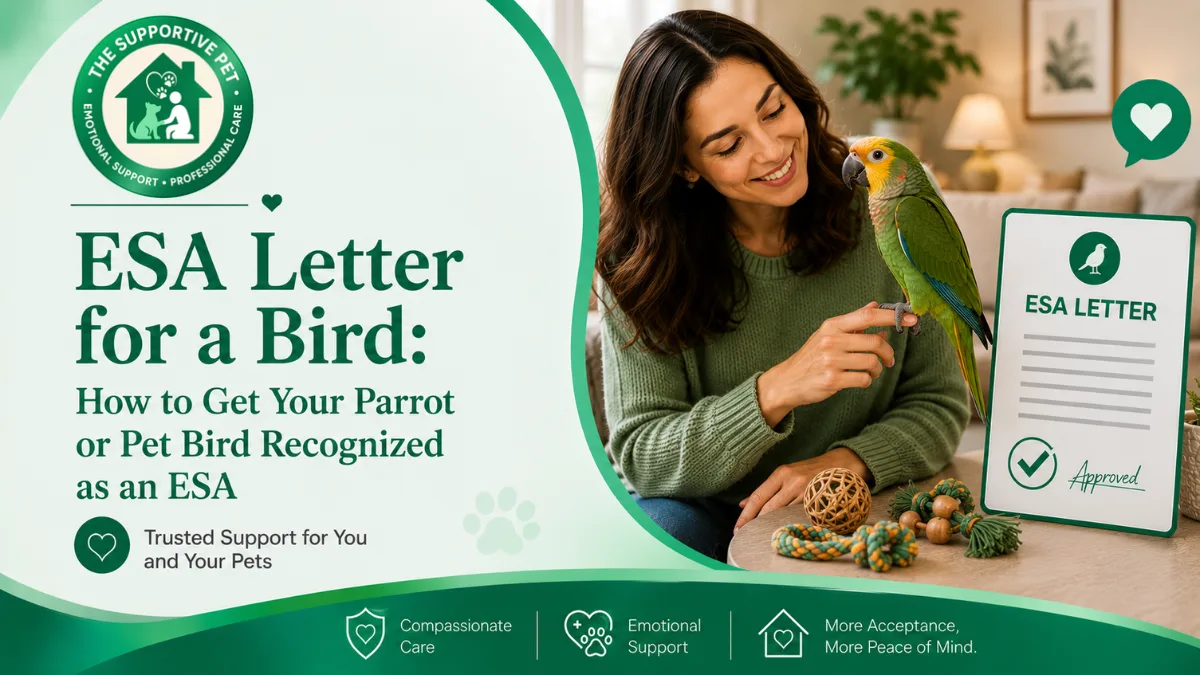
Yes. Birds - particularly social species like parrots, cockatiels, budgies, and lovebirds - can qualify as ESAs under the Fair Housing Act. A licensed mental health professional can issue an ESA letter for a bird that provides therapeutic support for a qualifying mental health condition, giving you the right to request housing accommodation.
Key Takeaways
- Birds, including parrots, cockatiels, and other companion species, can serve as ESAs under FHA housing protections when properly documented by a licensed clinician.
- A bird's consistent vocalizations, social responsiveness, and behavioral routine can provide meaningful emotional structure for individuals with depression, anxiety, or PTSD.
- Your ESA letter for a bird should note the species and describe how the bird's specific qualities address your mental health disability in concrete, clinical terms.
Medical Disclaimer: This article is for informational purposes only and does not constitute medical or legal advice. Consult a qualified mental health professional before making decisions about your care. If you or someone you know is in crisis, call or text 988 (Suicide & Crisis Lifeline, available 24/7).
Birds as Emotional Support Animals
Companion birds - particularly social species - have a long history in animal-assisted therapy and provide genuine therapeutic benefits that support ESA documentation. The therapeutic relationship between a person and their bird is often highly personalized: social birds can develop strong bonds with their owners, respond to emotional states, and provide a form of companionship that is actively engaging rather than passive.
Key therapeutic benefits of bird ESAs include:
- Interactive companionship: Social birds talk, respond to their owners, and engage in interaction - combating the social isolation that worsens depression and anxiety.
- Cognitive engagement: Training and interacting with an intelligent bird provides mental stimulation that can interrupt rumination and anxious thought patterns.
- Routine structure: Consistent feeding, care, and interaction schedules provide the kind of external routine that supports mental health in depression.
- Auditory comfort: The sounds of birds - song, vocalization, interaction - can provide a calming ambient presence for people with anxiety or sensory needs.
- Sense of purpose: The responsibility of caring for a living being provides meaning and motivation, which is particularly therapeutic for depression.
Species Considerations for Bird ESAs
Not all birds are the same when it comes to ESA accommodation. Practical considerations by species:
- Budgies/Parakeets: Small, relatively quiet, social, and widely kept. Generally the easiest bird ESA to have accommodated.
- Cockatiels: Social, moderately vocal, and well-suited to apartment living. A popular choice for ESA accommodation.
- Canaries and finches: Generally kept for their song. Canary song is pleasant and melodic - less likely to cause noise disputes than parrots.
- Parrots (medium/large species): Highly interactive and emotionally intelligent, but can be loud. Conures, African Greys, Amazons, and cockatoos may be more challenged in no-pet buildings due to noise. Your ESA documentation is the same; practical noise management may require discussion with your landlord.
Getting and Using Your Bird ESA Letter
Complete The Supportive Pet's intake and describe your qualifying mental health condition, how it affects your daily functioning, and the specific therapeutic role your bird plays in your life. A licensed clinician will evaluate your case and, if appropriate, issue your ESA letter identifying your bird.
Submit the letter to your landlord as a reasonable accommodation request under the FHA. Include the species and name of your bird. Your landlord must consider the request - they cannot deny based on species alone. If noise concerns arise, address them proactively: describe your bird's noise profile and any mitigation measures you already take.
From the Clinician
Birds are among the more nuanced species I evaluate for ESA documentation. The therapeutic mechanism is genuinely different from what most people expect.
The NIH research on human-animal interaction focuses heavily on dogs. But the core therapeutic elements are also present in social bird species. These include consistent interactive engagement, caregiving routines, and the experience of being responded to.
In bird ESA letters, I document specific interactive behaviors - not vague presence. Concrete behaviors carry more clinical weight. They include vocalization that interrupts anxious rumination, a care routine that structures the morning, and tactile contact that grounds sensory regulation.
Client scenario: A client with major depressive disorder described their African Grey parrot as the reason they got out of bed. In clinical terms, what they were describing was a behavioral activation trigger - the parrot's morning vocalizations created a consistent external demand that interrupted the inertia of depression and initiated daily functioning. I documented this specific mechanism in their ESA letter, noting the bird by name and describing its interactive behaviors. Their apartment complex, which had a strict no-pets policy, approved the ESA accommodation and noted they had never previously considered a bird in that context.
A Fair Look at the Other Side
Birds in multi-unit housing raise a legitimate concern: some species - particularly parrots and larger companion birds - can produce sustained noise that genuinely affects neighbors in adjacent units. The FHA permits landlords to deny accommodation that creates undue burden for others, and noise is a factor that can weigh in that assessment. Addressing noise proactively in your accommodation request (noting the species, typical vocalization levels, and any mitigation measures) is more effective than waiting for a neighbor complaint to introduce the issue.
Which Bird Species Work Best as ESAs?
While any bird can legally qualify as an emotional support animal under the FHA, some species are particularly effective in the therapeutic role given their social intelligence and bonding capacity:
- African Grey Parrots: Highly intelligent, capable of complex emotional bonding, and sensitive to their owners' moods. Greys can learn hundreds of words and are especially effective ESAs for depression and social anxiety.
- Cockatiels: Affectionate, responsive, and manageable for apartment living. Cockatiels form strong bonds with their owners and are among the most recommended species for first-time bird ESA owners.
- Budgerigars (Parakeets): Social, interactive, and trainable. One of the most common bird ESA species due to their manageable size, affordability, and adaptability.
- Lovebirds: Form pair bonds with owners and thrive on daily interaction - providing reliable, consistent companionship for people managing depression or anxiety.
- Canaries and Finches: Less hands-on but provide calming auditory companionship through song, beneficial for people with anxiety who find ambient bird sounds soothing.
Common Landlord Objections to Bird ESAs and How to Respond
Bird ESAs face specific landlord objections that dog and cat ESAs typically do not. Here is how to address the most common ones:
"Birds are too noisy." Anticipated noise is not a valid basis for denying an ESA accommodation under the FHA. HUD guidance requires landlords to evaluate ESA requests on their merits - not on speculative concerns. Respond in writing that you will take reasonable steps to manage noise levels and that the accommodation must be granted based on your valid ESA documentation.
"Birds are not on our approved pet list." The FHA reasonable accommodation standard applies to all species, not just those on a landlord's pet approval list. No-pet policies and species restriction lists cannot override a valid ESA request.
"We need additional documentation." Landlords may request clarification that a disability-related need exists, but they cannot require your specific diagnosis, veterinary records, or proof that your bird is trained. A valid ESA letter from a licensed clinician is the required documentation.
Getting Your ESA Letter for a Bird
The ESA evaluation process for a bird is identical to any other species - the focus is entirely on your mental health needs. Complete a clinical intake describing your condition, how it limits daily functioning, and the therapeutic role your bird plays. A licensed clinician evaluates your case and, if appropriate, issues a letter naming your bird as your emotional support animal. The letter can be used immediately to submit a housing accommodation request - your bird species does not affect the validity of the documentation.
Related: What animals can be ESAs · ESA letter for rabbits · ESA housing rights
Frequently Asked Questions
Can a bird be an emotional support animal?
Yes. Birds - particularly social species like parrots, cockatiels, budgies, and lovebirds - can qualify as ESAs under the Fair Housing Act. A licensed mental health professional can issue an ESA letter for a bird that provides therapeutic support for a qualifying mental health condition, giving you the right to request housing accommodation.
Will landlords accept a bird ESA?
Landlords must consider a bird ESA accommodation request under the FHA if you have valid documentation. Bird ESAs may face slightly more scrutiny than dogs or cats in some cases, particularly in buildings with noise concerns. However, many birds - especially smaller species like budgies, cockatiels, or canaries - are quiet enough that noise is not a practical issue. A landlord cannot deny based on species alone; they must evaluate the individual accommodation request.
What birds are most commonly approved as ESAs?
Parrots (African greys, cockatoos, macaws, conures, budgies/parakeets), cockatiels, canaries, finches, and doves are among the most commonly approved bird ESA species. Birds known for extreme noise (large macaws kept in close quarters, for instance) may encounter more practical resistance from landlords based on noise concerns, though the FHA still requires an individualized assessment.
How does a bird help with mental health?
Social birds provide interactive companionship that is cognitively engaging, emotionally rewarding, and routine-building - benefits that are well-matched to conditions like depression, anxiety, and loneliness. Many bird owners describe their birds as having distinct personalities and emotional attunement to their owners' moods. The daily structure of bird care and the interactive engagement of a social bird can provide consistent therapeutic benefit.
See our articles highlighted in Google Search
Add The Supportive Pet as a preferred source - your results, your way.