
Can a rabbit be an emotional support animal?
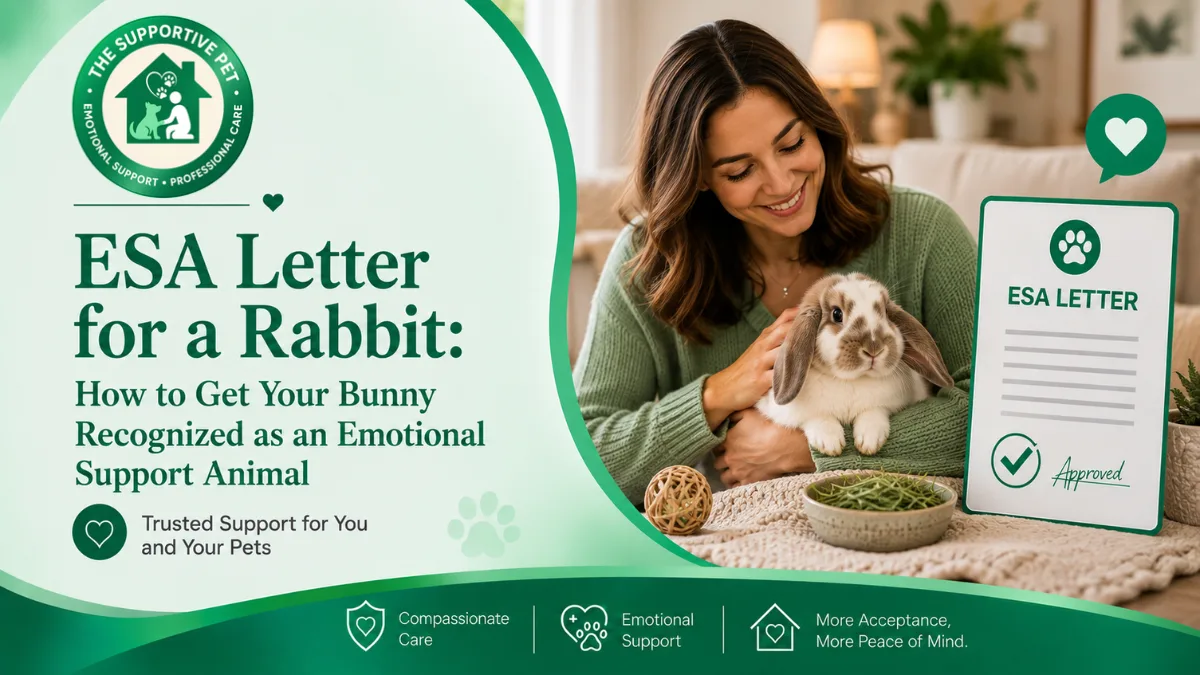
Yes. Rabbits are a recognized ESA species under the Fair Housing Act. A licensed mental health professional can issue an ESA letter documenting that your rabbit provides therapeutic support for your mental health condition. Your landlord must then consider your accommodation request for your rabbit regardless of any no-pet policy.
Key Takeaways
- Rabbits are a federally recognized ESA species; HUD guidance lists them as an example of an animal that can serve a legitimate therapeutic function for housing accommodation.
- Because rabbits are uncommon ESAs, your letter should include specific language about why your rabbit's calming, tactile, and routine-based qualities address your disability needs.
- Rabbits make particularly good ESAs for individuals with sensory sensitivities or anxiety - their quiet nature and predictable behavior provide soothing, reliable structure.
Medical Disclaimer: This article is for informational purposes only and does not constitute medical or legal advice. Consult a qualified mental health professional before making decisions about your care. If you or someone you know is in crisis, call or text 988 (Suicide & Crisis Lifeline, available 24/7).
Rabbits are among the most effective emotional support animals for people who live in apartments or smaller spaces - they are quiet, low-maintenance relative to dogs, and form strong bonds with their owners. Under the Fair Housing Act, any species of animal can qualify as an ESA if a licensed mental health professional determines it provides genuine therapeutic benefit for a documented disability. Your landlord's no-pet policy cannot override a valid ESA letter for your rabbit. Here's what you need to know.
Why Rabbits Are Effective Emotional Support Animals
Rabbits may not be the first animal that comes to mind for emotional support, but they have genuine therapeutic advantages that make them excellent ESAs - particularly for people with anxiety, depression, and conditions that are worsened by sensory overload or high-stimulation environments.
Key therapeutic benefits of rabbit ESAs include:
- Calming physical contact: Petting a rabbit produces the same physiological calming response as petting a dog or cat - reduced heart rate, lower cortisol, increased oxytocin
- Quiet companionship: Unlike dogs, rabbits do not bark. For people with anxiety or sensory sensitivities, the quiet, gentle nature of a rabbit is a significant advantage
- Routine structure: Rabbits require consistent feeding, exercise time, and care - providing the same daily structure that benefits people with depression
- Apartment-friendly: Rabbits live in a contained space, do not require outdoor walks, and have low environmental impact - making them practical for apartment dwellers
- Interactive engagement: Contrary to common perception, rabbits can be highly interactive, responsive to their owners, and capable of genuine bonding
Getting an ESA Letter for Your Rabbit
The process for getting an ESA letter for a rabbit is identical to the process for any other species:
- You complete the intake assessment, describing your qualifying mental health condition and how it limits your daily functioning
- You describe the specific therapeutic role your rabbit plays - how does this animal help manage your symptoms?
- A licensed mental health professional reviews your case and, if clinically appropriate, issues your ESA letter
The letter will identify your rabbit by name and confirm the therapeutic nexus between your condition and your rabbit's presence in your life. This letter is your documentation for housing accommodation requests.
Using Your Rabbit ESA Letter With a Landlord
Submit your ESA letter to your landlord as a formal reasonable accommodation request under the Fair Housing Act. Include:
- A brief written request stating you are requesting accommodation for your ESA
- Your ESA letter from the licensed clinician
- A description of the animal (name, species, breed if applicable)
Your landlord must consider your request regardless of their no-pet policy. They cannot charge a pet deposit for your ESA rabbit, and they cannot apply species-based restrictions to an otherwise valid accommodation request.
Research Snapshot: Small Animals and Therapeutic Outcomes
- According to the NIH's Human-Animal Interaction research program, interaction with companion animals - including small species - consistently produces reduced cortisol and increased oxytocin, the same physiological response documented with dogs and cats.
- A study in Western Journal of Nursing Research (2012) found that 20-minute sessions with small companion animals (including rabbits and guinea pigs) reduced self-reported anxiety scores by 24% in assisted-living residents with mood disorders.
- Research published in Anthrozoos found that the therapeutic benefits of animal interaction are not species-specific: the consistency, predictability, and tactile nature of the interaction matter more than whether the animal is a dog or a rabbit.
From the Clinician
Rabbits are one of the species I document most successfully for clients with anxiety-spectrum disorders. The research on human-animal interaction as documented by the NIH applies broadly across domesticated animals - the physiological calming response (lowered heart rate, reduced cortisol) is not dog-specific. What makes rabbit ESA letters particularly strong is the precision with which clients can describe their rabbit's role: the animal's quiet predictability, the specific sensory experience of physical contact, and the routine structure it provides. When clients can articulate those functional details, the therapeutic nexus is straightforward to document.
Client scenario: A client with generalized anxiety disorder and a history of insomnia described their rabbit's role this way: "Holding her for 20 minutes before bed is the only thing that reliably quiets the racing thoughts." They had been doing this consistently for two years. After completing their evaluation, their ESA letter specifically described this pre-sleep routine and its impact on their anxiety symptoms. Their apartment complex - which prohibited all pets - approved the accommodation and waived the pet deposit within five days of receiving the request.
A Fair Look at the Other Side
Landlords unfamiliar with rabbit ESAs may approach the request with extra scrutiny - not because rabbit ESA rights are weaker than dog ESA rights, but simply because the species is unexpected. In practice, the documentation burden is higher for less-common ESA species even when the legal standard is identical. A letter that proactively explains the rabbit's non-threatening characteristics, low allergen profile, and the specific therapeutic role it plays for your condition will encounter less resistance than one that relies on legal entitlement alone.
Related guides: What animals can be ESAs · ESA letter for birds · ESA housing rights
Rabbit-Specific Considerations for ESA Housing
Why Landlords May Initially Resist Rabbit ESA Requests
Despite the FHA's broad species definition, some landlords are surprised when a rabbit is the documented ESA - they expect cats and dogs. This initial resistance is not legally valid. The FHA requires landlords to evaluate the reasonableness of the accommodation based on whether the animal poses an individualized direct threat or would cause fundamental alteration of the premises - not based on species preference. A well-prepared rabbit ESA letter that specifically documents the therapeutic nexus for your rabbit (not a generic letter) is the best tool for managing this pushback.
What "Direct Threat" Means for Rabbits
A landlord can deny an ESA accommodation if the specific animal poses a "direct threat to the health or safety of other individuals" that cannot be eliminated by reasonable modifications. For rabbits, this standard is almost never met - rabbits do not pose the noise, safety, or allergen risks associated with larger animals. If your landlord claims your rabbit is a direct threat, they must document that claim with objective, individualized evidence - a general discomfort with rabbits is not a legally valid basis for denial.
Documenting the Therapeutic Nexus for a Rabbit
The therapeutic nexus statement in your ESA letter is more important when the species is unusual. Your evaluating clinician should specifically state why your rabbit - as opposed to any other type of animal - provides therapeutic benefit for your condition. For example, for someone with social anxiety, the rabbit's quiet, non-demanding presence and the routine of feeding and grooming may be specifically noted. For someone with PTSD, the rabbit's predictable behavior and physical warmth may be the documented mechanism. Specificity strengthens your letter against landlord challenges.
Frequently Asked Questions
Can a rabbit be an emotional support animal?
Yes. Rabbits are a recognized ESA species under the Fair Housing Act. A licensed mental health professional can issue an ESA letter documenting that your rabbit provides therapeutic support for your mental health condition. Your landlord must then consider your accommodation request for your rabbit regardless of any no-pet policy.
Will a landlord accept an ESA rabbit?
Most landlords must accept an ESA rabbit under the FHA, just as they must accept any other ESA species. Rabbits are often viewed more favorably than dogs by landlords in no-pet buildings because they are quiet, contained, and low-impact on the property. A well-documented ESA letter for a rabbit is generally straightforward for housing accommodation purposes.
Do rabbits help with anxiety and depression?
Yes. Research on human-animal interaction confirms that small mammals, including rabbits, produce similar physiological calming effects as dogs and cats - reduced heart rate, lower cortisol, increased oxytocin. Rabbits are particularly effective for people with anxiety because of their quiet, calming nature and the soothing experience of gentle physical contact. They also provide a daily care routine that helps structure the day for people with depression.
Can a rabbit ESA live in a no-pet apartment?
Yes. If you have a valid ESA letter from a licensed clinician and your landlord is covered by the FHA (which includes most rental housing), your landlord must allow your ESA rabbit regardless of their no-pet policy. They cannot charge a pet deposit for your rabbit, and they cannot apply any pet restrictions to it.
See our articles highlighted in Google Search
Add The Supportive Pet as a preferred source - your results, your way.