
What animals can be emotional support animals?
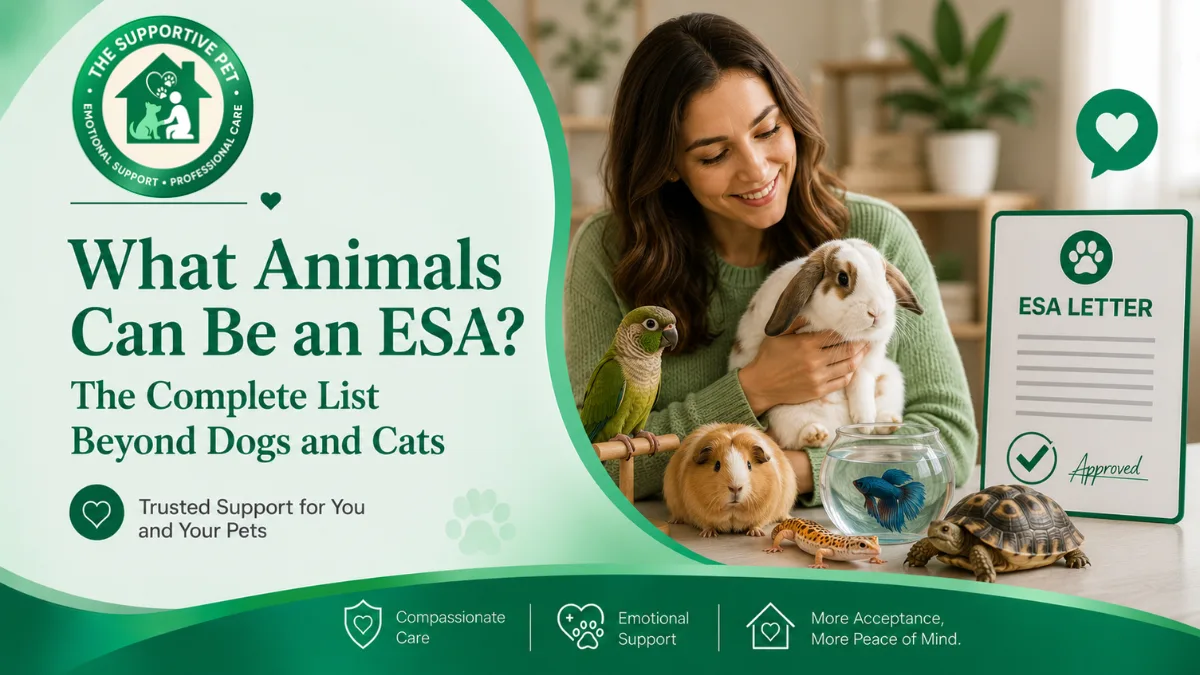
Under the Fair Housing Act, any animal can potentially be an ESA - there is no species restriction in the law itself. Common ESA species include dogs, cats, rabbits, guinea pigs, birds, hamsters, fish, and turtles. Less common but legally supportable species include miniature horses, pigs, and reptiles. The key is that a licensed clinician must confirm the therapeutic nexus between the specific animal and your mental health condition.
Key Takeaways
- Any domesticated animal species can serve as an ESA - dogs, cats, rabbits, birds, guinea pigs, and even miniature horses have been documented in HUD accommodation cases.
- There is no federally mandated approved species list; each accommodation request is evaluated based on the disability nexus and whether the animal poses a direct threat or undue burden.
- Unusual animals face higher scrutiny - landlords may request additional documentation showing that the specific species is necessary for your therapeutic needs and condition.
Medical Disclaimer: This article is for informational purposes only and does not constitute medical or legal advice. Consult a qualified mental health professional before making decisions about your care. If you or someone you know is in crisis, call or text 988 (Suicide & Crisis Lifeline, available 24/7).
The Fair Housing Act's definition of assistance animals is remarkably broad - it does not limit ESAs to dogs or cats. Any animal can qualify as an ESA if a licensed mental health professional documents that it provides emotional or therapeutic benefit for a specific person's disability. In practice, this means snakes, birds, rabbits, guinea pigs, miniature horses, and even fish have been documented as ESAs and accepted by landlords under FHA obligations. The animal's species matters far less than the quality of the clinical documentation.
The FHA's Broad Definition of ESA Species
The Fair Housing Act does not contain a list of approved ESA species. The law refers to "assistance animals" broadly, and HUD's implementing guidance confirms that any animal may potentially qualify as an ESA. What matters under the law is the therapeutic nexus: does this particular animal provide genuine emotional support for this particular person's mental health disability?
This is a significantly broader standard than the ADA's approach to service animals, which is limited to dogs (and miniature horses in limited circumstances). For housing under the FHA, the species question is open.
Commonly Approved ESA Species
The following species are commonly approved in ESA accommodation requests and are most likely to be accepted without additional friction from housing providers:
- Dogs: The most common ESA species. Strong research base, broadly understood by landlords, and therapeutic benefits are well-documented across nearly all mental health conditions.
- Cats: The second most common ESA species. Cats are often preferred for people with anxiety or depression who find the lower-maintenance nature of cats more manageable. Their quiet presence and gentle responsiveness are well-suited to providing comfort.
- Rabbits: Popular ESA choice, particularly in apartments. Rabbits are quiet, relatively clean, and provide tactile comfort. See our dedicated guide: ESA letter for rabbits.
- Guinea pigs: Similar to rabbits - popular for apartment settings, low noise, and responsive to human interaction.
- Birds: Social birds like parrots, cockatiels, and lovebirds can provide significant companionship and interactive engagement. See our guide: ESA letter for birds.
- Small rodents (hamsters, gerbils, rats): Less common but not unusual. Rats in particular have been shown to be more social and interactive than often assumed.
- Fish: Aquariums are well-researched for their calming effects, particularly for anxiety and hypertension. Fish ESAs are unusual but not unheard of.
Less Common ESA Species: What to Expect
HUD's 2020 guidance specifically addresses what it calls "unique" animals - species that are less commonly associated with ESA status. For these species, housing providers may conduct a more individualized assessment:
- Miniature horses: Legal under the FHA as ESAs; also recognized as service animals under the ADA in limited circumstances. Housing providers may question the practicality of a miniature horse in residential housing.
- Pigs: Particularly miniature or teacup pigs. Landlords may have more concern about these based on noise, cleanliness, or local zoning restrictions.
- Reptiles (snakes, lizards, iguanas): Clinically supportable for some individuals with autism or anxiety who find the predictable, calm nature of reptiles therapeutic. Housing providers may apply more scrutiny.
- Ferrets: Banned in some states and cities (California, New York City); where legal, they can be ESAs.
For any less common species, the strength of your ESA letter - specifically, how clearly the clinician documents the therapeutic nexus with this particular animal - becomes more important.
How to Make the Strongest Case for Any Species
Regardless of species, the key to a successful ESA accommodation is a clinically grounded ESA letter that specifically addresses your disability and the therapeutic role of your particular animal. When completing your intake for a less common species:
- Be specific about how this animal - not animals in general - provides therapeutic benefit for your condition
- Describe the daily therapeutic role: how does interacting with or caring for this animal reduce your anxiety, support your routine, or help manage your symptoms?
- If you have existing clinical documentation from a treating therapist supporting the therapeutic relationship, share it with the evaluating clinician
From the Clinician
Clinically, the species question rarely defines whether I can write a letter - the therapeutic nexus question does. HUD's 2020 assistance animal guidance confirms that any species may qualify, provided a licensed clinician can document the relationship between the person's disability and the animal's support. What I look for isn't the species on its own - it's whether this particular person has a genuine, consistent therapeutic interaction with this particular animal. I've written letters for dogs, cats, rabbits, birds, and guinea pigs. The detail that makes those letters hold up isn't the species - it's the specificity of the therapeutic narrative.
Client scenario: A client with trichotillomania (hair-pulling disorder) came to me seeking documentation for their rabbit as an ESA. Their describing the rabbit's role was what made the evaluation meaningful: when they felt the urge to pull, petting the rabbit's fur gave their hands a tactile substitute that interrupted the compulsive behavior. That specific, functional description became the therapeutic nexus in their letter. Their landlord approved the accommodation with no pushback.
A Fair Look at the Other Side
Accommodation requests for unusual ESA species - particularly those that are large, loud, or allergenic - can create genuine practical concerns in multi-unit housing. The FHA's direct-threat exception exists because accommodation is not unconditional: if an animal poses a real, documented threat to the health or safety of other residents that cannot be mitigated, a denial may be lawful. This is why documentation for uncommon species should proactively address the specific concern (allergen exposure, noise, sanitation), not simply assert therapeutic benefit and leave the landlord to raise objections.
Related: ESA letter for dogs · ESA letter for rabbits · ESA letter for birds · What is an ESA letter?
Species-by-Species: What Landlords Can and Cannot Do
Dogs and Cats: Straightforward Accommodation
Dogs and cats are the most widely accepted ESA species. Landlords who deal with multiple ESA requests are familiar with these animals, and documentation disputes tend to focus on the letter's legitimacy rather than the species itself. Even for dogs and cats, landlords cannot impose breed restrictions, size limits, or pet fees on documented ESAs. A pit bull or a Maine Coon cat with a valid ESA letter must be accommodated just as a Chihuahua or a tabby cat.
Uncommon Species: Building the Stronger Case
For ESAs of uncommon species - birds, reptiles, rabbits, guinea pigs, or similar - your ESA letter needs to do more work. HUD's 2020 guidance specifically addresses uncommon species: landlords can request information about whether the specific animal poses a direct threat or would cause fundamental alteration. For unusual species, your letter should include species-specific therapeutic nexus language - why this type of animal specifically (not just any animal) provides the documented therapeutic benefit for your condition. A detailed therapeutic nexus statement dramatically reduces the likelihood of a successful landlord challenge.
Animals Landlords Can Legitimately Deny
Even with an ESA letter, a landlord can deny an animal that poses an individualized, documented direct threat to health or safety, or would cause fundamental alteration of the premises. This assessment must be based on the specific animal's behavior - not assumptions about the species. Practically, this means landlords can deny an ESA that has documented biting incidents, poses a documented severe allergy risk, or requires housing modifications that cannot reasonably be made. The burden of proving direct threat falls on the landlord, not the ESA owner. Generic concerns about an animal's species are never a sufficient basis for denial under HUD guidelines.
Frequently Asked Questions
What animals can be emotional support animals?
Under the Fair Housing Act, any animal can potentially be an ESA - there is no species restriction in the law itself. Common ESA species include dogs, cats, rabbits, guinea pigs, birds, hamsters, fish, and turtles. Less common but legally supportable species include miniature horses, pigs, and reptiles. The key is that a licensed clinician must confirm the therapeutic nexus between the specific animal and your mental health condition.
Can a rabbit be an ESA?
Yes. Rabbits are a commonly approved ESA species. They are quiet, responsive to human interaction, provide calming tactile contact, and are well-suited for apartment living. Many landlords are comfortable with rabbits as ESAs given their relatively low impact on the property. A licensed clinician can document the therapeutic nexus for a rabbit ESA.
Can a bird be an ESA?
Yes. Birds - particularly parrots, cockatiels, and other social species - can be ESAs. The therapeutic benefit of bird companionship is well-recognized for people with depression, anxiety, and social isolation. One practical consideration: some landlords may be more resistant to birds than dogs or cats due to noise concerns. A bird that causes significant noise disturbance could become grounds for the landlord to revisit the accommodation, though the initial request must still be considered.
Can a landlord refuse an unusual ESA species?
A landlord may refuse an accommodation for an animal that poses a direct threat to health or safety, or that would cause fundamental alteration of their property - and unusual species may face a higher standard of scrutiny on this basis. However, landlords cannot reflexively deny based on species alone. They must individually assess whether the specific animal poses a direct threat, weighing the person's need for the accommodation. HUD's 2020 guidance specifically addresses "unique" animals and requires an individualized assessment.
See our articles highlighted in Google Search
Add The Supportive Pet as a preferred source - your results, your way.