
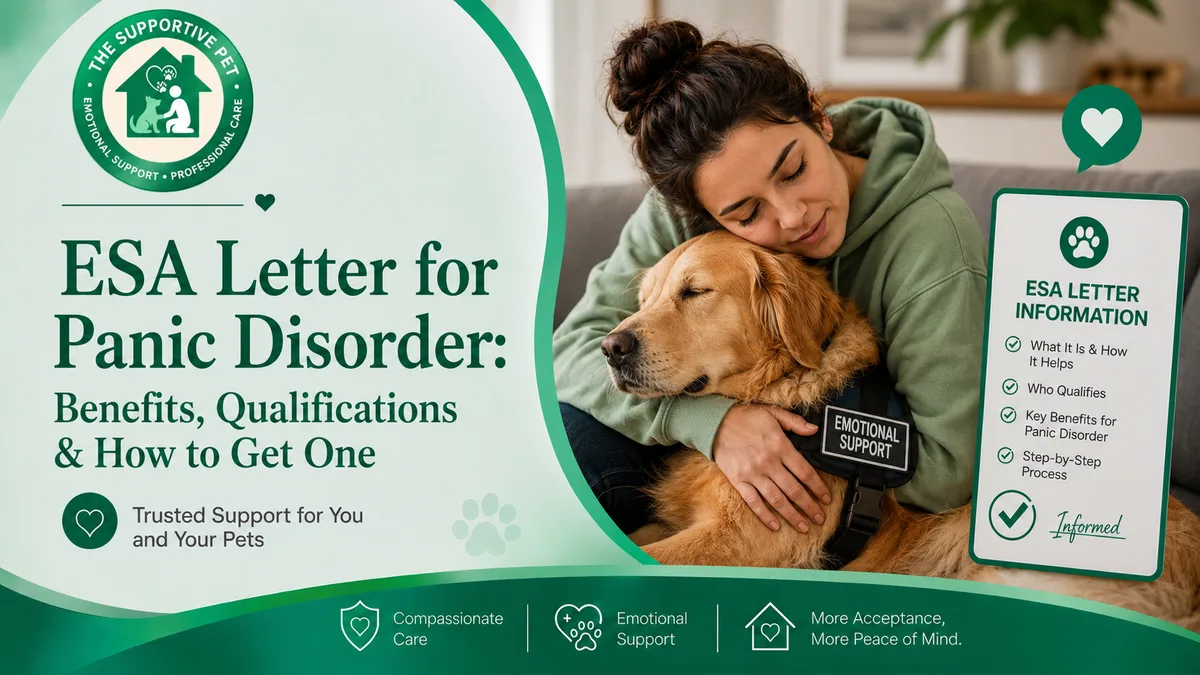
Does panic disorder qualify for an ESA letter?
Yes. Panic Disorder is a recognized DSM-5 condition, and a licensed clinician can evaluate whether your panic disorder qualifies for an ESA letter. The key factors are that your condition substantially limits a major life activity and that an ESA provides therapeutic benefit - both of which are commonly true for panic disorder.
Medical Disclaimer: This article is for informational purposes only and does not constitute medical or legal advice. Consult a qualified mental health professional before making decisions about your care. If you or someone you know is in crisis, call or text 988 (Suicide & Crisis Lifeline, available 24/7).
Panic disorder is characterized by recurrent, unexpected panic attacks. These are sudden surges of intense fear that peak within minutes. Symptoms can include heart palpitations, shortness of breath, dizziness, chest pain, and fear of losing control. Between attacks, people with panic disorder often live with anticipatory anxiety about the next attack. This can severely restrict their daily activities. For many people with panic disorder, an emotional support animal provides measurable help managing that anxiety and recovering from attacks more quickly. If this describes your experience, you may qualify for an ESA letter from a licensed mental health professional.
Does Panic Disorder Qualify for an ESA?
Yes. Panic Disorder is a recognized DSM-5 mental health condition. It involves recurrent, unexpected panic attacks — sudden surges of intense fear with physical symptoms. These include racing heart, chest pain, shortness of breath, dizziness, and a sense of impending doom.
When panic disorder substantially limits a major life activity — which it often does — a licensed clinician can issue an ESA letter. This provides housing protections under the Fair Housing Act. With a valid ESA letter, your landlord cannot enforce no-pet policies or charge pet deposits for your emotional support animal.
How Panic Disorder Affects Daily Life
Panic disorder extends well beyond the attacks themselves. The anticipatory anxiety between episodes can be just as disabling. It is the constant fear of when the next attack will strike. Common impacts include:
- Avoidance behaviors - avoiding places or situations where a panic attack has occurred, or where escape might be difficult
- Agoraphobia - in some cases, panic disorder leads to agoraphobia, where leaving home feels unsafe
- Work and relationship disruption - the unpredictability of panic attacks can make it difficult to maintain employment or social commitments
- Sleep disturbance - nocturnal panic attacks can severely disrupt sleep, contributing to a cycle of exhaustion and increased anxiety
- Physical health impact - chronic anxiety associated with panic disorder is linked to cardiovascular and immune system effects
How Emotional Support Animals Help with Panic Disorder
For people with panic disorder, an ESA can provide several layers of support:
- Grounding during panic episodes - focusing on an animal (petting, holding, making eye contact) provides a sensory anchor that can interrupt the dissociation and hyperventilation of a panic attack
- Reducing baseline anxiety - research consistently shows that interaction with animals lowers cortisol and activates the parasympathetic nervous system, which directly counters the "fight or flight" state of panic disorder
- Predictability and routine - caring for an ESA creates consistent daily structure, which can reduce the unpredictability that fuels anticipatory anxiety
- Motivation to leave home - for those whose panic disorder has led to avoidance or agoraphobia, an ESA's need for exercise and care provides a structured reason and motivation to engage with the outside world gradually
- Nighttime comfort - the presence of an ESA during the night can provide comfort to those who experience nocturnal panic attacks or heightened nighttime anxiety
How ESAs Interrupt the Panic Attack Cycle
Grounding During an Attack
Panic attacks are partly fueled by hyperventilation and sympathetic nervous system activation. Physical contact with an animal - petting, holding, or simply feeling the animal's warmth and weight - activates competing parasympathetic pathways. Many people with panic disorder say their ESA is the most reliable grounding tool during an attack. It is more accessible than breathing exercises and more immediate than medication. This grounding mechanism is clinically recognized and forms part of the therapeutic nexus statement in ESA letters for panic disorder.
Reducing Anticipatory Anxiety
The fear of having a panic attack - anticipatory anxiety - often becomes as disabling as the attacks themselves. It drives avoidance behaviors (not leaving home, avoiding crowded places, not using public transport) that progressively narrow a person's life. Having an ESA at home creates a stable emotional environment. Many people with panic disorder say it reduces their baseline anxiety. This makes anticipatory anxiety less severe and avoidance behaviors less compelling.
Post-Attack Recovery
After a panic attack, many sufferers experience significant exhaustion, shame, and residual anxiety. The non-judgmental presence of an animal during recovery provides a distinctive form of support. You do not need to explain or justify anything. This differs from what human interaction can offer. Licensed clinicians who evaluate panic disorder patients for ESA documentation assess this recovery function as part of the therapeutic nexus analysis.
ESA vs. Psychiatric Service Dog for Panic Disorder
If your panic disorder is severe and you need task-specific support, a psychiatric service dog (PSD) may be more appropriate than an ESA:
- ESA: Provides emotional support through companionship. No task training required. Protected under FHA for housing.
- PSD: Can be trained to perform specific tasks during panic attacks - deep pressure therapy, turning on lights, guiding you to safety, alerting to escalating anxiety before a full panic attack occurs. Protected under ADA for public access.
Many people with panic disorder benefit significantly from an ESA without needing a PSD. Your licensed clinician can help you decide which level of support fits your symptoms.
How to Get an ESA Letter for Panic Disorder
- Complete a clinical evaluation - a licensed mental health professional evaluates your panic disorder and determines whether an ESA provides therapeutic benefit for your condition
- Receive your ESA letter - if you qualify, your clinician issues a signed letter with their name, license number, and contact information on their professional letterhead
- Present the letter to your landlord - your landlord must make reasonable accommodations under the Fair Housing Act; they cannot charge pet deposits or apply no-pet policies to your ESA
The Supportive Pet connects you with licensed clinicians who understand anxiety and panic disorders. Most people receive their letter as soon as their evaluation is complete. View pricing or start your evaluation here.
Panic Disorder, ESAs, and Your Housing Rights
Panic disorder is a DSM-5 condition that qualifies as a disability under the Fair Housing Act. This applies when it substantially limits major life activities. That is typical when panic attacks occur regularly and anticipatory anxiety restricts daily functioning. With a valid ESA letter, your landlord must accommodate your ESA. They must waive pet deposits, pet rent, and size or breed restrictions — regardless of their no-pet policy.
The FHA requires landlords to engage with your accommodation request in good faith. If your landlord denies your request, see our guide on ESA landlord denials and your options. You can also review the full ESA housing rights framework to understand exactly what protections apply to your situation. For people who need both housing and travel rights, our PSD letter guide explains when a psychiatric service dog letter provides extra protections.
Frequently Asked Questions
Does panic disorder qualify for an ESA letter?
Yes. Panic Disorder is a recognized DSM-5 condition, and a licensed clinician can evaluate whether your panic disorder qualifies for an ESA letter. The key factors are that your condition substantially limits a major life activity and that an ESA provides therapeutic benefit - both of which are commonly true for panic disorder.
Can an ESA stop a panic attack?
An ESA cannot stop a panic attack, but interaction with an emotional support animal - petting, holding, or focusing on the animal - can help ground you during a panic episode by activating the parasympathetic nervous system and providing a sensory focal point. Many people with panic disorder report their ESA helps shorten the duration and intensity of panic episodes.
Is a psychiatric service dog better than an ESA for panic disorder?
It depends on your needs. A psychiatric service dog can be trained to perform specific tasks during a panic attack - such as applying deep pressure therapy, alerting before an episode, or guiding you to a safe space. An ESA provides calming companionship but is not task-trained. If your panic disorder is severe and you need specific task-based assistance, a PSD may be more appropriate. A clinician can help you decide.
How quickly can I get an ESA letter for panic disorder?
Most people receive their ESA letter the same business day they complete their evaluation with The Supportive Pet. The process - from completing the questionnaire to receiving your signed letter - typically takes under an hour (excluding states with mandatory waiting periods, like California and Arkansas).
Can I get an ESA letter if I only have occasional panic attacks?
Qualifying for an ESA letter depends on whether your condition substantially limits a major life activity - not on the frequency of panic attacks alone. Even infrequent but severe panic attacks can significantly limit your ability to work, travel, or maintain relationships. A licensed clinician will evaluate your specific situation.
See our articles highlighted in Google Search
Add The Supportive Pet as a preferred source - your results, your way.