
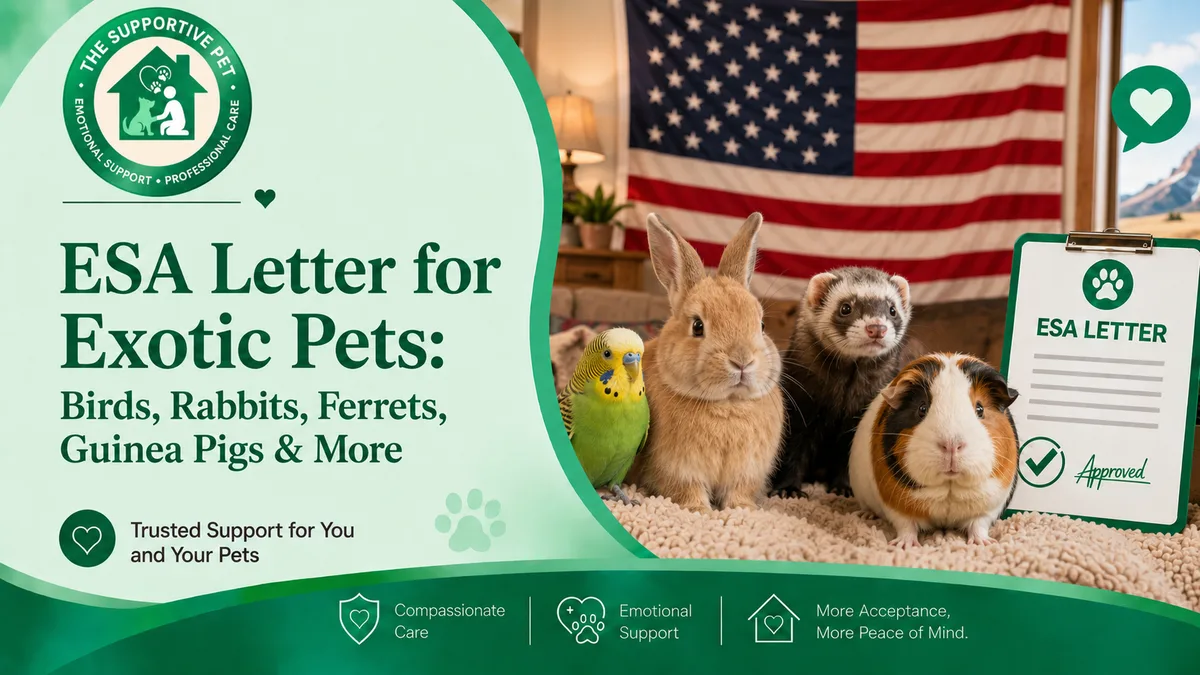
Can any animal be an ESA, or just dogs and cats?
The Fair Housing Act does not restrict ESA species. Any domesticated animal can qualify as an ESA - including guinea pigs, rabbits, birds, hamsters, and other species. Your landlord cannot refuse an ESA accommodation solely because your ESA is not a dog or cat.
Medical Disclaimer: This article is for informational purposes only and does not constitute medical or legal advice. Consult a qualified mental health professional before making decisions about your care. If you or someone you know is in crisis, call or text 988 (Suicide & Crisis Lifeline, available 24/7).
Guinea pigs are among the most effective emotional support animals for people who prefer small, quiet, low-maintenance companions. Despite their small size, they form strong bonds with their owners and provide consistent therapeutic benefit. Under the Fair Housing Act (42 U.S.C. § 3604), a valid ESA letter gives your guinea pig full housing protections - landlords cannot charge pet fees or enforce no-pets policies against a documented ESA owner.
Can a Guinea Pig Be an ESA?
Yes. The Fair Housing Act does not restrict ESA species to dogs and cats. Any domesticated animal can qualify as an ESA - including guinea pigs, rabbits, birds, hamsters, and many other species. The qualification is based on your mental health need and the animal's therapeutic benefit to you - not the species.
Why Guinea Pigs Make Effective Emotional Support Animals
Guinea pigs offer specific therapeutic qualities that make them particularly suitable for certain ESA owners:
- Gentle, non-threatening presence - for people with trauma histories or sensory sensitivities, a small, quiet animal that does not make sudden movements reduces the anxiety that larger, more active animals can trigger
- Tactile grounding - their soft fur and warm body temperature provide calming sensory input during anxiety episodes
- Low-demand routine - guinea pigs require regular feeding and cage maintenance but far less active engagement than dogs; this is beneficial for ESA owners managing depression who cannot maintain high-demand pet routines
- Apartment-appropriate - small, quiet (compared to dogs), and space-efficient, making them practical for urban housing
- Social animals - guinea pigs are highly social within their species and with humans, providing genuine companionship
Guinea pigs are particularly effective as ESAs for owners managing anxiety, depression, autism spectrum disorder, and PTSD with sensory sensitivities.
Housing Rights for Guinea Pig ESA Owners
With a valid ESA letter, the Fair Housing Act requires your landlord to:
- Allow your guinea pig regardless of no-pets policies or "cats and dogs only" restrictions
- Waive all pet fees - deposits, monthly pet rent, move-in fees
- Override any species-specific restrictions on your lease
Note: Guinea pigs typically fall under general "no pets" policies rather than breed/weight restrictions. Your ESA letter overrides "no pets" policies for any ESA species.
How to Get an ESA Letter for Your Guinea Pig
The evaluation focuses on your mental health needs and the therapeutic benefit of your guinea pig - not on the species. A licensed clinician will assess your qualifying condition and confirm that your guinea pig provides genuine therapeutic support. The Supportive Pet provides same-day telehealth evaluations. Start your evaluation here.
See also our guide to ESA letters for exotic pets.
Frequently Asked Questions
Can any animal be an ESA, or just dogs and cats?
The Fair Housing Act does not restrict ESA species. Any domesticated animal can qualify as an ESA - including guinea pigs, rabbits, birds, hamsters, and other species. Your landlord cannot refuse an ESA accommodation solely because your ESA is not a dog or cat.
Can my landlord refuse my guinea pig ESA because their no-pets policy specifies 'no pets of any kind'?
No. The Fair Housing Act overrides all types of no-pets policies - including those that say 'no pets of any kind' - for documented ESA owners. The breadth of the no-pets policy does not affect your ESA rights.
Do I need to tell my landlord what species my ESA is when I submit my accommodation request?
You will typically need to describe your ESA in the accommodation request (species and name). Your ESA letter may also specify the species. Landlords may ask about the species as part of evaluating the reasonableness of the accommodation, but they cannot deny the request solely because your ESA is a guinea pig.
See our articles highlighted in Google Search
Add The Supportive Pet as a preferred source - your results, your way.