
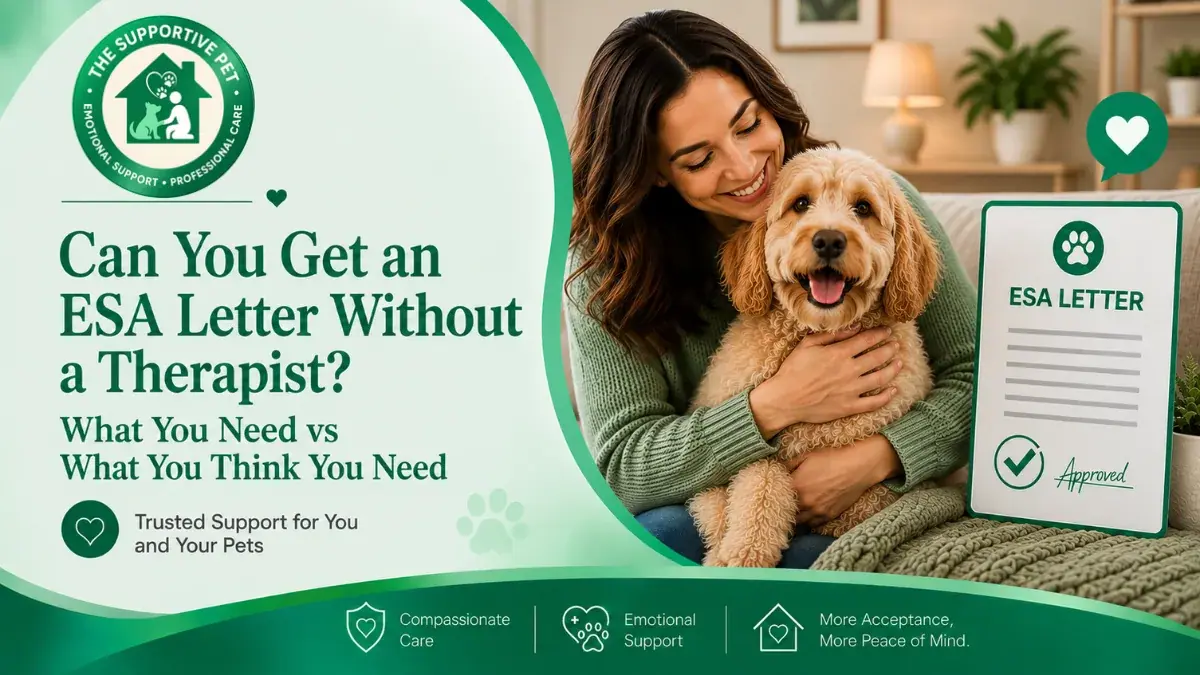
Do I need a therapist to get an ESA letter?
No. Any licensed mental health professional or qualified healthcare provider - including LCSWs, LPCs, psychologists, psychiatrists, and in some cases primary care physicians - can write a legitimate ESA letter after evaluating your situation.
Medical Disclaimer: This article is for informational purposes only and does not constitute medical or legal advice. Consult a qualified mental health professional before making decisions about your care. If you or someone you know is in crisis, call or text 988 (Suicide & Crisis Lifeline, available 24/7).
Who Can Write a Legitimate ESA Letter?
A legitimate ESA letter must come from a licensed mental health professional or a licensed healthcare provider who is qualified to evaluate your mental health. The letter does not have to come from a therapist in the traditional sense. A range of licensed professionals can provide ESA documentation if they have evaluated you and determined that you have a disability-related need for an emotional support animal.
Licensed professionals who can write ESA letters include licensed clinical social workers (LCSWs), licensed professional counselors (LPCs), licensed marriage and family therapists (LMFTs), psychologists (PhDs and PsyDs), psychiatrists (MDs or DOs with psychiatric training), primary care physicians who provide mental health care, and licensed nurse practitioners with mental health training. The key requirements are licensure in your state and a genuine clinical evaluation of your situation.
What You Actually Need From Any Provider
Regardless of which type of provider writes your letter, the content requirements are the same. The letter must confirm that you have a disability as defined under the Fair Housing Act (42 U.S.C. § 3604) - meaning a physical or mental impairment that substantially limits one or more major life activities. It must confirm that you have an ongoing therapeutic relationship or clinical evaluation supporting this determination. It must state that your ESA provides disability-related support. It must include the provider's credentials, license number, and state of licensure, and be signed on official letterhead.
A letter that meets these standards from an LCSW is as valid as one from a psychiatrist. The credential type matters less than the legitimacy of the evaluation and the accuracy of the documentation.
What Does Not Qualify as a Legitimate ESA Letter
Many websites offer to generate ESA letters instantly after a brief online questionnaire. These are typically not legitimate for housing accommodation purposes. HUD guidance distinguishes between documentation from a provider with whom you have a genuine therapeutic relationship and documentation purchased from a website that provides no real clinical evaluation.
Landlords who receive suspicious documentation can verify the provider's license through state licensing boards. If the provider does not hold an active license in your state, or if the letter was clearly generated without a real clinical evaluation, your landlord may decline to accept it - and may have grounds to do so.
Similarly, letters from non-licensed friends or family members, letters from life coaches, letters from online 'certifiers' who are not licensed mental health professionals, and form letters with no individualized clinical content are not legitimate ESA documentation.
Can a Primary Care Doctor Write an ESA Letter?
Yes, in many cases. A primary care physician who treats you for a mental health condition - prescribing antidepressants, managing anxiety medications, or providing mental health counseling as part of their practice - can write an ESA letter if they can legitimately evaluate your disability-related need. The requirement is not about professional title but about whether the provider is qualified to make the clinical determination that your condition qualifies as a disability under the FHA and that an ESA provides disability-related support.
Some primary care providers are comfortable making this determination. Others may refer you to a mental health specialist. If your doctor is not comfortable writing an ESA letter, ask for a referral or seek an evaluation from a licensed mental health professional.
Teletherapy and Online Evaluations
Telehealth has expanded access to licensed mental health professionals significantly. Many LCSWs, LPCs, and psychologists offer video or phone consultations specifically for ESA evaluations, particularly in states where they are licensed. A legitimate telehealth ESA evaluation involves a real clinical conversation about your mental health, your symptoms, your functional impairment, and how an ESA would support your care.
This is different from a website that offers an instant letter for a flat fee with no meaningful evaluation. A legitimate telehealth provider will spend time with you, ask meaningful questions about your condition, and document their findings in a way that reflects a genuine clinical assessment.
How to Find a Legitimate Provider
If you do not currently have a therapist or mental health provider, the fastest legitimate path to an ESA letter is typically a telehealth evaluation with a licensed professional in your state. Look for providers who are transparent about their credentials, offer a real consultation rather than an automated questionnaire, and are willing to discuss your mental health in depth before providing documentation.
You can also check with your primary care provider, university counseling centers, community mental health centers, or therapist directories like Psychology Today to find licensed providers in your area. Some providers specialize in ESA evaluations and are well-versed in the documentation requirements.
What Happens After You Have the Letter
Once you have a legitimate ESA letter from a licensed provider, you can submit a written accommodation request to your landlord or property manager. Under the Fair Housing Act (42 U.S.C. § 3604), covered housing providers must consider reasonable accommodation requests from people with disabilities. Your landlord may verify the letter, ask clarifying questions, and engage in an interactive process - but they cannot demand your full medical records or deny a legitimate request without a valid legal reason.
How to Choose a Legitimate Online ESA Provider
Not all online ESA services are legitimate. The ESA letter scam industry is large and well-documented. Here is how to tell a legitimate service from a fraudulent one:
- Legitimate services provide a real telehealth evaluation - you meet with a licensed mental health professional via video or phone call; the evaluation takes 15-30 minutes and covers your mental health history and functional limitations
- Legitimate services have licensed professionals on staff - check the clinician's license number against your state's licensing board
- Fraudulent services issue letters without a real evaluation - instant letters, letters issued based on a written questionnaire alone, or letters from entities that claim to be "ESA registries" or "ESA certifiers" are not legally valid
- Fraudulent services sell "registration" or "certification" - there is no legitimate ESA registry or certification; a legally valid ESA letter comes only from a licensed mental health professional with a clinical relationship
What Your ESA Letter Must Include
A valid ESA letter under the Fair Housing Act (42 U.S.C. § 3604) must:
- Be on the clinician's official letterhead
- Include the clinician's license type, license number, and issuing state
- State that you have a disability (without necessarily naming it) and that an ESA provides disability-related benefit
- Be signed and dated by the clinician
The Supportive Pet provides clinician-issued letters meeting all of these requirements through telehealth evaluations. Start your evaluation today.
Frequently Asked Questions
Do I need a therapist to get an ESA letter?
No. Any licensed mental health professional or qualified healthcare provider - including LCSWs, LPCs, psychologists, psychiatrists, and in some cases primary care physicians - can write a legitimate ESA letter after evaluating your situation.
Are online ESA letters legitimate?
It depends. A letter from a licensed mental health professional who conducted a genuine clinical evaluation via telehealth can be legitimate. A letter generated by an automated questionnaire website without a real evaluation is not.
What makes an ESA letter valid for housing?
A valid ESA letter includes confirmation of your disability under the FHA (42 U.S.C. § 3604), confirmation that the ESA provides disability-related support, and the provider's credentials, license number, state of licensure, and signature on official letterhead.
See our articles highlighted in Google Search
Add The Supportive Pet as a preferred source - your results, your way.