
How do you verify an ESA letter is real?
Verify the clinician's name and license number on the letter against the state licensing board's public database. All licensed mental health professionals (psychiatrists, psychologists, LCSWs, LPCs, LMFTs) appear in publicly searchable state licensing databases. If the name or license number on the letter does not match an active, current license in the relevant state, the letter is fraudulent.
Key Takeaways
- A legitimate ESA letter names a specific licensed clinician with their license number, state, and professional title - verify this information through your state's license lookup board.
- Illegitimate letters often come from ESA registries, use vague provider identifiers, or are issued without a clinical evaluation - these do not hold up to landlord scrutiny.
- HUD's guidelines state that a letter is valid when it comes from a licensed professional who has evaluated the tenant - this is the standard landlords and housing courts apply.
Medical Disclaimer: This article is for informational purposes only and does not constitute medical or legal advice. Consult a qualified mental health professional before making decisions about your care. If you or someone you know is in crisis, call or text 988 (Suicide & Crisis Lifeline, available 24/7).
ESA letter fraud is a real problem - dozens of websites sell instant ESA letters without any genuine clinical evaluation, and landlords are increasingly skeptical of documentation that doesn't hold up to basic verification. Whether you're a landlord trying to validate a tenant's letter or a renter trying to ensure your letter will be accepted, understanding what makes a letter legitimate and how to verify it takes less than five minutes. Here's the definitive checklist.
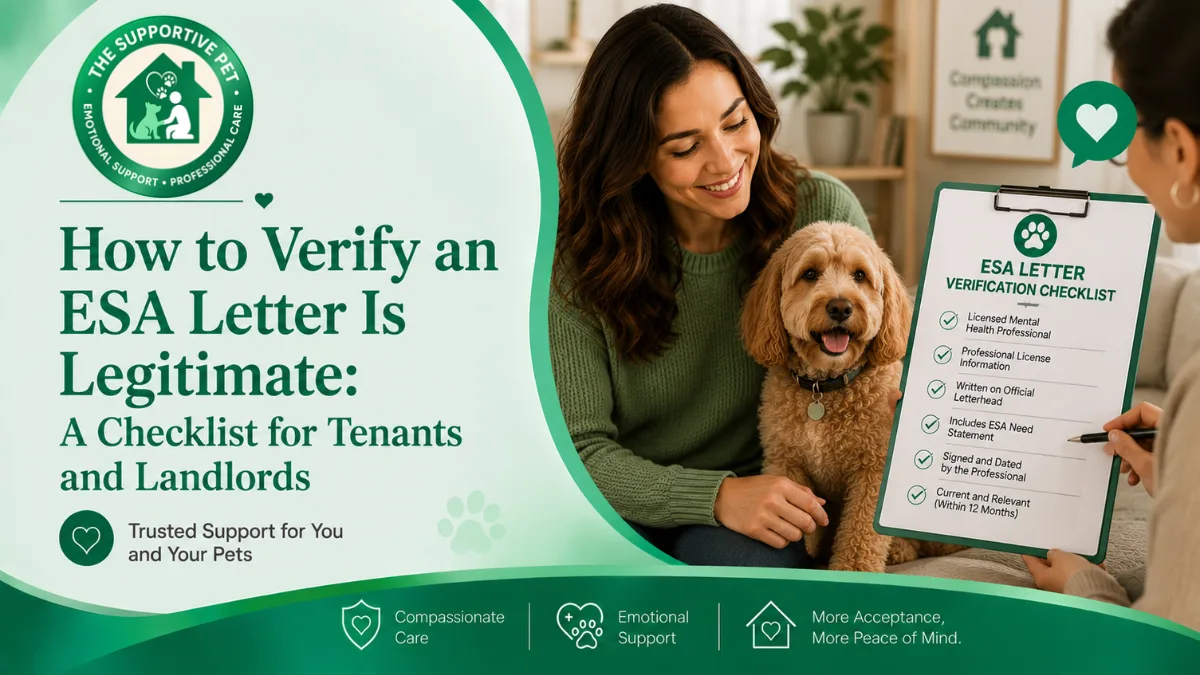
The ESA Letter Legitimacy Checklist
Use this checklist to evaluate any ESA letter - whether you are verifying the letter you received, or evaluating one as a housing provider:
Required Elements
- ☠Clinician's full name - the name of the licensed professional who issued the letter
- ☠Professional credentials - title (MD, PhD, LCSW, LPC, LMFT, etc.)
- ☠License number - the specific license number issued by the state licensing board
- ☠State of licensure - the state in which the clinician holds their active license
- ☠Contact information - phone number or email for verification
- ☠Disability confirmation - statement that the person has a disability under the FHA
- ☠Therapeutic nexus - statement that the identified animal provides support related to that disability
- ☠Animal identification - the name and species of the animal
- ☠Original signature - the clinician's signature (wet or electronic)
- ☠Date - the date the letter was issued (within the past 12 months)
- ☠Letterhead - the clinician's or practice's letterhead
How to Verify the Clinician's License
Every state maintains a public searchable database of licensed mental health professionals. Here is how to check:
- Search for "[State name] [license type] license verification" - e.g., "California LCSW license verification"
- Enter the clinician's name or license number in the state licensing board's search tool
- Confirm the license is active, that the license type matches what is stated in the letter, and that the license number matches
- Confirm the state of licensure matches the state where the housing is located (clinicians must be licensed in the state where their client resides)
If the clinician does not appear in the state database, or if their license is expired or suspended, the letter is fraudulent.
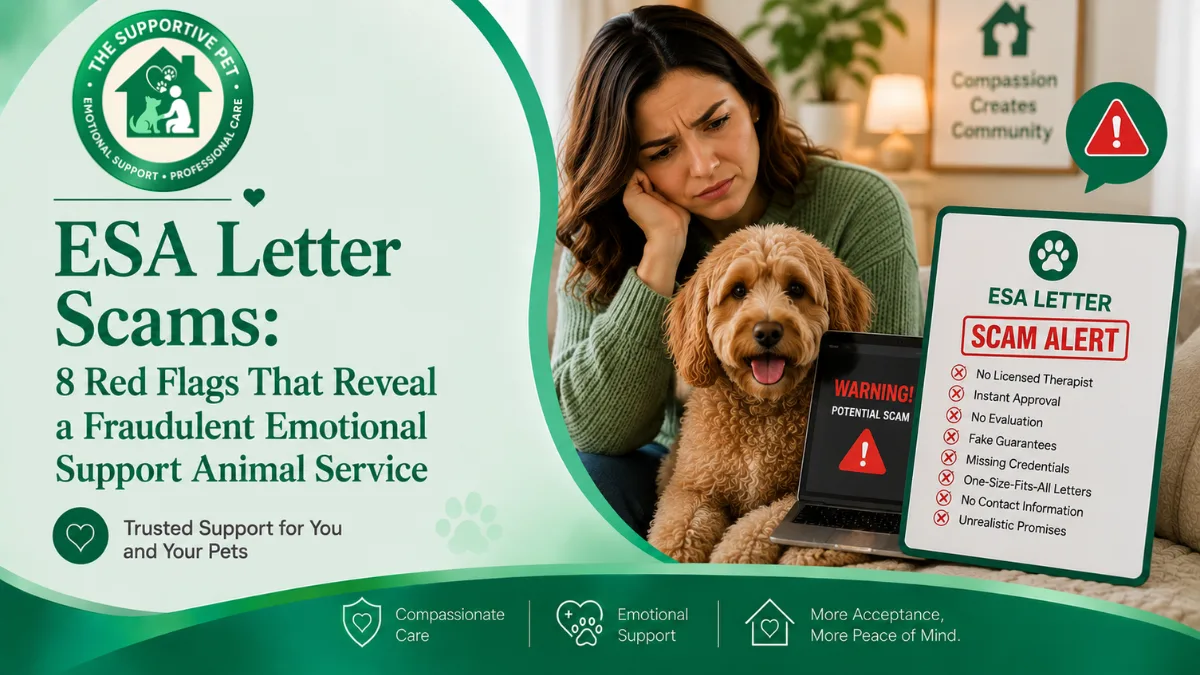
Red Flags That Suggest a Fraudulent Letter
- No license number: A legitimate ESA letter always includes the clinician's license number. No license number = no verifiable credentials.
- Generic or missing letterhead: Legitimate letters are on professional letterhead. A letter that looks like a template with fields filled in is suspicious.
- Instant issuance: A letter issued instantly (within seconds of completing an online form) has not been reviewed by a clinician. Real clinical evaluations take time.
- Bundled with registry certificates or ID cards: National ESA registries, certification programs, vests, and ID cards have no legal value. Providers that sell these alongside ESA letters are typically not legitimate clinical services.
- Very low price: A legitimate ESA letter requires a licensed clinician's time. Letters priced at $30–$60 cannot reflect the cost of a genuine clinical evaluation.
- Guaranteed approval: No legitimate clinician can guarantee approval before evaluating a patient. A guarantee of approval means there is no real evaluation.
For Housing Providers: How to Handle an ESA Letter
If you are a landlord evaluating an ESA accommodation request:
- You may contact the clinician to verify the letter's authenticity - you may not ask for medical details beyond what is in the letter
- You may verify the clinician's license through the state licensing board's public database
- You may not require additional documentation beyond the letter, such as medical records or a diagnosis
- You may not deny the accommodation based solely on the fact that the letter was obtained through a telehealth service
From the Clinician
As Head of Legal & Compliance, I've reviewed hundreds of ESA letters - both ours and those that clients brought us after their landlord rejected them. The patterns in fraudulent letters are strikingly consistent: no clinician name, license number formatted as "ESA-XXXX" rather than a state-issued number, no state of practice identified, and a template that could have been issued in any state for any person. The HUD guidance on assistance animals describes what constitutes "reliable documentation" from a clinician - and the fraudulent letters I see meet none of those criteria. What those services are selling is the appearance of documentation, not documentation itself.
Client scenario: A client came to us after their second landlord rejection. Their first letter, purchased for $49, named a clinician whose license number returned no results on the California licensing board search. Their second letter, from a different cheap service, named a licensed psychologist - but one whose license had lapsed three years prior. After obtaining a legitimate letter through our clinical evaluation process, their third landlord accepted without any follow-up questions. The client told us they had spent more money on the two fake letters than a legitimate evaluation would have cost.
A Fair Look at the Other Side
Even thorough verification steps are imperfect: some bad actors use real license numbers belonging to legitimate clinicians who did not actually issue the letter - a fraud that standard license board verification cannot catch. The most reliable additional check is to call the provider's office directly, using a phone number found independently through the state licensing board (not one printed on the letter), to confirm the letter was actually issued to you. A legitimate provider will confirm without hesitation; a fraudulent service often cannot.
Related: ESA letter scam red flags · Online vs in-person ESA letters · ESA registration scams
Step-by-Step License Verification Guide
Step 1: Find the Clinician's License Number
A legitimate ESA letter includes the clinician's name, license type (LCSW, LPC, Psychologist, MD, etc.), license number, and the state in which they are licensed. If any of these elements is missing, the letter is incomplete at minimum. Write down the license number and the state before proceeding to verification.
Step 2: Search the State Licensing Board Database
Every US state maintains a public license lookup database for mental health professionals. Search "[state name] LCSW license lookup" or "[state] psychology license verification" to find the relevant board website. Most state licensing board websites have a license search that allows you to search by name or license number. Verify that the license is active (not expired, suspended, or revoked) and that the license type matches what appears on the letter.
Step 3: Confirm the Clinician Has Clinical Knowledge of Your Condition
HUD's 2020 guidance specifies that the licensed professional must have "knowledge of the individual's disability." This means the clinician should have actually conducted a clinical evaluation of the individual - not simply signed a form. A letter issued without this evaluation cannot establish the required therapeutic nexus. If you are a landlord and you have serious doubts about whether an evaluation was conducted, you may request confirmation from the tenant that they actually interacted with the clinician - but you cannot demand medical records or details about the evaluation content.
Red Flags Checklist for Landlords
Letters that likely do not meet HUD standards: issued within minutes of an online questionnaire submission; no mention of clinical evaluation or patient relationship; from a "national ESA registry" (which does not exist); issued by an entity rather than an individually named licensed professional; license number absent or unverifiable in state database; template language without any individualized clinical assessment references. A letter meeting these red flags can be questioned in good faith without violating the FHA.
Frequently Asked Questions
How do you verify an ESA letter is real?
Verify the clinician's name and license number on the letter against the state licensing board's public database. All licensed mental health professionals (psychiatrists, psychologists, LCSWs, LPCs, LMFTs) appear in publicly searchable state licensing databases. If the name or license number on the letter does not match an active, current license in the relevant state, the letter is fraudulent.
What should an ESA letter include to be valid?
A valid ESA letter includes: (1) The clinician's full name, professional title, license type, and license number; (2) The state in which the clinician is licensed to practice; (3) Confirmation that the letter holder has a disability under the FHA; (4) Confirmation that the identified animal provides therapeutic benefit related to that disability; (5) The clinician's signature; (6) The date the letter was issued. The letter should be on the clinician's letterhead or the letterhead of their practice.
Does an ESA letter need to be notarized or certified?
No. ESA letters do not need to be notarized, certified, or registered. A valid ESA letter is a clinical document signed by a licensed mental health professional - not a legal document requiring notarization. Services that sell notarized ESA letters or imply that notarization adds validity are selling a misleading product.
Can I call the clinician to verify the ESA letter?
Yes, and landlords may do so. Contacting the clinician whose name and contact information appears on the letter to confirm the letter is authentic is permitted under HUD guidance. The clinician can confirm the letter is genuine - but they cannot reveal details about your diagnosis or treatment beyond what appears in the letter.
See our articles highlighted in Google Search
Add The Supportive Pet as a preferred source - your results, your way.