
What causes blisters on dog paw pads?
Dog paw pad blisters are most commonly caused by heat burns from hot pavement (especially in summer), chemical burns from ice melt products or lawn chemicals, friction burns from rough terrain or running on concrete, and less commonly by autoimmune skin conditions. Hot pavement is the leading cause - asphalt can reach 140°F or more on a hot day, far exceeding the roughly 120°F threshold that causes tissue damage.
Medical Disclaimer: This article is for informational purposes only and does not constitute medical or legal advice. Consult a qualified mental health professional before making decisions about your care. If you or someone you know is in crisis, call or text 988 (Suicide & Crisis Lifeline, available 24/7).
Dog paw blisters - fluid-filled pockets under the pad or skin of the paw - are more common than many dog owners realize, and they can range from minor friction injuries to symptoms of serious underlying conditions. Understanding what caused your dog's paw blisters is the key to treating them correctly and preventing recurrence. This guide covers the most common causes, how to assess severity, treatment options, and when a vet visit is necessary.
What Are Dog Paw Blisters?
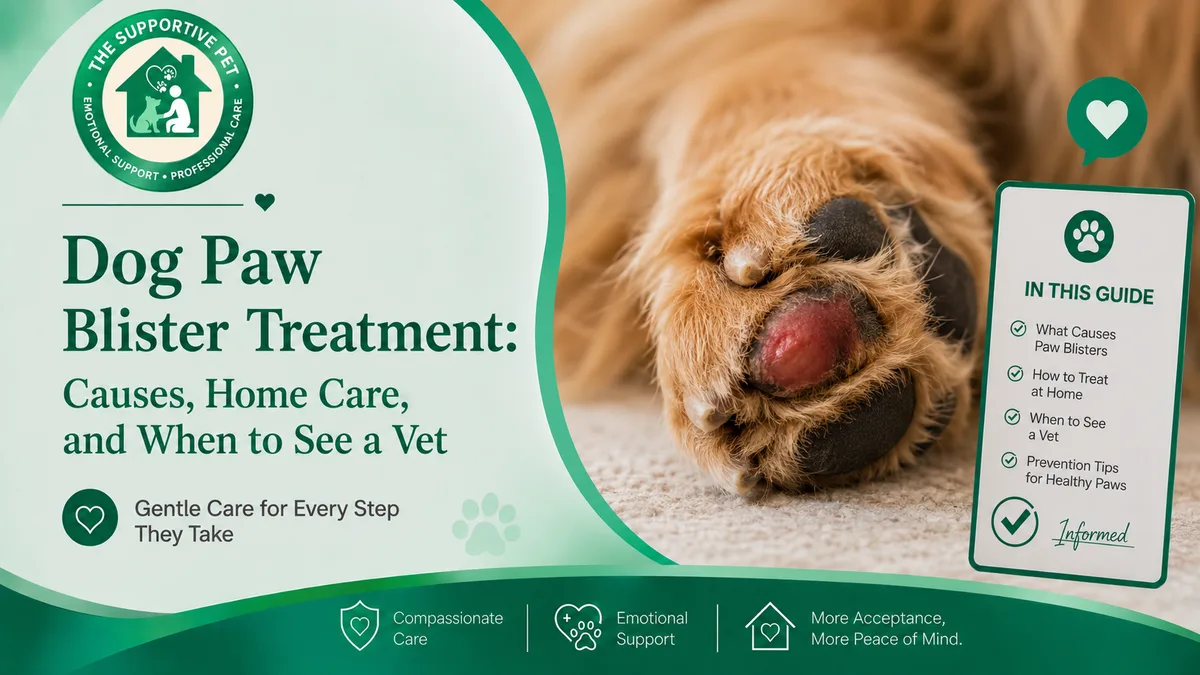
A blister on a dog's paw pad is a raised, fluid-filled area of skin damage. In dogs, paw pad blisters typically look different from human blisters - the thick skin of the paw pad may blister internally, causing the pad surface to look swollen, soft, or partially separated from the underlying tissue. In some cases, the blister ruptures, leaving a raw, wet, painful sore on the pad surface.
Related guides: bandages for dogs and dog scabs and skin conditions.
Paw pads are designed to be tough - they are thick, durable, and highly innervated (sensitive to provide sensory feedback). But this toughness has limits, and excessive heat, chemical exposure, or friction can damage the pad tissue just like it damages human skin.
Common Causes of Blisters on Dog Paw Pads
Hot Pavement Burn
This is the most frequent cause of paw pad blisters, especially in summer. Asphalt and concrete absorb and retain heat - on a day when the air temperature is 85°F, asphalt can reach 140°F or higher. Dog paw pads begin to sustain tissue damage around 120°F.
The risk is highest during midday walks on sunny days, particularly in southern and western states where summer temperatures regularly exceed 90°F. Many owners don't realize their dog's paws are burning because dogs often continue walking out of instinct or eagerness even when injured.
The palm test: Hold your palm against the pavement for 5 seconds. If it's too hot for you, it's too hot for your dog's paws.
Chemical Burns
Winter ice melt products (rock salt, calcium chloride, magnesium chloride) are a significant seasonal hazard. These chemicals can cause chemical burns on paw pads, especially with prolonged contact. Other chemical sources include lawn fertilizers, pesticides, pool chemicals, and cleaning products on floors.
Friction and Rough Terrain
Sudden increases in activity intensity - a dog who normally walks on grass suddenly runs for a long time on concrete or asphalt - can cause friction burns and blisters. This is also seen in dogs new to hiking on rocky terrain. Paw pads condition over time with gradual exposure, but abrupt increases in rough surface activity outpace this conditioning.
Autoimmune Conditions
Less commonly, blisters on dog paw pads can be a manifestation of autoimmune skin diseases including pemphigus foliaceus or lupus. These conditions cause blistering and erosion across multiple paw pads simultaneously, often along with lesions elsewhere on the body. Autoimmune paw disease requires veterinary diagnosis and specific immunosuppressive treatment.
How to Identify a Blister on a Dog's Paw
Signs of a paw pad blister:
- Limping or reluctance to bear weight on the affected paw
- Licking or chewing at one or more paws
- Visible swelling, redness, or soft/raised areas on the pad surface
- Discoloration of the pad (darkening, or pale/whitish areas from deep burns)
- A raw, wet-looking sore where a blister has ruptured
- Whimpering or pulling the paw away when you touch the pad
After any summer walk on hot pavement or winter walk with ice melt chemicals, check all four paws for these signs.
Dog Paw Blister Treatment at Home
For minor blisters caught early:
- Cool the paw: Rinse immediately with cool (not cold/ice) water for 5–10 minutes to remove chemical residue and reduce heat. Do not use ice directly on the paw.
- Do not pop the blister: Intact blisters protect the underlying tissue as it heals. Popping introduces infection risk.
- Clean gently: Use mild soap and water or diluted chlorhexidine to clean around the blister
- Apply antibiotic ointment: A thin layer of triple antibiotic ointment on ruptured blisters helps prevent infection
- Bandage the paw: Wrap with a non-stick pad, then gauze, then cohesive bandage (Vetwrap). A dog boot over the bandage protects it during outdoor time.
- Prevent licking: Use an e-collar to keep your dog away from the paw
- Restrict activity: Soft grass or indoor-only until healed
- Change bandage daily or more often if wet or soiled
When to See a Vet
Seek veterinary care when:
- Multiple paw pads are affected simultaneously
- The blister is large, covers significant pad area, or is deeply discolored
- Your dog refuses to bear any weight on the paw
- There are signs of infection (swelling spreading beyond the pad, discharge, odor)
- The injury doesn't show improvement after 3–5 days of home care
- Your dog is in significant pain despite pain management
- You suspect chemical burn and are unsure what chemical was involved
Your vet can prescribe appropriate pain management, stronger topical treatment, and can debride (clean) severely damaged pad tissue to promote proper healing.
How to Prevent Paw Blisters
- Use the palm test before every hot-weather walk - if pavement is too hot for your hand, walk at a cooler time of day or on grass
- Use dog boots in summer heat and winter ice melt conditions
- Rinse paws thoroughly after exposure to chemicals, ice melt, or pool water
- Gradually increase activity on rough surfaces rather than sudden long runs
- Apply paw balm regularly to maintain pad moisture and resilience
Your dog's health and your own go hand in hand. If your pet provides essential emotional support for your mental wellbeing, The Supportive Pet can connect you with a licensed clinician to evaluate you for an ESA letter - protecting your right to keep your pet in your home. Start the process here.
Protecting Your Dog's Paws Year-Round
Summer Pavement Burns
Hot pavement is one of the leading causes of paw blisters in dogs during summer months. Asphalt and concrete can reach temperatures of 150°F or higher on hot days - far above the threshold for paw pad burns. The simple test: hold the back of your hand on the pavement for 7 seconds. If it's too hot for your hand, it's too hot for your dog's paws. Walk dogs during early morning or evening when pavement has cooled, stick to grass and dirt surfaces when possible, and consider protective paw wax or booties for dogs that must walk on hot pavement.
Winter Salt and Chemical Burns
Road salt and chemical ice melters used on sidewalks and roads during winter can cause chemical burns and blistering on dog paw pads, particularly with prolonged exposure. Signs of salt irritation or burns: limping during or after walks, licking paws intensely after walks, red or inflamed paw pads, visible blistering. Rinse your dog's paws with warm water after every winter walk to remove salt and chemicals. Protective wax applied before walks and dog booties provide the best protection against winter chemical exposure.
Paw Pad Health Maintenance
Regular paw pad care prevents many blister-causing conditions. Check your dog's paw pads weekly: they should be smooth (or lightly textured for grip), free of cracking, without any spots that appear thickened, discolored, or painful to touch. Keep the hair between the toes trimmed to prevent mats that retain moisture. Apply paw balm or wax weekly during extreme weather seasons - both hot summer and cold winter increase the risk of pad damage. If your dog's pads are consistently cracking or rough, discuss a supplemental fatty acid or biotin regimen with your veterinarian, as nutritional deficiencies can contribute to poor pad health.
Frequently Asked Questions
What causes blisters on dog paw pads?
Dog paw pad blisters are most commonly caused by heat burns from hot pavement (especially in summer), chemical burns from ice melt products or lawn chemicals, friction burns from rough terrain or running on concrete, and less commonly by autoimmune skin conditions. Hot pavement is the leading cause - asphalt can reach 140°F or more on a hot day, far exceeding the roughly 120°F threshold that causes tissue damage.
How do I treat a blister on my dog's paw?
For minor paw pad blisters: rinse the paw with cool (not cold) water to remove any chemical residue and soothe the area. Do not pop the blister - intact blisters protect the healing tissue underneath. Apply a thin layer of antibiotic ointment and bandage the paw lightly to protect it. Prevent your dog from licking the paw. Restrict activity to allow healing. If the blister is large, ruptured, or appears severely burned, see a vet.
How long does a paw blister take to heal?
Minor paw pad blisters from surface burns typically heal in 1–2 weeks with appropriate care. More significant injuries - deep burns, large areas of damage, or ruptured blisters that became infected - can take several weeks to heal and may require veterinary-prescribed wound care. Paw pads do regenerate but heal slowly because they bear weight and are difficult to immobilize.
Can my dog walk with a blister on their paw?
Short, gentle walks on soft surfaces are usually tolerable for a dog with a minor paw blister. Avoid hot pavement, rough concrete, gravel, or long walks. Use a dog boot to protect the bandaged paw during outdoor time. Significant paw pad injuries may cause enough pain that your dog refuses to bear weight - if this happens, carry your dog for bathroom trips and see a vet promptly.
How do I prevent paw blisters in my dog?
Prevent paw blisters by: testing pavement temperature with your hand before walking (if it's too hot for your hand for 5 seconds, it's too hot for paws), walking during cooler parts of the day in summer, using dog boots during hot weather or winter ice melt season, rinsing paws after any chemical exposure, and gradually conditioning your dog's paw pads if increasing activity levels on rough terrain.
See our articles highlighted in Google Search
Add The Supportive Pet as a preferred source - your results, your way.