
Should I tell my new landlord about my ESA before or after I apply?
The most practical approach is to disclose after receiving a lease offer but before signing. Submit your ESA letter and accommodation request at that point and ask for written confirmation before you execute the lease.
Medical Disclaimer: This article is for informational purposes only and does not constitute medical or legal advice. Consult a qualified mental health professional before making decisions about your care. If you or someone you know is in crisis, call or text 988 (Suicide & Crisis Lifeline, available 24/7).
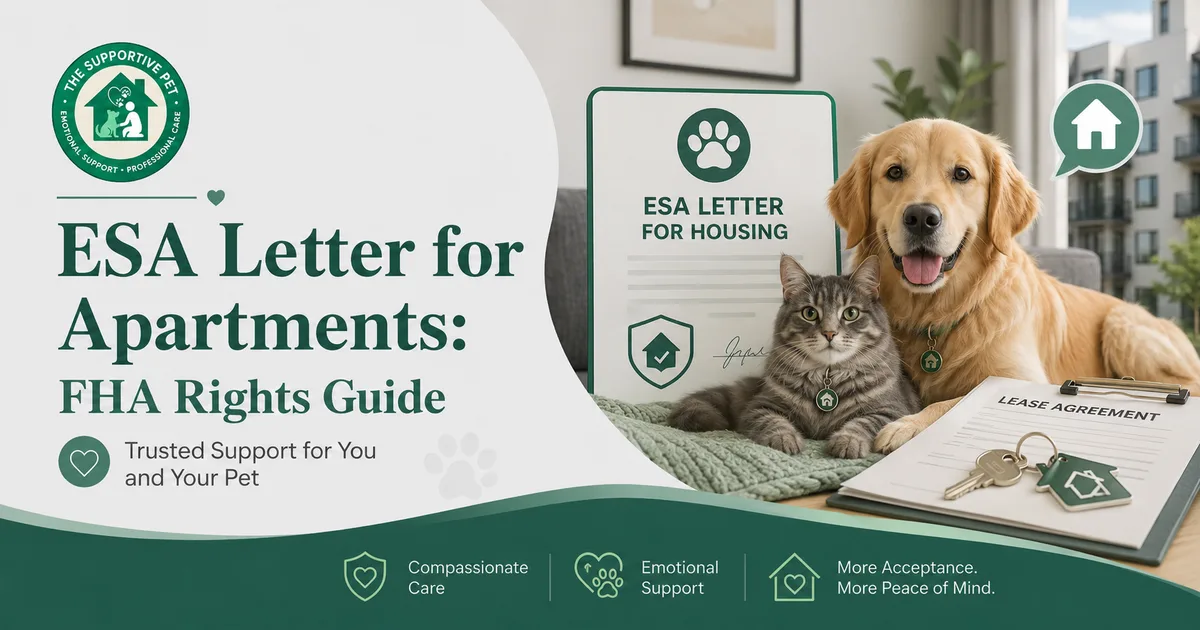
Moving to a new apartment with an emotional support animal involves an extra layer of planning that most people overlook until problems arise. The question of when to disclose your ESA, how to submit your accommodation request, and what to do if a prospective landlord resists - these are decisions that can determine whether your move goes smoothly or becomes a legal dispute. This guide covers everything you need to know before you sign.
Your Rights When Moving to a New Apartment
The Fair Housing Act (42 U.S.C. § 3604) applies not just to your current housing - it applies to the housing application process for new units. A prospective landlord who refuses to consider your application, withdraws an offer, or denies you housing specifically because of your emotional support animal may be violating federal fair housing law.
Key points for new apartment applications:
- You have the right to request a reasonable accommodation at any stage of the application process
- A landlord cannot reject your application solely because you have an ESA
- Once you have submitted a valid ESA letter and accommodation request, the landlord must engage in a good-faith review process
When to Submit Your ESA Accommodation Request
Timing your ESA disclosure requires balancing transparency with protection. Here are the most common approaches:
- At application: Some ESA owners prefer to disclose upfront to avoid surprises after a lease is offered. This is transparent but gives some landlords an early opportunity to discriminate illegally.
- After application approval, before lease signing: This is the most practical approach for most people. Submit your ESA accommodation request after the landlord indicates they want you as a tenant, before the lease is finalized. This ensures your ESA situation is addressed before you are legally bound.
- During the lease signing meeting: Submitting at signing creates pressure and time constraints. The landlord has not had time to process the request properly, and you may feel pressured to sign without the accommodation confirmed in writing.
The recommended approach: submit your ESA letter and written accommodation request as soon as you receive a lease offer, before you sign. Ask for the accommodation to be reflected in a lease addendum or written confirmation before you execute the lease.
What to Include in Your New Apartment ESA Request
Your accommodation request to a new landlord should include:
- Your name and the unit address you are applying for
- A statement that you have a disability and require an emotional support animal as an accommodation
- Your animal's species and name
- A copy of your ESA letter from a licensed mental health professional
- A specific request to be allowed to keep the animal and have all pet fees waived as a reasonable accommodation under the Fair Housing Act (42 U.S.C. § 3604)
- A request for written confirmation of the accommodation before lease signing
What to Do if a Prospective Landlord Resists
Some landlords push back during the application stage. Common resistance patterns and responses:
- "We have a strict no-pets policy." - Your response: cite the Fair Housing Act, which requires housing providers to consider reasonable accommodation requests regardless of their standard pet policies. A no-pets policy does not exempt landlords from FHA obligations.
- "Your ESA letter needs to be from a local provider." - There is no such requirement. Your ESA letter from any licensed mental health professional in your state is valid.
- "We need more information about your condition." - Your response: HUD guidelines state that landlords may request confirmation that you have a disability and that the animal provides disability-related benefit. They cannot demand your diagnosis, treatment details, or medical records. Your ESA letter satisfies the documentation requirement.
- "We will need to charge a larger deposit because of the ESA." - Illegal. The FHA prohibits any additional fees for documented ESA owners.
Getting Your ESA Letter Before You Move
If you do not yet have an ESA letter, get one before you begin your apartment search. Having your letter ready allows you to submit your accommodation request immediately when you find the right unit. The Supportive Pet provides same-day letters through state-licensed clinicians via telehealth.
Protecting Yourself After You Sign
Even after the lease is signed and your accommodation is approved, keep your documentation organized:
- Keep a copy of your original accommodation request with the submission date
- Keep the landlord's written approval of your accommodation
- Keep your ESA letter and have it renewed annually as most are valid for one year
If you need to move again, your ESA letter can be used at your next housing location. Annual renewal keeps your letter current.
Frequently Asked Questions About ESA Letters for New Apartments
Q: Can a landlord reject my application because I have an ESA?
Rejecting an application solely because of an ESA likely violates the Fair Housing Act. Landlords must engage in an accommodation process rather than outright rejection. If you believe you were denied housing due to your ESA, contact HUD or a local fair housing organization.
Q: I found an apartment that lists "no pets" but I have an ESA. Should I apply?
Yes. The "no pets" designation in a listing does not change your FHA rights. Many no-pets buildings regularly accommodate ESA owners through the accommodation process. Apply, receive an offer, then submit your ESA accommodation request.
Q: Can I include my ESA accommodation in the lease itself?
Yes, and this is often the clearest arrangement. Some landlords add a lease addendum specifying that the ESA is permitted as a reasonable accommodation. This provides written protection for the duration of your tenancy.
Related Resources
- How to write an ESA accommodation request letter
- How long does a landlord have to respond?
- ESA letter for housing - complete guide
ESA Letter Renewal for a New Lease
If you are moving from a previous apartment where your ESA was already approved, your existing ESA letter may still be valid - but many landlords request a letter dated within the past year. Here is what to know about carrying ESA rights from one property to another:
- Your ESA letter does not "transfer" - each housing provider requires their own accommodation process
- Your new landlord cannot rely on your previous landlord's approval; you must submit a new accommodation request
- If your letter is more than 12 months old, consider getting a renewal letter before submitting to your new landlord - a current letter avoids any dating disputes
- See our guide to ESA letter expiration and renewal for the full details
Quick Reference: New Apartment ESA Checklist
- Get or renew your ESA letter before or immediately after finding a new apartment
- Write a formal accommodation request letter - name, address, disability-related need, copy of ESA letter
- Send by email with read receipt or certified mail
- Allow 10-14 business days for a response
- Keep all correspondence and confirm approval in writing before moving in with your ESA
- If denied, respond citing the Fair Housing Act (42 U.S.C. § 3604) or file a complaint with HUD
Frequently Asked Questions
Should I tell my new landlord about my ESA before or after I apply?
The most practical approach is to disclose after receiving a lease offer but before signing. Submit your ESA letter and accommodation request at that point and ask for written confirmation before you execute the lease.
Can a new landlord reject my application because I have an ESA?
Rejecting an application solely because of an ESA likely violates the Fair Housing Act. Landlords must engage in a good-faith accommodation process. If you believe you were denied due to your ESA, contact HUD or a local fair housing organization.
My new apartment has a no-pets policy. Can my ESA still live there?
Yes. The Fair Housing Act (42 U.S.C. § 3604) requires housing providers to make reasonable accommodations for people with disabilities. No-pets policies in leases cannot eliminate your federal rights as a documented ESA owner.
See our articles highlighted in Google Search
Add The Supportive Pet as a preferred source - your results, your way.