
Do I need a diagnosis before an ESA evaluation?
No. The clinician assesses your current mental health during the evaluation. Many people who have never received a formal diagnosis qualify - what matters is whether your condition substantially limits major life activities.
Medical Disclaimer: This article is for informational purposes only and does not constitute medical or legal advice. Consult a qualified mental health professional before making decisions about your care. If you or someone you know is in crisis, call or text 988 (Suicide & Crisis Lifeline, available 24/7).
If you are considering an ESA letter for the first time, the evaluation process may feel unfamiliar or even intimidating. What will the clinician ask? How long does it take? What are they actually assessing? This walkthrough explains exactly what happens during a legitimate ESA evaluation through The Supportive Pet, so you can prepare and know what to expect.
What Is an ESA Evaluation?
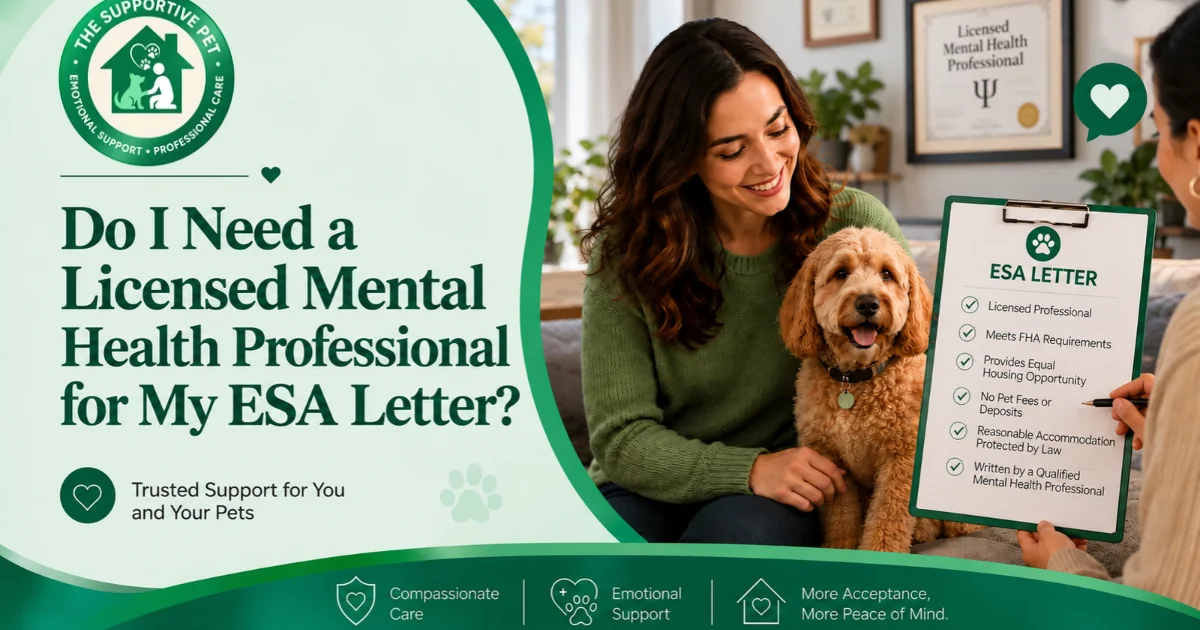
An ESA evaluation is a clinical assessment conducted by a licensed mental health professional. The clinician evaluates whether you have a qualifying mental health condition under the Fair Housing Act (42 U.S.C. § 3604) and whether an emotional support animal is an appropriate clinical recommendation for your situation. It is a real clinical consultation - not a rubber stamp or a form to fill out.
Valid ESA letters must come from licensed professionals including:
- Licensed Clinical Social Workers (LCSWs)
- Licensed Professional Counselors (LPCs)
- Licensed Marriage and Family Therapists (LMFTs)
- Psychologists (PhD, PsyD)
- Psychiatrists (MD)
Through The Supportive Pet, evaluations are conducted by state-licensed clinicians via HIPAA-compliant telehealth video or phone sessions.
Before Your Appointment
Before your evaluation, you will complete a brief intake form covering:
- Basic demographic and contact information
- Your current mental health concerns (not a diagnosis form - just what brings you in)
- Your current treatment situation (whether you are in therapy, on medication, or not currently in treatment)
- Information about your animal (species, name)
You do not need to come with a diagnosis. Many people seeking ESA letters have never received a formal mental health diagnosis but experience significant anxiety, depression, or other symptoms. The clinician assesses you during the evaluation - the intake form is preparation, not a decision.
During the Evaluation: What the Clinician Assesses
The evaluation typically runs 20-40 minutes. The clinician will cover:
- Your current mental health concerns - what symptoms you are experiencing, how long they have been present, and how they affect daily functioning. This is a conversational assessment, not a formal battery of psychological tests.
- Functional impact - how your condition affects specific areas of life: work or school, relationships, sleep, daily self-care, social functioning. The clinician is assessing whether your condition substantially limits major life activities.
- Treatment history - what treatments you have tried, what has helped, what has not. This provides clinical context for the recommendation.
- Your animal's role - how your emotional support animal helps you. This is usually a brief part of the conversation - the clinician is confirming that the animal provides disability-related benefit, not testing your pet.
- Housing context - your current housing situation and why you are seeking an ESA letter. This helps the clinician understand the clinical need.
What the Clinician Is Not Allowed to Do
A legitimate ESA evaluation does not involve:
- Demanding proof of a prior diagnosis
- Requiring you to be in active treatment before they can help you
- Asking about your landlord or housing dispute details
- Evaluating your animal's behavior or training
If you encounter a service that skips the clinical evaluation entirely and simply sends you a letter after a form submission, that is a red flag. ESA letters from services without genuine clinical evaluation are not legally valid and may be rejected by landlords or housing providers. See our guide to identifying legitimate ESA letters.
After the Evaluation: What Happens Next
If the clinician determines that you have a qualifying condition and that an ESA is an appropriate clinical recommendation, they issue your ESA letter. Through The Supportive Pet, letters are typically delivered the same business day or within 24 hours.
Your ESA letter will include:
- The clinician's name, license type, and license number
- The state in which they are licensed
- A statement that you have been evaluated and have a qualifying disability
- A recommendation for an emotional support animal as part of treatment
- The letter on clinic letterhead with signature and date
Once you have your letter, see our guide to submitting your ESA accommodation request to your landlord.
What If I Do Not Have an Existing Mental Health Provider?
You do not need to be in current therapy or have a prior mental health provider to get an ESA letter. The evaluation through The Supportive Pet is a standalone clinical assessment. Many people who have never seen a therapist qualify - what matters is your current mental health and functional state, not your treatment history.
Preparing for a Successful Evaluation
To make the most of your evaluation:
- Be specific about your symptoms - describe how anxiety, depression, or other conditions affect your daily life with concrete examples
- Be honest - the evaluation is a clinical consultation; honesty produces the most accurate assessment and the most useful clinical documentation
- Know your animal's name and species - this is typically asked during intake
- Have a quiet, private space - telehealth evaluations work best in a space where you can speak freely
Frequently Asked Questions About the ESA Evaluation Process
Q: What if I do not get the letter I expected after the evaluation?
If a clinician determines that an ESA is not an appropriate clinical recommendation, they will typically explain why and may suggest other resources. This is rare for people with genuine mental health needs. The evaluation is designed to serve people with real needs, not to create barriers.
Q: Is my evaluation information confidential?
Yes. The evaluation is a clinical consultation protected by HIPAA. Your session information is not shared with your landlord - only the ESA letter itself is provided to you for use with housing providers.
Get Started Today
Schedule your evaluation with a licensed clinician at The Supportive Pet. Same-day letters available for qualifying conditions.
Related Resources
- Which mental health professionals can write ESA letters
- Online vs. in-person ESA evaluations
- How to verify an ESA letter is legitimate
Summary: The ESA Evaluation at a Glance
Here is what the process looks like from start to finish when you get an ESA evaluation through The Supportive Pet:
- Book a telehealth appointment - choose a time that works with your schedule; most slots are available same-day or next-day
- Video call with a licensed clinician - 15-30 minutes discussing your mental health, how it affects daily functioning, and whether an ESA would provide therapeutic benefit
- Letter issued - if qualified, most clients receive their ESA letter the same business day or within 24 hours
- Use the letter - submit with a written accommodation request to your landlord; keep the original and provide a copy
The evaluation is a clinical conversation, not a test. There are no trick questions or pass-fail criteria - the clinician simply needs enough information to make a professional judgment about your mental health needs and whether an ESA is an appropriate recommendation.
Frequently Asked Questions
Do I need a diagnosis before an ESA evaluation?
No. The clinician assesses your current mental health during the evaluation. Many people who have never received a formal diagnosis qualify - what matters is whether your condition substantially limits major life activities.
How long does an ESA evaluation take?
Most ESA evaluations through The Supportive Pet take 20-40 minutes. The clinician asks about your symptoms, their impact on daily functioning, and how your animal provides support.
What happens if the clinician does not recommend an ESA for me?
If your condition does not meet the clinical criteria, the clinician will explain why and may recommend other resources. This is uncommon for people with genuine mental health needs. The evaluation is not a rubber stamp, but it is designed to serve people who truly need support.
See our articles highlighted in Google Search
Add The Supportive Pet as a preferred source - your results, your way.