
Can my landlord ban Pit Bulls as ESAs because of their breed?
No. Under the Fair Housing Act, landlords cannot deny ESA accommodations based solely on breed. They can only deny if your specific Pit Bull poses a documented, direct threat - not based on the breed's general reputation. A valid ESA letter overrides breed bans for any breed.
Medical Disclaimer: This article is for informational purposes only and does not constitute medical or legal advice. Consult a qualified mental health professional before making decisions about your care. If you or someone you know is in crisis, call or text 988 (Suicide & Crisis Lifeline, available 24/7).
Breed restrictions are among the most common housing barriers ESA owners face. Many apartment complexes maintain lists of prohibited breeds - typically Pit Bulls, Rottweilers, German Shepherds, Dobermans, Chow Chows, Akitas, and sometimes mixed breeds. Under the Fair Housing Act (42 U.S.C. § 3604), these restrictions cannot be enforced against documented ESA owners.
The Legal Position: Breed Bans vs. Fair Housing Act
The Fair Housing Act requires housing providers to make reasonable accommodations for people with disabilities. An emotional support animal that provides documented therapeutic benefit to a person with a qualifying disability is a recognized reasonable accommodation under the FHA.
Breed restrictions are set by private landlords, property managers, and HOAs - typically driven by insurance underwriting requirements. They have no legal authority over Fair Housing Act rights. When your accommodation request is valid under the FHA, your landlord's breed restriction must yield to your federal right.
This is not a gray area in housing law. Federal courts and HUD enforcement actions have consistently upheld ESA owners' right to breed-restricted animals in housing.
What Landlords Can and Cannot Do
Landlords CANNOT:
- Deny an ESA accommodation solely because of the animal's breed
- Require a breed-restricted ESA to wear a muzzle as a blanket condition
- Charge pet fees for a breed-restricted ESA (fees are waived for all documented ESAs)
- Use insurance-based breed restrictions as a legal basis for denial
- Require a different, non-restricted breed instead of the one you have a bond with
Landlords CAN:
- Request documentation - a letter from a licensed mental health professional
- Evaluate the reasonableness of the specific accommodation
- Deny based on a direct, documented threat posed by your specific animal (not the breed in general)
- Request additional documentation if they have specific concerns about your animal's history
The "Direct Threat" Exception
The only lawful basis for denying an ESA on safety grounds under the FHA is a documented direct threat from your specific animal. The standard is:
- The threat must be based on your specific animal's actual behavior - not the breed's reputation
- It must be a genuine threat to other residents or property - not an anticipatory concern
- It must be documented (prior incidents, documented behavior)
- The landlord must consider whether any conditions could mitigate the threat before denying
A landlord who says "we don't allow Pit Bulls" without evidence of a specific threat from your specific dog does not meet the direct threat standard.
Commonly Breed-Restricted ESA Breeds
These breeds most frequently face ESA accommodation pushback - all are overridden by a valid ESA letter:
- Pit Bull / American Staffordshire Terrier ESA
- Rottweiler ESA
- German Shepherd ESA
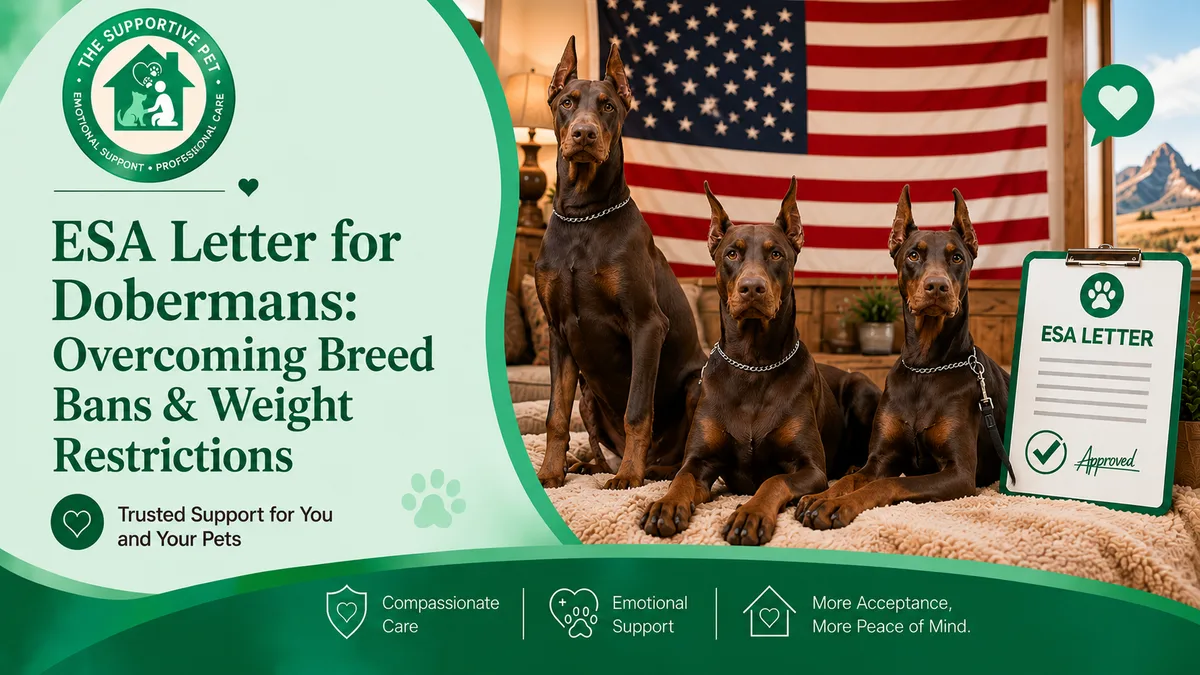
- Doberman ESA
- Great Dane ESA
- Husky ESA
How to Handle a Breed-Based ESA Denial
- Request denial in writing with the specific legal basis cited by the landlord
- Respond in writing citing the Fair Housing Act (42 U.S.C. § 3604) and noting that breed restrictions cannot override reasonable accommodation rights
- Verify your documentation - ensure your ESA letter is current, from a licensed clinician, on professional letterhead with license number
- File a complaint if the denial persists - file at hud.gov/fairhousing
The Supportive Pet provides free landlord dispute support to all clients who receive a letter through our clinicians. If you're facing a breed-based ESA denial, we can help.
Frequently Asked Questions
Can my landlord ban Pit Bulls as ESAs because of their breed?
No. Under the Fair Housing Act, landlords cannot deny ESA accommodations based solely on breed. They can only deny if your specific Pit Bull poses a documented, direct threat - not based on the breed's general reputation. A valid ESA letter overrides breed bans for any breed.
My lease says no restricted breeds and my dog is on the list. Do I still have ESA rights?
Yes. The Fair Housing Act overrides lease clauses, including breed restriction clauses. Federal law cannot be contracted away in a lease. Submit your ESA accommodation request with a valid letter, and your landlord must evaluate it under FHA standards - not lease terms.
What happens if my landlord cites their insurance company's breed restrictions to deny my ESA?
Insurance-based breed restrictions do not override FHA obligations. HUD has consistently held that landlords must explore alternative insurance options rather than using insurance restrictions to deny ESA accommodations. A denial based solely on insurance breed lists is potentially an FHA violation.
Can I get an ESA letter for any breed, including those considered 'dangerous' breeds?
Yes. ESA letter qualifications are based on your mental health needs and the therapeutic benefit of your specific animal - not the animal's breed. Licensed clinicians assess your qualifying condition, not your dog's breed. Any breed can be an ESA.
See our articles highlighted in Google Search
Add The Supportive Pet as a preferred source - your results, your way.