
What is an emotional support animal (ESA)?
An emotional support animal (ESA) is any animal - most commonly a dog or cat - that a licensed mental health professional has determined provides therapeutic benefit to a person with a mental health condition. ESAs are recognized under the Fair Housing Act, which requires housing providers to make reasonable accommodations for individuals with disabilities. Unlike service animals, ESAs do not need special training - their presence and companionship itself is the therapy.
Medical Disclaimer: This article is for informational purposes only and does not constitute medical or legal advice. Consult a qualified mental health professional before making decisions about your care. If you or someone you know is in crisis, call or text 988 (Suicide & Crisis Lifeline, available 24/7).
What Is an Emotional Support Animal?
An emotional support animal (ESA) is any animal that a licensed mental health professional has determined provides direct therapeutic benefit to a person with a mental or emotional health condition. The animal's presence, companionship, and bond with the owner is itself the therapy - no special training is required.
ESAs are not simply pets. They are assistance animals recognized under the Fair Housing Act (FHA), which obligates housing providers to make reasonable accommodations for tenants with disabilities - including allowing an emotional support animal in buildings that otherwise prohibit pets.
The Legal Definition of an Emotional Support Animal
HUD guidance defines an emotional support animal as an assistance animal that "provides emotional support that alleviates one or more identified symptoms or effects of a person's existing disability." This definition has two clinical requirements:
- A qualifying disability: The person must have a mental or emotional impairment that substantially limits one or more major life activities - such as sleeping, concentrating, caring for oneself, or interacting with others.
- A therapeutic nexus: The animal must provide support that is directly related to, and necessary because of, that disability. This relationship must be assessed and confirmed by a licensed mental health professional.
This is why an ESA letter - issued by a licensed clinician who has evaluated your specific case - is the required documentation. A registration, certificate, or ID card purchased online is not a legal ESA document and is not recognized by the FHA.
What Animals Can Be Emotional Support Animals?
The Fair Housing Act does not restrict ESAs to any specific species. Any domesticated animal can qualify as an emotional support animal, provided a licensed clinician determines it provides genuine therapeutic benefit. Common ESA species include:
- Dogs - the most common ESA species by far. Any breed, size, or weight can qualify - FHA housing rights are not limited by breed restrictions.
- Cats - the second most common ESA. See our guide on ESA letters for cats.
- Rabbits - popular for their gentle, calming presence. See ESA letters for rabbits.
- Birds - including parrots, cockatiels, and canaries. See ESA letters for birds.
- Guinea pigs, hamsters, and small mammals - approved when clinically appropriate.
Housing providers may raise objections if a specific animal poses a direct threat to others or would cause substantial property damage. But species or size alone is not a valid reason to deny an accommodation request. For a full breakdown, see our guide to all animals that can be ESAs.
ESA vs. Service Animal vs. Pet: What Is the Difference?
These three categories are frequently confused. Here is the legal distinction:
| Category | Training Required | Legal Protection | Public Access |
|---|---|---|---|
| Service Animal (ADA) | Yes - specific disability-related tasks | ADA + FHA | Full - all public places |
| Psychiatric Service Dog | Yes - psychiatric tasks | ADA + FHA | Full - all public places |
| Emotional Support Animal | No training required | FHA only | Housing only |
| Therapy Animal | Varies by program | No federal protection | By facility invitation only |
| Pet | None | None | By owner permission only |
The key distinction for housing: only service animals and ESAs have legal housing rights under the FHA. Pets have no such protection - landlords can enforce pet policies, charge deposits, and restrict breeds for regular pets. For a deep comparison, see our guide to ESA vs. service animals.
What Mental Health Conditions Qualify for an ESA?
Many diagnosed mental health conditions can qualify a person for an emotional support animal. The condition must be recognized in the DSM-5 and must substantially limit a major life activity. Common qualifying conditions include:
- Anxiety disorders (generalized anxiety, social anxiety, panic disorder)
- Depression and major depressive disorder
- Post-traumatic stress disorder (PTSD)
- Attention deficit hyperactivity disorder (ADHD)
- Bipolar disorder
- Obsessive-compulsive disorder (OCD)
- Autism spectrum disorder
- Agoraphobia and other phobias
- Insomnia and sleep disorders related to mental health
The licensed clinician conducting your evaluation determines whether your specific condition and circumstances qualify. Having a diagnosis alone does not automatically qualify you - the clinician must determine that an ESA genuinely provides therapeutic benefit for your situation. See our full qualifying conditions guide.
What Rights Does an Emotional Support Animal Letter Give You?
A valid ESA letter from a licensed mental health professional gives you the following rights under the Fair Housing Act:
- Live with your ESA in housing that otherwise prohibits pets - including apartments, condos, HOAs, college dorms, and most rental properties.
- No pet deposits or pet fees for your ESA - landlords cannot charge pet-related fees for assistance animals.
- No breed or size restrictions - standard pet policies for breed, weight, and size do not apply to documented ESAs.
- Have up to two ESAs if clinically appropriate and documented on one letter. See our guide on ESA letters for two pets.
ESA rights under the FHA apply to most housing. There are limited exceptions for owner-occupied buildings with four or fewer units and certain single-family homes rented without a broker. For a complete guide to your housing rights, see ESA letter for housing.
How to Get an Emotional Support Animal Letter
Getting an official ESA letter is a three-step process:
- Complete a clinical intake: Answer questions about your mental health history, current symptoms, and how your animal helps manage those symptoms. This takes under 10 minutes at The Supportive Pet.
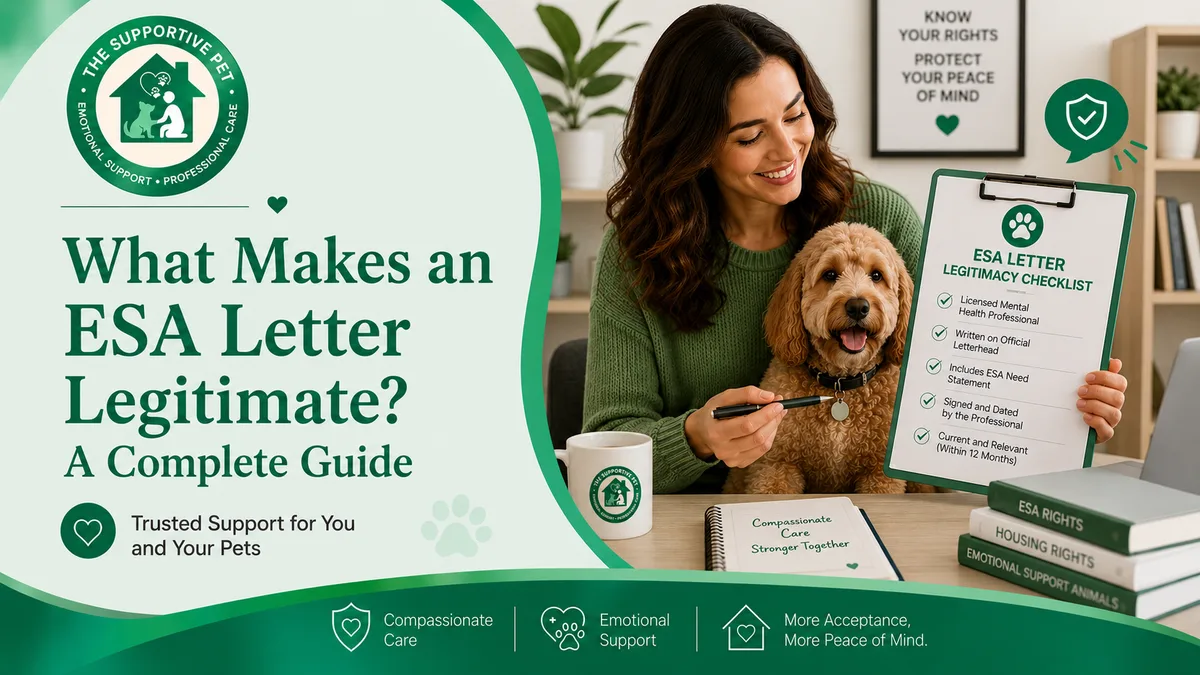
- Licensed clinician evaluation: A licensed mental health professional in your state reviews your case. If you qualify, they write and sign your ESA letter on their official letterhead, including their license number and state of licensure.
- Receive your letter: Your signed ESA letter arrives by email the fast, as a PDF ready to present to your landlord.
Important: avoid any service that issues an ESA letter without a real clinical evaluation - those letters are not considered legitimate by housing providers and will not hold up to scrutiny. For a complete breakdown of what a legitimate letter must contain, see our guide to what makes an ESA letter valid.
The Role of the Licensed Mental Health Professional
Only a licensed mental health professional (LMHP) can write a valid ESA letter. Eligible clinicians include:
- Licensed psychologists (PhD, PsyD)
- Licensed clinical social workers (LCSW)
- Licensed professional counselors (LPC)
- Licensed marriage and family therapists (LMFT)
- Psychiatrists (MD or DO with psychiatric specialty)
The clinician must be actively licensed in the state where you reside. Letters from unlicensed advisors, life coaches, wellness counselors, or online "ESA registration" services are not valid and are not required to be accepted by housing providers. For more, see who can legally write an ESA letter.
Summary: What Makes an ESA Different
An emotional support animal is not simply a well-loved pet. It is an animal that plays a documented clinical role in managing a person's mental health condition - confirmed by a licensed professional and protected under federal housing law. The letter from that clinician is what separates an ESA from a pet in the eyes of your landlord and the law.
To get started: get an ESA letter online from The Supportive Pet. To understand your specific housing rights: ESA letter for housing guide.
Related: ESA & PSD letter benefits
Frequently Asked Questions
What is an emotional support animal (ESA)?
An emotional support animal (ESA) is any animal - most commonly a dog or cat - that a licensed mental health professional has determined provides therapeutic benefit to a person with a mental health condition. ESAs are recognized under the Fair Housing Act, which requires housing providers to make reasonable accommodations for individuals with disabilities. Unlike service animals, ESAs do not need special training - their presence and companionship itself is the therapy.
What is the legal definition of an emotional support animal?
Under HUD guidance, an emotional support animal is an assistance animal that provides emotional support that alleviates one or more identified symptoms or effects of a person's existing disability. The definition has two parts: (1) the person must have a disability as defined by the Fair Housing Act - a physical or mental impairment that substantially limits one or more major life activities - and (2) the animal must provide support that is necessary because of that disability.
What animals can be emotional support animals?
Any species of domestic animal can qualify as an emotional support animal under the Fair Housing Act, provided a licensed mental health professional determines the animal provides therapeutic benefit. Dogs and cats are the most common ESA species. Rabbits, birds, guinea pigs, hamsters, hedgehogs, and other domestic animals have also been approved. Housing providers may object to specific animals that pose a direct threat or would cause substantial property damage.
What is the difference between an ESA and a service animal?
A service animal (under the ADA) is a dog trained to perform specific tasks directly related to a person's disability - such as guiding someone who is blind or alerting someone who is deaf. An ESA provides emotional support through companionship and presence, without needing task training. Service animals have broader public access rights (restaurants, stores, transportation). ESAs have housing rights under the FHA but not general public access rights.
Do emotional support animals need to be trained?
No. Emotional support animals are not required to be trained to perform any specific task. The therapeutic benefit of an ESA comes from companionship, presence, and the emotional bond with the owner - not from trained behaviors. However, housing providers can deny an ESA if the specific animal poses a direct threat to others or causes substantial property damage, so well-behaved animals are less likely to face objections.
How do you get an emotional support animal letter?
To get an official emotional support animal letter, you need to be evaluated by a licensed mental health professional - a psychologist, licensed clinical social worker (LCSW), licensed professional counselor (LPC), licensed marriage and family therapist (LMFT), or psychiatrist licensed in your state. They assess whether you have a qualifying mental health condition and whether an ESA provides therapeutic benefit. The Supportive Pet connects you with licensed clinicians for a fast online evaluation.
See our articles highlighted in Google Search
Add The Supportive Pet as a preferred source - your results, your way.